Loading...
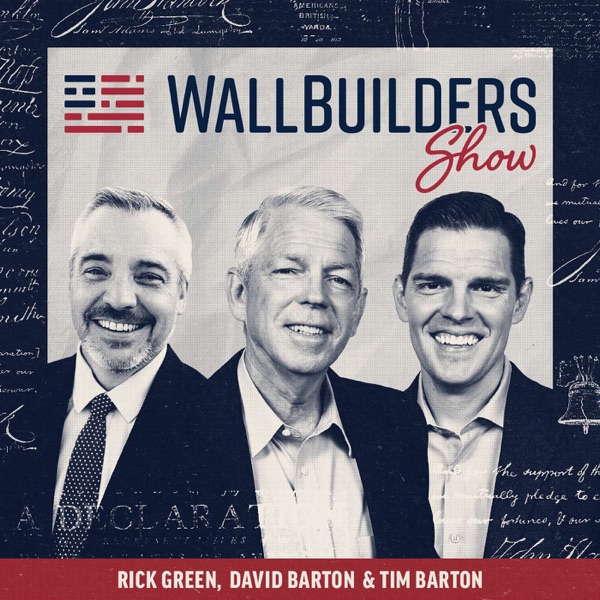
Episodes (200)
Undercover Inside A D.C. Islamist Network - with David Gaubatz
A former federal agent joins us with a claim that still shocks people years later: he assembled a team, trained them to move quietly inside Sharia-driven spaces, and sent them undercover to assess the Council on American-Islamic Relations (CAIR). What they say they found, including the recovery of roughly 13,000 internal documents, shapes the entire conversation and raises urgent questions about how influence campaigns work when they don’t look like “terrorism” on the surface. We dig into the difference between kinetic violence and what we call cultural jihad: the slow, persuasive strategy aimed at institutions, education, and public opinion. David Gobbitz argues that another 9-11 style attack may be strategically delayed because it would wake the country up, while “lone wolf” activity and ideological pressure can keep fear alive and momentum moving. We connect that argument to Texas, local community debates, and why law enforcement often feels handcuffed when investigations touch mosques, schools, or anything labeled religious. The hardest part of the conversation is a disturbing allegation involving a child inside a Sharia class and the long fight to get authorities to act. We also discuss what “freedom of religion” protects under the First Amendment when an Imam describes Islam as a political, economic, and military ideology using religion as a tool. If you care about national security, constitutional boundaries, and protecting kids while keeping a clear head, this is a challenging but important listen. Subscribe for more conversations at the intersection of faith and culture, share this with a friend who wants sources not slogans, and leave a review with your biggest takeaway. Support the show
Apr 14, 202626 min
Read The Bible Together - with Bunni Pounds
What would it look like for America to hear the Bible out loud again, not as a slogan, but as the actual text from Genesis to Revelation? That question drives our conversation as we get ready for a major national moment in Washington, DC: America Reads the Bible, where nearly 500 leaders will read Scripture publicly and livestream it across the country. We talk about why public Bible reading has such a powerful track record, from Moses to King Josiah to Jesus reading Isaiah, and especially Ezra and Nehemiah, where Scripture helps rebuild a broken people with clarity, worship, and renewed commitment. We also dig into the practical reason this matters right now: Bible literacy is collapsing in real time, and that vacuum is being filled with confident “crazy talk” from across the spectrum, including people who should know better. If we want a healthy biblical worldview, we have to get back to the source. Then we’re joined by Bunny Pounds from Christians Engaged to lay out the details: the schedule, the livestream, and how churches, families, universities, and small groups can participate. Along the way, we keep it real about the parts of Scripture people tend to avoid, including the genealogies, and why even those passages can be part of God’s bigger story. If you care about faith and culture, the Bible’s role in America’s founding, and what renewal could look like in the next 250 years, listen and join us. Subscribe, share this with a friend, and leave a review so more people can find the conversation. Support the show
Apr 13, 202626 min
Europe Reverses Course As America’s Culture Fights Heat Up
Europe is changing course, Hollywood is unexpectedly saying the quiet part out loud, and a few long-running legal fights just took a dramatic turn. We kick off Good News Friday by looking at the European Parliament’s move toward deportations and detention centers for illegal immigration, a major shift after years of open-border ideology. If you care about immigration policy, national sovereignty, and public safety across Western civilization, this story is hard to ignore. Then we jump into culture with American Idol’s Faith Night. We talk through Luke Bryan’s reflections on growing up around a Baptist church, how gospel preaching and youth group shaped him, and why Carrie Underwood’s bold, consistent Christian faith still stands out. We also name the tension you probably felt too: sometimes “faith” means worship, and sometimes it gets reduced to self-confidence. That difference matters, especially when the whole country is listening. From there, we get practical and constitutional. A new Department of Defense policy allows commanders to approve service members carrying personal firearms on U.S. military bases, a shift framed around self-defense and lessons from past base shootings. We also cover the dismissal of the last charge against David Daleiden after years of prosecution tied to exposing Planned Parenthood’s alleged fetal tissue sales, plus the first Antifa terrorism convictions in Texas. We close with a hopeful call from South Carolina to rededicate the state to the Lord through prayer, repentance, and moral renewal as the 250th anniversary approaches. If you found value here, subscribe, share this with a friend, and leave a review so more people can find conversations on faith and culture grounded in history and the Constitution. Support the show
Apr 10, 202626 min
Christ-Centered College Rallies Are Rewriting The Story Of Gen Z
Thousands of college students are showing up in arenas to talk about Jesus and it’s not happening at just one school. We dig into the Unite Us movement and the wave of campus revival stories from places like Pittsburgh, Alabama, Purdue, Ohio State, and Texas A&M, plus why the real test comes after the rally. Big moments are powerful, but we talk about the unglamorous next step that makes them stick: local churches stepping in to disciple, mentor, and help students build a lasting faith that shapes everyday life. Then we shift gears to a claim designed to spark outrage: the idea that George Washington hated his mother. We walk through why sensational history spreads so easily, especially when a famous name sells the story, and we lay out a simple way to fact-check anyone, no matter how well-known. If the claim is real, there should be a document, a date, and a quotation. If not, the burden of proof stays where it belongs. Finally, we answer a parent question we know many families face: how do you respond when your teen doubts the American Revolution and appeals to Christian teaching on obeying government? We unpack taxation without representation, the Declaration of Independence and its list of grievances, and the biblical framework for when resisting tyranny can align with obedience to God. If you care about faith, civic literacy, and raising thoughtful young leaders, hit play, share it with a friend, and leave a review telling us what question you want us to tackle next. Support the show
Apr 9, 202626 min
What Happens When Voters Lead Again - with Tim Mooney
A two-week ceasefire can sound like progress, but it can also be a trap if it lets a hostile regime regroup. We take a hard look at the Iran headlines and ask the question most coverage skips: what would a real end to the conflict require, and how do you prevent a “pause” from becoming a rebuild? From deterrence to diplomacy, we talk through why credibility changes negotiations, why Israel’s posture matters, and why “done enough damage” is not the same thing as securing lasting peace. To make sense of the moment, we reach back to history and compare today’s strategy debates to Harry Truman’s challenge with Imperial Japan. Winning every battle doesn’t guarantee you win the war, and the will to keep fighting can outlast rational self-interest. We also address how World War II is often misremembered, why context matters, and what that history teaches about surrender, reconstruction, and the difference between a tactical victory and a durable outcome. Then we bring it home with our guest Tim Mooney from Morning in America, who’s helping drive ballot initiatives across the country. We dig into the states where these fights are happening, the polling that shows voters across party lines shifting back toward common sense, and why protecting girls’ sports is becoming a defining issue in places like Maine, Colorado, Arizona, and Nevada. If you’re tired of legislatures ignoring voters, this is a practical roadmap for how citizens can move policy and culture at the same time. If you found this helpful, subscribe, share the show with a friend, and leave a review so more people can find conversations that connect faith, culture, and real-world action. Support the show
Apr 8, 202626 min
What If Courageous Faith Is Contagious Again
A Holy Week news cycle rarely sounds like this: a US president openly celebrates the resurrection of Jesus Christ with Scripture, a Passover message points back to the God of Abraham, Isaac, and Jacob, and an Artemis astronaut looks at Earth from space and calls it an oasis in a universe of emptiness. We put those clips on the table and talk honestly about what they reveal about faith in public life, cultural courage, and the hunger people have for meaning that goes deeper than the daily outrage. We also wrestle with a question many believers keep bumping into: what do we do with leaders who defend Christianity and religious liberty while still carrying rough edges? We walk through the biblical pattern of God using imperfect people for decisive moments, why “intent of the heart” matters, and how discipleship is a process. That doesn’t excuse bad speech or bad choices, but it does change the way we measure progress and gratitude when real protections for faith are at stake. Then we shift gears into the Iran situation, deadlines, ceasefire terms, and why strategic control points like the Strait of Hormuz matter in global security. The conversation lands on a gripping military rescue of a downed American airman, the kind of story built around SEER training, special operations capability, and a national ethic that refuses to leave someone behind. If you care about Christianity in America, constitutional principles, and how faith and culture collide in real time, listen now, share this with a friend, and leave a review so more people can find the show. What part of the conversation challenged you most? Support the show
Apr 7, 202626 min
Counseling And Free Speech - with Kelly Shackelford
Colorado tried to do something chillingly simple: let one side of a heated cultural debate speak freely, then make the other side a punishable offense. We dig into the Supreme Court’s 8–1 decision rejecting that approach, and why it’s bigger than a single headline about “conversion therapy” bans. When the state can outlaw a counselor’s viewpoint, free speech stops being a constitutional right and becomes a permission slip. We’re joined by Kelly Shackelford from First Liberty Institute to explain what the Court actually protected and why it matters for minors seeking counseling, parents trying to help confused kids, and professionals who don’t want their licenses held hostage to political ideology. Kelly also walks through how this case fits the First Amendment framework of viewpoint discrimination and why even two liberal justices sided with the majority. We also talk about the Court’s recent 9–0 win for the right to bring a lawsuit when your speech rights are violated, plus a new employment case involving a college student fired after she answered questions about her Christian beliefs. Along the way, we connect the dots to other legal and cultural fights, including concerns about major cases still in the pipeline and how ballot initiatives could roll back extreme policies even in deep-blue states. If you care about religious liberty, constitutional law, parental rights, and free speech in counseling, this conversation puts real-world stakes on the table. Subscribe, share this with a friend, and leave a review so more people can find the show and join the conversation. Support the show
Apr 6, 202626 min
Good Friday Good News
Good Friday forces a question most of us try to avoid: if the resurrection is real, what does that change about everything else? We take that question straight into American history, reading the Founding Fathers in their own words and letting their Easter beliefs speak for themselves. You’ll hear unmistakably Christian statements about redemption, mercy, judgment, and the general resurrection from figures like George Mason, Charles Carroll, John Hart, Benjamin Rush, and Gunning Bedford, all discussed from a biblical, historical, and constitutional perspective. We also talk candidly about public faith in modern leadership and why it’s refreshing to hear a president speak clearly about Holy Week without treating Christian language as taboo. Whether you agree with every political angle or not, the broader point matters: understanding where America came from helps us argue honestly about religious liberty, culture, and what belongs in the public square. Then we pivot into Good News Friday stories that go far beyond the usual headlines. We dig into why a moon base is back on the table, including concerns about China and space weaponization. We celebrate a March Madness moment where High Point’s Chase Johnson uses his jersey number 99 to share the parable of the lost sheep and the gospel on camera. And we close with a provocative research claim from a multi-decade review of medical marijuana trials that challenges the benefits often cited in legalization debates. If you care about Easter, the Founding Fathers, Christian faith in America, and practical cultural issues, subscribe so you never miss an episode, share this with a friend, and leave a review with the biggest takeaway you’re chewing on. Support the show
Apr 3, 202626 min
Honest Money - with Kevin Freeman
The scariest part of America’s debt problem is how easy it is to ignore until it’s too late. We sit down with Kevin Freeman from Economic War Room as he delivers a rapid-fire briefing on what the numbers actually mean: a debt trajectory that cannot last, interest costs that threaten to consume tax revenue, and a system that keeps reaching for the same “solution” of borrowing and money creation. If you have ever felt your eyes glaze over at economic talk, this one is built to snap things into focus with plain language, memorable examples, and real-world stakes. Kevin also pulls back the curtain on economic warfare and why global rivals want the US dollar to lose trust. We connect the dots between BRICS pressure, central banks accumulating gold, and the long-term risk of America financing itself at low cost. Then we go where the debate is headed next: central bank digital currency (CBDC). Programmable digital money can mean surveillance and control over how people spend, which raises serious questions for anyone who values privacy, free markets, and constitutional limits. We close with a practical path forward that does not require waiting on Washington. Kevin explains the constitutional argument for states enabling transactions in gold and silver alongside the dollar, plus a legislative framework focused on trust standards, tax relief, and protections against government overreach. We add a biblical perspective on debt, stewardship, and leaving a better inheritance, and we challenge ourselves to stay engaged in elections and local leadership. If this conversation helps you, subscribe, share it with a friend, and leave a review so more people can find it. Support the show
Apr 2, 202626 min
Faith In The Public Square - with Ray Comfort
A stranger climbs a billboard and changes four words into three, turning “Jesus is not God” into the exact opposite. That headline grabs attention, but what we really want to know is what comes next: is bold public action wise, does it help the gospel, and what does it reveal about the spiritual battle for the public square? We sit down with evangelist Ray Comfort of Living Waters to talk about courage, restraint, and the difference between being provocative and being effective. Ray shares his own billboard story, then goes deeper into a problem many churches quietly live with: people who claim Christ but show little spiritual fruit. We wrestle with discernment, distraction, and why a comfort-first message can create shallow faith that collapses under pressure. Along the way, we revisit Ray’s core evangelism approach: using the Ten Commandments and the moral law to wake up a sleeping conscience, not to win arguments but to bring people to repentance and real trust in Jesus. We also hit practical takeaways for leaders: why pastors benefit from seeing faith and history inside the US Capitol, how biblical worldview connects to government, and how creative outreach tools like Living Waters “gold coins” aim to start gospel conversations in everyday life. If you care about evangelism, discipleship, Christian living, and religious liberty in a noisy culture, this conversation will sharpen you. Subscribe, share this with a friend, and leave a review with the biggest takeaway you want the Church to recover. Support the show
Apr 1, 202626 min
Making Laws Count - with Jaco Booyens
Human trafficking doesn’t lose because we lack talking points. It wins when cases never get prosecuted as trafficking, when judges don’t know what to do with the complexity, and when our systems quietly allow predators to slip through. That’s why this conversation turns the spotlight away from national theater and toward the unglamorous place where outcomes are decided: state policy, local law enforcement capacity, family court, and courtroom follow-through. We share practical ways to get equipped locally through Patriot Academy, the Patriot Institute, and Constitution Coach training, because culture change and policy change require trained citizens and leaders. Then Yaako Bullions joins us from the Pro Family Legislators Conference with a direct briefing on what’s coming, including the heightened risk around the 2026 World Cup and why destabilizing the family reliably leads to child exploitation and trafficking. If you care about victim protection, anti-trafficking legislation, and real prevention, you can’t ignore how family court gaps and judicial inexperience create openings for abuse. We also dig into the prosecution crisis: “best laws on the books” can still produce weak results when trafficking gets pled down to lesser charges. Yaako makes the case for a specialized, constitutional human trafficking court approach to build expertise, speed timelines, and make convictions match the law. Finally, we confront the digital shift, including AI-driven coercion and the disturbing reality that many cases no longer fit the old hierarchy model, leaving communities unprepared for self-exploitation dynamics and online grooming. If this matters to you, subscribe, share this with a friend, and leave a review so more people find the show and take action where they live. Support the show
Mar 31, 202626 min
Restoring A Republic - With David Bullard
A state ballot measure can feel like the purest form of “power to the people” until you see how easily the process can be engineered by professionals with money, messaging, and a motive. We sit down with Oklahoma Senator David Bullard as he lays out a clear argument: initiative petitions were designed by progressives as a tool of direct democracy, and they are now being used to bypass legislatures, sidestep the will of voters who elected representatives, and push policies that could not survive open debate. Bullard walks through the history of the progressive movement’s rise, why the petition system spread across states, and why the media’s constant language about “our democracy” matters. Then he brings it back to the Constitution, including the guarantee of a republican form of government, and the founders’ warnings about “pure democracy” becoming turbulent, unstable, and vulnerable to tyranny. If you’ve ever wondered why civics feels upside down right now, this conversation gives you a framework that’s both historical and practical. We also get specific about reforms: clearer and non-misleading petition summaries, transparency about taxpayer cost, limits on out-of-state funding, rules for signature gatherers, and requirements that prevent a couple of big counties from dominating statewide outcomes. Along the way, Bullard connects these procedural fights to broader culture battles, civic education, and the need for principled unity rather than conservative infighting. If you care about state sovereignty, constitutional government, election integrity, and protecting representative lawmaking from manipulation, you’ll get concrete ideas to bring to your state leaders. Subscribe, share this with a friend, and leave a review with your biggest question about ballot initiatives and petition reform. Support the show
Mar 30, 202626 min
Faith And Culture Wins From Statues To Sports
They ripped down a Columbus statue, smashed it into pieces, and dumped it into Baltimore Harbor. Years later, a crew goes underwater, hauls it back up, and a brand-new replacement statue ends up installed at the White House. We unpack why that matters, what it says about how a nation remembers its past, and why telling the full American history beats trading in slogans. From there, we jump to a surprising moment of public faith in sports. Chris Pratt describes standing with his son in a Super Bowl locker room as the Seattle Seahawks drop to their knees in prayer and give glory to God. We talk about why that kind of humility hits so hard right now, and why visible gratitude and courage can shape the next generation far more than another viral rant ever will. Then we take on the fear factory. Paul Ehrlich’s “Population Bomb” helped mainstream overpopulation panic and a worldview that treats humans as the problem. We walk through the record of predictions that didn’t happen, the personal cost of believing them, and a better biblical framework for environmental stewardship that protects creation without devaluing people. We close with an unexpected bright spot from Hollywood, where an Oscars speech celebrates marriage, children, and the joy of motherhood. If you care about faith and culture, Christian worldview thinking, American history, and practical hope, hit subscribe, share this with a friend, and leave a review so more people can find the conversation. Support the show
Mar 27, 202626 min
What Nature Teaches About Rights And Responsibility
TSA delays, shutdown threats, and airport security drama raise a bigger question than most headlines admit: who should be responsible for keeping travelers safe, and what does the Constitution actually allow? We dig into the growing push to privatize TSA-style screening, why some lawmakers argue airports or airlines should carry more of the burden, and how accountability changes when government runs a system versus when a private operator runs it under a clear standard. Along the way, we talk candidly about what travelers experience on the ground, why effectiveness matters more than optics, and why a “Chick-fil-A run the line” joke lands because people are hungry for competence. We also tackle the confusion around ICE at airports and the way social media can turn routine law enforcement into instant political theater. Words like “police state” and “fascist” get thrown around fast, so we slow down and define terms. If we want honest debate about immigration enforcement, homeland security, and public safety, we have to start with reality instead of outrage. We connect that to the Senate funding fight and the deeper issue underneath it: politicians rarely change course until voters make the consequences real. Then we shift gears into one of the most important lines in the Declaration of Independence: “the laws of nature and of nature’s God.” What are those laws beyond self-defense? We share a practical way to think about natural law through observation and Scripture, including why Job 38 is a powerful crash course in learning from creation. If you care about constitutional government, biblical worldview, and everyday policies that affect real families, this conversation ties them together. Subscribe, share this with a friend, and leave a review with your biggest takeaway from the TSA and natural law discussion. Support the show
Mar 26, 202626 min
Election Day Means Election Day
Election rules don’t just decide winners, they decide whether people believe the system is honest. We start with the Supreme Court weighing whether states can keep counting mail-in ballots days after Election Day, and why the drift from “election day” to “election week” can punish transparency, stretch uncertainty, and invite suspicion. We also cover the Court’s recent standing decision that strengthens the ability of candidates to challenge election procedures in court, which could change how future election disputes are handled. From there, we head to California, where a Riverside County sheriff seized hundreds of thousands of ballots after a major mismatch appeared between ballot logs and reported totals. We talk voter ID, chain of custody, record retention, and why “human error” isn’t a satisfying answer when the numbers don’t reconcile. If election integrity is the goal, verification has to be normal, not controversial. Then we pivot to global stakes: the reported five-day pause with Iran, Israel’s continued strikes, what may be happening inside the Iranian regime, and how all of it connects to China, oil markets, and long-term security. We also reflect on the underground church in Iran and why spiritual and cultural change can be part of the story people miss. Subscribe for more biblical, historical, and constitutional analysis, share this with a friend, and leave a review if it helps. What’s the single most important reform for rebuilding trust: tighter deadlines, voter ID, or better transparency? Support the show
Mar 25, 202626 min
Why Conservatives Must Vet Candidates Before They Rise - With Heidi St John
A decorated past, a tragic story, a viral interview, and suddenly millions of people are treating a politician’s new talking points as truth. That’s a recipe for getting played, and we’ve seen it happen before. Heidi St. John joins us to unpack the Joe Kent controversy, what she witnessed firsthand on the campaign trail, and why the real issue is bigger than one candidate. We talk about how media narratives get built, how endorsements can suck the oxygen out of a race, and why conservatives can’t afford lazy discernment. Heidi explains why she flagged warning signs early, what “vetting” should actually look like, and why a résumé, charisma, or military service can never replace a clear record and consistent values. We also wrestle with a hard but necessary idea: multiple things can be true at once, including gratitude for service and serious concerns about a person’s leadership. Then we widen the lens to the long-term fight. Heidi shares what she’s learning through building a thriving homeschool resource center and why education is shaping the next generation of voters. We address burnout, the lure of conspiracy culture, and the danger of outsourcing your worldview to influencers instead of grounding yourself in Scripture and solid sources. If you care about faith and culture, civic responsibility, and how to recruit better leaders locally, you’ll walk away with practical steps and a renewed sense of duty. If this conversation helps you, subscribe, share it with a friend who’s tired of the noise, and leave a review so more people can find it. What’s one question you always ask before you trust a public voice? Support the show
Mar 24, 202626 min
Iran And Israel Update - with Jonathan Feldstein
The headlines move fast, but the hard question stays the same: what does “success” actually look like when Iran is at the center of a regional firestorm and Israel is fighting for its future. We talk through why Americans feel whiplash right now from shifting narratives on the right and left, and why mission clarity matters more than slogans when troops, trade routes, and global stability are on the line. If leaders can define objectives, limits, and an end state, public trust holds. If they cannot, the fog of war turns into a fog of politics. Jonathan Feldstein returns with an Israel-focused update while temporarily stuck in the United States, and he doesn’t mince words about how we got here. We dig into decades of appeasement, the consequences of regime funding, and why “Death to America” is not a cute chant but a declared threat that should be taken seriously in any Iran policy analysis. We also explore the practical knock-on effects many listeners feel immediately, including shipping lanes, oil prices, and the fear of a prolonged conflict that drags on for years. Then the conversation widens into something most geopolitics shows won’t touch: what happens after the regime. Feldstein argues Iran is not Hamas, describing a hijacked nation with deep Persian roots and signs of widespread rejection of radical Islam, including the growth of an underground Christian church. We talk about why visiting Israel changes minds, how truth cuts through propaganda, and what people of faith can do right now through Genesis123.co, including prayer and tangible support. If you care about Israel security, US foreign policy, and the future of the Middle East, subscribe, share this with a friend, and leave a review with your biggest question about what comes next. Support the show
Mar 23, 202626 min
What Happens When A Nation Prays Again
A 20% nationwide drop in murder. Thousands of missing kids found. Tens of thousands of Texas families rushing to school choice on day one. If you’re tired of doomscrolling, we’ve got a stack of stories that point to something different: when leaders restrain evil, protect families, and tell the truth out loud, the results show up in the numbers and in the culture. We start with new FBI data and what it says about law enforcement priorities, public safety, gangs, fentanyl seizures, and the renewed pursuit of child predators. From there, we shift to an unexpected cultural signal: the Melania documentary hitting number one on Amazon Prime in the US and worldwide. We talk about what the film reportedly highlights, why the media attention feels lopsided, and why viewers’ choices can quietly undermine propaganda. Next we get practical with education policy and the Texas school choice rollout, including the scale of the program, who applies, and why competition tends to raise academic outcomes while lowering costs. We also cover a tense international story involving the Iranian women’s soccer team threatened for refusing to sing Iran’s anthem, plus the push for asylum protections in Australia. We close with the National Prayer Breakfast, the America Praise Initiative, and the May 17 prayer gathering on the National Mall as part of the 250th anniversary. If you care about faith and culture, FBI crime statistics, school choice in Texas, and how prayer shows up in public life, this conversation ties it together. Subscribe, share with a friend who needs some good news, and leave a review with the story that mattered most to you. Support the show
Mar 20, 202626 min
The Real Story Behind Presidential Term Limits
Power doesn’t usually arrive with a villain speech, it piles up quietly through attention, advantage, and time. We take a listener’s question about presidential term limits and follow it straight into the real history behind the 22nd Amendment: Franklin D Roosevelt’s four election wins, Harry Truman’s push to formalize limits, and the fear that long tenures can start to look like a monarchy or worse. We also get honest about what changed between Washington’s day and ours. George Washington set the two term precedent with personal restraint, but modern politics runs on name recognition, fundraising, and nonstop “earned media.” We talk about why wartime presidents can become impossible to challenge, how mass communication can tilt the field, and why today’s media ecosystem makes the incumbency advantage feel even more powerful than it used to. Then we widen the lens to Congress, Supreme Court justices, and federal judges. If the goal is limiting accumulated power, should term limits apply beyond the presidency? And if “staff is policy,” what happens when elected officials rotate out but the permanent class of staffers and institutions stays in place? To close, we pivot to something practical and fun: a list of American history movies that aim for real historical accuracy, including classics like Sergeant York, The Longest Day, Tora! Tora! Tora!, Amistad, and Apollo 13, plus a few content caveats for families. If you like biblical, historical, and constitutional talk that stays grounded in facts, subscribe, share this with a friend, and leave a review. What would you change about term limits, and what history film do you trust most? Support the show
Mar 19, 202626 min
The SAVE Act And The New Fight For Election Integrity - with Seth Keshel
You can feel it everywhere: people don’t just argue about candidates anymore, they argue about whether the election system itself is believable. We walk through the SAVE Act now hitting the Senate, why it’s built around proof of citizenship and voter ID, and why a simple question sits underneath all the noise: should only US citizens decide the course of the United States? Seth Keschel joins us to explain what he calls the difference between “stolen” and “rigged” elections, where the real leverage often comes from structure like automatic voter registration, expansive vote-by-mail, ballot harvesting, and sloppy voter roll maintenance. We compare what fast, transparent election administration looks like in Florida versus the drawn-out counting and public frustration that shows up in places like Arizona. Along the way, we talk precinct size, chain-of-custody, paper ballots, and why black-box trust is a bad foundation for a nation that depends on consent of the governed. We also step back into American history and remind ourselves that disputes over election integrity aren’t new, which is exactly why durable rules matter. If you care about election security, voter registration integrity, proof of citizenship, and rebuilding trust in our constitutional republic, this conversation is for you. Subscribe, share this with a friend who disagrees, and leave a review with the single reform you think would restore confidence the fastest. Support the show
Mar 18, 202626 min
Faith In Every Arena - with Elizabeth Carlyle
Culture doesn’t drift toward truth by accident. It’s shaped by whoever shows up with conviction, skill, and staying power and that’s exactly why we’re talking about faith beyond church walls. We dig into what it means to live as “biblical citizens” who bring the gospel into every calling, from politics and education to media, medicine, and the fine arts. If you’ve ever wondered whether your work really matters to God, this conversation makes the case that your profession can be a mission field when you practice excellence and refuse to compartmentalize your beliefs. Elizabeth Carlisle joins us to share her new book, “Americans Who Pray: Uniting a Nation in Faith and Freedom,” a collection that blends her own prayers with prayers from 80 inspiring Americans. We talk about the power of prayer in American history, why George Washington’s dependence on God still speaks to the moment we’re in, and how humility changes leadership. Elizabeth also describes the story behind First Freedom Art and the legacy of Arnold Freeberg, the artist behind “The Prayer at Valley Forge,” now seen by hundreds of thousands at the Museum of the Bible. We also tackle the “Seven Mountains of influence” idea in a grounded way: don’t get stuck on labels, just engage every sphere of culture instead of surrendering institutions by default. Along the way, we point you to practical resources, including historic prayer proclamations and examples you can bring back into public life. If you care about faith and culture, Christian leadership, prayer for America, and restoring beauty and truth in the arts, this one’s for you. Subscribe, share this with a friend, and leave a review with one area of culture you’re ready to step into next. Support the show
Mar 17, 202626 min
How States And Congress Are Reclaiming Religious Liberty - with Jason Monks
A lot of political coverage trains us to expect the worst, so when real momentum shows up it can feel almost unbelievable. We zoom out on the good news we’re seeing at the intersection of faith and culture, where religious liberty and state-level leadership are producing wins that many people never hear about in their day-to-day “bubble.” From Washington, DC, we unpack Senator Josh Hawley’s press conference on mifepristone, often called the abortion pill, and why he’s making a medical safety case instead of a partisan pitch. We talk through the claims about adverse event rates, how FDA standards have treated other drugs with far smaller risk ratios, and why distribution channels and oversight matter. Even if you’re tired of culture-war framing, this part of the conversation is about patient safety, informed consent, and whether our institutions are applying consistent rules. Then we’re joined by Idaho House Majority Leader Jason Monks to discuss a statewide call for prayer and fasting. He explains why humility and self-reflection are the point, how leaders need divine guidance, and why the “separation of church and state” line is often used without knowing the history. We also dig into what “answered prayer” would actually look like: lower rhetoric, more patience, and the ability to disagree without turning each other into enemies. If you want more hopeful stories grounded in biblical Christianity, American history, and constitutional principles, subscribe, share this with a friend, and leave a review so more people can find the show. Support the show
Mar 16, 202626 min
A Week Of Unexpected Wins For Faith And Family
5,700 ISIS terrorists moved out of a shaky Syrian prison system and into Iraq. Sponsors walk away from a long-running Disney event. States start ending lifetime tenure for professors. And an NFL coach gives every player a Bible with a clear message about identity and purpose. That’s the kind of Good News Friday we’re bringing you, because the most important shifts often happen quietly, then all at once. We start with a Middle East security update that surprised even us: the reported US move to relocate thousands of ISIS detainees from Syria to Iraq, lowering the risk of escape and keeping dangerous actors off the field. From there we pivot to a piece of parenting research that keeps confirming what many families already know, children do better when a mom and a dad are both present, bringing different strengths that balance the home. If you care about child development, family structure, and what the data actually says, you’ll want to hear this part. Then we hit education accountability and higher education reform: student debt, weak job alignment, and a growing movement in multiple states to reform or eliminate tenure in favor of performance reviews and renewable contracts. We also talk culture and corporate pressure with news that Gay Days Orlando is being paused after losing sponsorship and hotel support. We wrap with two worldview-level stories: growing pushback on costly climate accords and a Seattle Seahawks coaching staff that’s unashamed to put faith front and center. Subscribe, share this with a friend who needs some hope, and leave a review. Which story landed most for you, and why? Support the show
Mar 13, 202626 min
Primary Power For Independent Voters
You can care about principles and still care about strategy, because the rules of the system decide whether your voice gets heard. We start with a listener stuck in a closed-primary state as an independent and walk through the hard tradeoff: stay unaffiliated and lose primary access, or register with a party so you get two meaningful chances to influence the outcome. Along the way, we explain open primaries vs closed primaries, why crossover voting happens, and how to think about party registration without turning your conscience over to a party label. From there, we zoom out to a values-first approach to voting, including Benjamin Rush’s blunt line that he’s neither an aristocrat nor a democrat but a “Christocrat.” That idea frames the whole conversation: judge candidates by the values they defend and the policies they will implement, not by team identity. If you’ve felt politically homeless, this gives you a clear way to stay grounded while still being effective. We also tackle two rapid-fire but important civics issues. First, the constitutional question about whether President Trump could ever serve as vice president, using the 12th Amendment and the 22nd Amendment to show why eligibility rules matter. Second, we respond to concerns about DEI in schools by correcting common “Founders” misinformation, including what really happened on July 4 versus August 2 with the Declaration of Independence, then lay out practical steps to challenge questionable curriculum and classroom materials at the local level. Wrap it up with a thoughtful look at gerrymandering reform and why simple fixes like “rectangular districts” run into geography, population, and politics. If you want more constitutional literacy, better history, and actionable ways to engage, subscribe, share this with a friend, and leave us a review. Support the show
Mar 12, 202626 min
Tennessee’s Push To Reclaim Marriage Law - With Gino Bulso
Power doesn’t just shape policy; it decides who gets to decide. We sit down with Tennessee State Representative Gino Bulso to unpack a bold two-bill strategy aimed at narrowing federal court rulings on marriage and civil rights while reclaiming state authority and protecting private conscience. If you’ve wondered how a state can push back without breaking the rules, this is a masterclass in targeted, constitutional maneuvering. We start by grounding the conversation in first principles—why the Declaration’s moral claims and the Constitution’s structure are not value neutral, and how drifting from a fixed moral baseline has confused public standards. From there, Rep. Bulso breaks down HB 1473, which clarifies that Obergefell binds public actors but not private citizens or businesses, and HB 1472, which directs Tennessee not to adopt the Supreme Court’s Bostock reading of “sex” into state anti-discrimination law. Together, the bills seek to secure space for conscience, particularly for private businesses not covered by federal Title VII, without inviting direct conflict with federal supremacy. Along the way, we tackle the question at the heart of civic life: who decides? Courts, Congress, or communities. We explore the separation of powers, the original meaning of the Fourteenth Amendment, and the role of state constitutions defining marriage. Rep. Bulso explains why changing national policy should go through elected lawmakers or amendment—not judicial legislation—and how Tennessee’s approach respects process while reshaping outcomes. The stakes are high: family, faith, and the social order all hinge on whether law stays tethered to coherent standards. If you care about federalism, religious liberty, and the future of marriage policy, this conversation offers a rare blend of constitutional depth and practical tactics. Listen, share with a friend who follows the courts, and then tell us what you think: who should draw the lines—judges, legislators, or the people in their states? Subscribe, leave a review, and join the debate. Support the show
Mar 11, 202626 min
Kids First: Rethinking Marriage Policy - with Katy Faust
What if the way we define marriage is quietly reshaping childhood—for worse? We open the conversation with a child-first lens and ask the question most debates avoid: does public policy exist to validate adult desires, or to protect a child’s right to both mother and father? Katie Faust, founder of Them Before Us, joins us to explain how the 2015 redefinition of marriage flattened biological reality and turned parenthood into a credential adults acquire, often without the adoption safeguards designed to protect kids. From IVF mandates to loosened parentage rules, she traces how systems now subsidize motherless or fatherless homes by design, measuring success by adult fulfillment rather than child well-being. We dig into the data and the vibe shift. Approval among conservatives has dropped as people connect the dots: if sex differences matter on the field and in the clinic, they matter even more at home. Pastors are finding their voice, too—teaching clearly that marriage is a child-serving institution rooted in the complementary gifts of men and women. Katie charts a three-part plan: reframe the public conversation around children’s rights, mobilize the church into a child-centered force, and pursue a legal strategy that changes the court’s question from “Do adults have dignity?”—yes—to “Do children need their own mother and father?” That pivot anchors policy in biology, safeguards adoption as child protection, and resists pathways that bypass rigorous screening. Together we spotlight a growing coalition of scholars, faith leaders, and policy groups aligned on one message: don’t touch the kids. We share practical ways to get involved, equip your church, and speak with clarity at home, online, and in your community. If you’re ready to move beyond slogans and defend the smallest stakeholders with facts, conviction, and compassion, this is your roadmap. Subscribe, share with a friend who cares about family and child safety, and leave a review to help more listeners find the show. Support the show
Mar 10, 202626 min
How A Revival Sparked A Revolution - With Joshua Enck
Liberty didn’t start with a vote. It started with a voice. We sit down with Josh Enck of Sight & Sound to explore A Great Awakening, a feature film that puts George Whitfield back in the pulpit and Benjamin Franklin at his press to show how revival prepared the ground for revolution. Rather than retell battlefield moments, we follow an unlikely friendship that helped shape the American mind—pairing Whitfield’s electrifying sermons with Franklin’s genius for print and persuasion—to reveal why cultural change must precede political change. Josh shares how a ministry known for epic, immersive stage productions stepped into cinema without losing its soul. The COVID shutdown became a catalyst: a filmed stage show reached more people in a long weekend than two years of sold-out theaters, pushing the team to bring stories to audiences wherever they are. That shift comes with a promise—no shortcuts, no sentimentality—just careful acting, tight scripting, and historically grounded scenes that honor the intelligence of the audience. The result is a throwback to classic, story-first filmmaking that still feels urgent and new. We also dig into the film’s core idea of liberty. Not a slogan, not a partisan badge, but a conviction with biblical roots and civic consequences. By tracing Whitfield’s influence across the colonies and Franklin’s role in amplifying it, we connect the Great Awakening to the habits of self-government that made the American experiment possible. Along the way, we talk about reviving the voices of past pastors, the power of print, and why opening-week support matters if we want more films that meet faith and history with excellence. Grab tickets at agreatawakening.com and share the trailer with someone who loves bold, character-driven stories about America’s origins. If this conversation moves you, subscribe, leave a review, and tell a friend—let’s put these voices back in the public square. Support the show
Mar 9, 202626 min
Revival Or Awakening
A surge of spiritual interest is sweeping the country, but will it last long enough to change anything? We dig into the hard truth: revivals inspire; awakenings transform. That transformation only happens when people are discipled to live out Jesus’ full teaching, the kind that speaks plainly about marriage, gender, and the purpose of covenant—without losing sight of grace, redemption, and the path back. We share encouraging shifts from the pulpit as national voices tackle no-fault divorce and explain why God’s commands are for our flourishing. Then we zoom out to culture and policy. Scouting America announces a slate of reforms—dropping DEI mandates, restoring membership by biological sex, and honoring military families—after high-level pressure to reclaim clarity and standards. Across the Atlantic, Marco Rubio earns applause in Europe by calling leaders back to the shared roots of Western civilization, Christian identity, and actionable security. At home, a key court win in Vermont protects foster families’ religious freedom and common-sense boundaries in a system that desperately needs willing parents. Finally, we confront the education paradox: nearly a million more students have left public schools for private, Christian, and homeschool options, even as districts add staff and pass higher costs to taxpayers. We break down what this means for families, classrooms, and local budgets—and how citizens can act. If you’ve been asking how faith can move from Sunday morning to everyday life, this conversation offers a roadmap: discipleship that forms character, engagement that shapes policy, and courage that tells the truth in love. If this resonated, share the show with a friend, subscribe for more Good News Fridays, and leave a review to help others find the conversation. Support the show
Mar 6, 202626 min
Why State Of The Union “Responses” Feel Scripted And What History Says About It
A courtroom drama played out in a committee room, and we got a front‑row seat. We break down why Tennessee’s push to post the Ten Commandments in public schools is framed as restoration, not invention, and how a single Supreme Court ruling—Coach Kennedy—quietly dismantled the decades‑old Lemon test that kept faith at arm’s length in public institutions. From Moses carved into the Supreme Court frieze to McGuffey’s Readers in the classroom, we connect the historical dots most civics courses skip. Then we pivot to the modern spectacle of the State of the Union and ask a simple question: if the rebuttals are live, why do they feel prerecorded? The answer runs through shrinking sound bites, risk‑averse scripting, and a media environment that punishes context. We dig into the surprisingly short history of formal SOTU responses, the experiments that worked (including conversational formats), and what it would take to make these moments useful again. Finally, we explore why members of Congress split by party inside the chamber without any rule requiring it. Human nature, scarce face time, and caucus culture drive the seating map more than procedure does. Drawing on statehouse experience, we look at how mixed seating, mentorship, and daily contact can lower the temperature and raise the quality of debate. If you care about constitutional history, religious liberty, legislative culture, and how media incentives shape public life, this is your guide to the moving pieces. Listen, share with a friend who loves policy as much as history, and leave a review so we can keep building smarter conversations together. Support the show
Mar 5, 202626 min
Iran’s Theocracy And The Ballot Box
Headlines about Iran can feel like a blur of missiles, ministers, and moving targets—until you connect the dots between what leaders believe and what nations do. We dive into how Shiite end-times theology influences Iran’s pursuit of power, why “the great Satan” rhetoric matters for strategy, and how surgical strikes against military and clerical leadership could open a narrow window for change. When ideology prizes escalation, containment looks different—and so do the choices free nations face. Back home, we unpack a Texas primary night that says a lot about where voters want guardrails. Prop 10’s blowout against Sharia law becomes a pivot point to discuss the deeper role of worldview in public life. We then break down key races across Arkansas, North Carolina, and Texas, contrasting a steady voting record with a lack of fight, and a fighter’s zeal with heavy baggage. Add a polished progressive pastor with strong media chops, and you get a masterclass in electability: narrative, competence, and character colliding in real time. The throughline is power you can use today. Primaries are where leverage lives, with lower turnout and higher impact per vote. We share practical ways to research candidates, compare records, and build simple voter guides for your church and neighborhood. If you want better choices in November, start months earlier—clarify your values, study the field, and bring two friends with you to the polls. Subscribe, share this episode with someone who needs a nudge to vote in the primary, and leave a review telling us which race you’ll track most closely this year. Support the show
Mar 4, 202626 min
School Prayer Returns To The Spotlight - with Kelly Shackelford
What changes when a single Supreme Court case rewrites the playbook on faith in public life? We dig into the ripple effects of Coach Joe Kennedy’s victory, which not only vindicated a high school coach’s right to pray but also swept aside the Lemon test that fed government hostility to religion for decades. With that barrier gone, schools and communities now have clearer ground to protect student religious expression, respect teachers’ personal faith, and honor America’s history and traditions without fear or confusion. We talk with Kelly Shackelford of First Liberty Institute about the legal momentum reshaping the landscape: Ten Commandments displays returning to public spaces, appellate courts signaling a new era for religious liberty, and updated Department of Education guidance that finally reflects the modern case law. Kelly explains how these changes empower local leaders to act confidently, why historical practice matters in constitutional analysis, and how misinformation about “separation of church and state” still clouds basic rights in classrooms and boardrooms. Beyond the courtroom, we spotlight a national call to prayer—an hour a week with ten friends—to re-center hearts and communities. Then we turn to the nuts and bolts of civic influence: strategic voting in low‑turnout primaries, where choosing a viable values-aligned candidate can block bad outcomes and advance lasting change. If you want practical steps, we point you to resources like FirstLiberty.org and RFIA.org, where citizens can find model language, legal backing, and real-world projects to restore faith in their hometowns. If this conversation helps clarify your rights or sparks an idea for your school or city, share it with a friend, subscribe for more, and leave a review with your biggest takeaway. Your voice—and your vote—can move the needle. Support the show
Mar 3, 202626 min
How A Preemptive Strike Aims To End A Forever War
Headlines popped, timelines blew up, and a joint operation against Iran became the weekend’s defining story. We dive straight into what actually happened and why it matters: the legal thresholds that govern rapid action, the Gang of Eight briefings, and the intelligence that pushed leaders toward a preemptive strike. Our goal is simple—cut through noise, track the facts, and ask the hard questions about deterrence, proportionality, and whether swift force can prevent a longer war. We unpack why some Iranians cheered while Western commentators split, and how selective outrage online can warp public judgment. From reported hits on hundreds of targets to the immediate regional reactions, we connect the operational dots to the broader strategy: neutralize launch sites, degrade terror financing, and avoid the trap of open-ended ground wars. We also revisit a consistent pattern—targeted actions that dismantle hubs of harm, whether tied to state terror or fentanyl pipelines that kill Americans—while keeping the U.S. footprint lean and time-bound. But tactics live under bigger ideas. We grapple with the tension between removing leaders and confronting ideologies that recruit replacements. Drawing a line from the Barbary pirates to modern jihadist networks, we explore why force can reset the board yet cannot rewrite the beliefs that motivate violence. That’s where diplomacy, financial pressure, and information efforts must carry weight, turning deterrence into durable stability. If you care about constitutional process, national security, and the difference between decisive action and reckless escalation, this conversation lays out the moving pieces without the spin. If this helped you see the story more clearly, follow the show, share it with a friend, and leave a quick review so others can find it too. Your feedback shapes future episodes—what question should we tackle next? Support the show
Mar 2, 202626 min
How Common Sense Is Making A Comeback Across Courts, Sports, And Politics
What if the headlines you’ve been waiting for finally started to land—quietly, firmly, and with a dose of common sense? We walk through a week where the executive branch said “stay in your lane” to the judiciary, a hockey team skated to gold while pointing to faith, and a British voice laid out a plain-spoken roadmap to national renewal. Different stories, same current: courage with boundaries. We start with a constitutional gut check. Two federal prosecutors were appointed by judges and immediately let go by the executive—an overdue reminder that prosecutors are executive officers, not judicial staff. That sparks a deeper dive into how Marbury v. Madison is taught versus how Jefferson and Madison actually handled judicial overreach. Instead of treating courts as super-legislatures, we argue for a return to the founders’ design: branches that respect each other’s roles and push back when lines blur. It’s not theory; it’s how a republic stays honest. Then the ice heats up. The USA men’s hockey team clinches gold and several players, led by veteran Jacob Slavin, point openly to their Christian faith. Their message is simple and rare: excellence is stewardship, not self-worship. Purpose anchors performance. For parents, coaches, and young athletes, it’s a case study in what happens when conviction meets discipline. We wrap with two jolts of practical clarity. Across the pond, a new “Restore Britain” platform calls for enforceable borders, cultural confidence, and a return to Christian heritage—proof that millions crave policies that match reality. And at home, English-only testing for commercial driver’s licenses puts safety over politics; if you’re driving 40 tons on American roads, you should read the signs. If you’ve been looking for signals that institutions can still work, that faith still inspires, and that straight talk still resonates, this one’s for you. If this conversation sparked new questions—or a little hope—tap follow, share it with a friend, and leave a quick review. Your feedback helps more listeners find the show and keeps these good stories rising. Links to Good News Articles: https://www.theepochtimes.com/us/doj-fires-interim-us-attorney-hours-after-virginia-court-selects-him-5988902 https://www.crosswalk.com/headlines/contributors/michael-foust/american-jaccob-slavin-fueled-by-faith-helps-lead-usa-to-historic-olympic-gold.html? https://notthebee.com/article/a-new-political-party-just-launched-to-save-britain https://thedailybs.com/2026/02/23/cdl-tests-will-become-english-only/ Support the show
Feb 27, 202626 min
What Do Courage, Polling, And Delegated Powers Tell Us About America Now
What happens when a speech turns the room into a live referendum on first principles? We break down a State of the Union that fused patriotic theater with hard policy bets—calling for voter ID through the SAVE Act, pressing tariffs despite a legal speed bump, and elevating faith and service as shared civic anchors. The showmanship was unmistakable: Team USA hockey winding through the press as chants rose, pointed “stand up” moments that drew sharp lines, and tributes to veterans and everyday heroes that felt refreshingly unifying. We walk through why the SAVE Act became the centerpiece and how that choice sets the terrain for the midterms. Simple framing plus visible floor reactions create clips that travel, and those clips influence polling that, in turn, disciplines party messaging. On tariffs, we dive into the constitutional mechanics—how delegated powers work, what Federalist No. 12 actually emphasizes, and why the Court’s ruling narrowed a lane without closing the highway. If you care about what lasts beyond one administration, you’ll appreciate the reminder that real durability comes from statute, not just executive muscle. There’s also a media and AI reality check. Pre-scripted rebuttals released before the speech, viral but fabricated quotes, and AI tools that mirror user bias all feed confusion. We share practical ways to verify claims, ask better questions, and keep civic engagement grounded in primary sources. Whether you applauded the tone or winced at the jabs, the night revealed which messages move people and where the country’s cultural seams are most visible. Listen for clear takeaways, a frank look at strategy versus spectacle, and a nudge to engage with discernment. If this helped you think more clearly about policy, culture, and the road to the midterms, subscribe, share with a friend, and leave a quick review—your feedback sharpens the conversation. Support the show
Feb 26, 202626 min
School Choice Wins In Texas
Want to see how ideas become laws that change lives? We trace a straight line from primary-source history to modern policy, then unpack how Texas advanced a billion-dollar school choice program while strengthening religious liberty protections. With Lieutenant Governor Dan Patrick, we dive into the long-game strategy behind expanding parental rights, why competition can lift outcomes for every student, and how teacher pay and public school funding fit into a balanced plan that keeps classrooms strong. We start with something rare in politics: receipts you can hold. From Revolutionary-era Bibles and George Washington’s orders, to WWII chaplain records, we share artifacts that demonstrate how faith once operated in America’s civic and military life. When people see history up close, the debate shifts. Instead of arguing abstractions, we face a record that shows religious expression as a durable thread in our national fabric—not an intrusion to be scrubbed away. From there, we break down the architecture of Texas’s program: a billion dollars in year one for roughly 100,000 students, clear pathways for families in need, and continued investment in public schools, including significant teacher pay raises. Worried that choice will drain districts? The numbers tell a different story, with 5.5 million students still in public schools and new incentives for districts to improve. Concerned about strings for private or homeschool families? Participation remains a choice; those who want full independence can simply decline funds. We also face the cultural headwinds: DEI mandates, curriculum revisions that sideline core history, and policies that blur parental rights. Every law reflects someone’s morality; the founders argued that liberty needs a moral backbone to last. By restoring religious liberty and empowering parents, we create room for conscience, competition, and genuine excellence to thrive together. The theme we return to is courage—contending earnestly for what’s true while leading with love. If you’re passionate about education freedom, faith in public life, or practical reforms that respect teachers and empower families, this conversation brings clarity and a path forward. Subscribe, share this episode with a friend who’s wrestling with these questions, and leave a review with your biggest takeaway—we read every one. Support the show
Feb 25, 202626 min
Faith, Freedom, And The Ballot
What if the most important fight for your faith happens before November? We bring the energy and get practical about why primaries carry outsized influence, how to find trustworthy voter guides, and where small turnouts can swing big outcomes. Then we go deep on religious liberty with Texas Lt. Gov. Dan Patrick, who chairs President Trump’s Religious Liberty Commission, to unpack what the hearings are revealing and what can actually change. You’ll hear the human side of constitutional rights: a Navy SEAL near retirement punished for a faith‑based vaccine objection, a fifth grader pushed to read a transgender book to first graders, a teacher sidelined for refusing to remove a cross, and a valedictorian told to strip God from his speech. These aren’t hypotheticals; they’re case studies showing how confusion about the First Amendment collides with daily life in schools and the military. Dan walks us through the Commission’s mission—clarifying when and where prayer and religious expression are protected, documenting violations across faiths, and shaping durable policy through DOJ action, legislation, and executive orders that stand beyond one administration. We also tackle a heated moment inside the Commission itself: an attempt to derail a hearing with anti‑Semitic rhetoric and political grandstanding. The swift removal of the member, and clear words from leaders like Franklin Graham and Cardinal Dolan, refocused the work on protecting people of faith—Christian, Jewish, Sikh, and others—without weaponizing theology against civil rights. Along the way, we connect the dots between America’s historic tradition of chaplaincy and conscience in the military and today’s need to enforce good laws already on the books. If you care about faith, free speech, and the ballot, this conversation maps the path from outrage to action—starting with your primary. Listen, share with a friend who needs clarity, and subscribe so you never miss a strategy that turns conviction into change. Support the show
Feb 24, 202626 min
Sharia Law At Our Doorstep
What would you do if changing your faith made you a target—and the people sworn to protect you hesitated out of fear of a label? We sit down with a former Muslim from the UK who lays out, in stark detail, how harassment turned into arson, how isolation bred despair, and how a brutal street attack finally forced his family into hiding. His story isn’t shared for shock value; it’s a stress test of our core freedoms and a warning about what happens when public officials let accusations of “phobia” outrank evidence, threats, and the equal protection of the law. Across the hour, we connect personal testimony to broader civic patterns: churches sold and converted, local councils won through bloc voting, and police culture shaped more by public relations than public safety. We open the books—including the Reliance of the Traveller and a contemporary text on Islamic law—to show how apostasy is treated and why that matters for anyone who cares about freedom of conscience. Our aim is not to inflame but to inform: to give listeners a clear view of the stakes when doctrine is used to rationalize intimidation, and when communities go quiet as neighbors face escalating harm. We also get practical. How can cities protect ex-Muslims and other at-risk dissenters? What must change in policing, prosecution, and community organizing to make sure the law is applied evenly? We outline steps any listener can champion: document threats, insist on neutral enforcement, build support networks for converts, and show up—at council meetings, in courtrooms, and for families under pressure. Courage is contagious, but it needs structure. Want the full two-hour forum and deeper dive with our scholars? Watch on Facebook at Patriot Rick Green or at PatriotU.com. If this conversation moved you, share it, leave a review, and subscribe so more people hear what’s at stake—and how we can act together. Support the show
Feb 23, 202626 min
Texas On The Front Lines Against Sharia Law
Freedom doesn’t vanish overnight—it erodes when we forget what we stand for and hesitate to defend it. We dive straight into the collision of Sharia law with constitutional liberty, outlining why abrogation matters, why enforcement beats rhetoric, and why Texas is uniquely positioned to set a national precedent. With Frank Gaffney, Bill Federer, and more voices at the table, we trace a strategy from “tavern talk” to the ballot box: make the threat legible, win a public mandate, and operationalize it through clear laws, candidate accountability, and focused law enforcement. We lay out the stakes with specificity: what Sharia means in practice; why later doctrinal interpretations shape governance claims; and how groups accused of advancing illiberal aims fit into a modern legal framework. Then we pivot to action—five words on the Texas primary ballot that could spark a wider movement: “Texas should prohibit Sharia law.” The message is simple but decisive: ask every candidate where they stand and make the answer consequential. We look to Reagan’s playbook for confronting totalitarian threats, turning principle into policy and public will into durable action. The most searing moments come from Nissar Hussein, a former Muslim who faced threats for apostasy. His story personalizes abstract debate: when leaving a faith invites violence, the bedrock of religious liberty crumbles. He warns that the gap between the UK and the United States may be smaller than many think, urging vigilance before norms reset. Alongside that warning, we return to first principles: restore civic memory, teach constitutional guardrails, and practice the habits that keep a free people free. If you care about religious liberty, constitutional law, and the practical steps that turn conviction into policy, this is your roadmap. Listen, share with a friend who votes, and leave a review to help more people find the show. Then ask your candidates—local to federal—exactly where they stand on Sharia and what they’ll do about it. Support the show
Feb 20, 202626 min
Why Defining Religious Freedom Now Shapes Our Future
A packed room, a raised question: how do we safeguard genuine religious freedom while resisting a system that treats law, politics, and belief as one instrument of control. We gathered a unique panel—historian Bill Federer, national security voice Frank Gaffney, and advocate Nissar Hussain—to cut through noise and name the stakes. From the legal misunderstandings that haunted the First Amendment for decades to the recent course-correction in the courts, we explore why definitions matter. If liberty means anything, it must include the courage to say no to practices that violate equal protection, due process, and the dignity of women and dissenters. We trace the timeline many avoid: Muhammad’s early years in Mecca marked by persuasion, followed by the Medina turn where governance, warfare, and law fused into a total system—what we now call Sharia. This history isn’t theology class; it’s a user’s manual for understanding how political Islam advances, how it frames power, and why some societies struggle once parallel legal norms begin to surface. Europe’s arc—heritage to secularization to rising Islamist influence—offers concrete lessons: concessions stack, intimidation chills speech, and courts can drift when citizens are afraid to speak plainly. Then we get practical. Frank walks through a simple standard: if any religiously justified act breaches constitutional rights, the state intervenes—impartially, consistently, and early. We talk model legislation that keeps foreign legal codes from overruling American rights in family or contract law; civic education that teaches young people the First Amendment’s true boundaries; and real community safeguards against intimidation. Nissar’s experience underscores what’s at stake for those who leave Islam or challenge orthodoxies: without clear law and a culture of courage, the most vulnerable go unprotected. We close with a grounded optimism: Americans can defend both faith and freedom by returning to first principles—equal law for every person, no exceptions. If this conversation sharpened your thinking, share it with a friend, rate the show, and hit subscribe so you don’t miss the next chapter of this series. Your voice shapes the public square—what will you stand for today? Support the show
Feb 19, 202626 min
How Parent-Led, Faith-Rooted Schooling Fuels A Free Nation
Is freedom built at the ballot box—or around the kitchen table? We open a lively, no-fluff conversation about education as discipleship, why parental authority is essential to a free society, and how churches can move from the sidelines to the front lines of formation. Joined by Stephen McDowell of the Providence Foundation, we explore his new film “Educated for Liberty,” a free, segment-based resource designed to help families and congregations reclaim the mission of shaping young hearts and minds. Across the episode, we connect founding-era wisdom with today’s realities. Early American schooling united literacy with virtue and self-government, producing citizens capable of stewarding liberty. As education drifted to bureaucracies, academics decoupled from morality and meaning, fueling cultural confusion. Stephen lays out a clear framework: parents have the right and duty to lead, the church is called to assist, and education that honors truth and character yields stable, flourishing communities. We also confront the hard outcomes of outsourcing formation—why “sending kids to Caesar” predictably harvests a secular worldview—and how to reverse course with courage and clarity. This isn’t just theory. We walk through practical pathways any family can start now: homeschool curricula that are turnkey, micro-schools and one-room models, co-ops for specialized subjects, and church-based schools supported by scholarships. The film features respected voices like Mike Farris, Carol Swain, George Barna, Alex Newman, and the Bartons, offering stories, tools, and a step-by-step on-ramp. Whether you’re curious, cautious, or ready to jump, you’ll find a roadmap for aligning method with mission so your children are truly educated for liberty. Stream “Educated for Liberty” free at ProvidenceFoundation.com or EducatedforLiberty.com, share it with a friend, and tell us your next step. If this conversation helps, subscribe, leave a review, and pass it along to someone who needs a nudge to start. Liberty grows where parents lead and truth is taught—let’s build it together. https://www.educatedforliberty.com/ Support the show
Feb 18, 202626 min
When Executive Orders Meet Biblical Principles
Power without principle corrodes, but principle without power accomplishes little. We set out to bridge that gap by examining how executive orders work, where their legal boundaries lie, and how a biblical framework can help citizens evaluate them with clarity rather than heat. Pastor and author Jim Garlow joins us to unpack his new project auditing more than 200 of President Trump’s recent executive orders against Scripture-based criteria, grouping them into practical themes like border policy, religious liberty, DEI, and government efficiency. We start by demystifying executive orders: they implement existing law and cannot create new statutes. That matters in court, where well-crafted orders cite authority, anticipate challenges, and often prevail on appeal. It also matters for durability; a new administration can reverse much of what isn’t codified by Congress. With that foundation laid, we move to the heart of the conversation: can faith-informed principles—justice, ordered compassion, equal weights, protection of conscience—offer a reliable lens for modern governance? Jim argues they can, and shows how a topic-by-topic approach makes dense policy readable for leaders, pastors, students, and everyday voters. Immigration becomes a case study. We explore biblical categories that distinguish lawful residents, temporary guests, and those who enter with harmful intent, mapping them to modern visas, naturalization, and unlawful entry. The goal is not to license cruelty or naivety, but to pair welcome with responsibility and the rule of law. From there we touch religious liberty, where safeguarding conscience and limiting state coercion remain nonnegotiable if we want a healthy civic culture. Throughout, we emphasize method over marching orders: learn the principles, apply them consistently, and judge policies—anyone’s policies—accordingly. If you care about constitutional boundaries, moral clarity, and practical tools for evaluating policy, this conversation will sharpen your thinking. Grab the book at wellversedworld.org, share this episode with a friend who loves both history and Scripture, and subscribe to get future deep dives. Have a question we should tackle next? Leave a review with your toughest policy puzzle and we’ll take it on. Support the show
Feb 17, 202626 min
Safeguarding Sunday
A sanctuary should feel safe—and that takes more than good intentions. We sat down with John Bradshaw, founder of Valor Defense Consulting, to map out a step‑by‑step framework any church can implement to protect people while keeping a warm, welcoming culture. From leadership’s duty of care to on‑the‑ground tactics, we dig into what real preparedness looks like when faith meets risk. We talk through why written policies matter, how to align with your state’s laws, and how to give designated team members clear authority for trespass decisions, de‑escalation, and emergency response. John shares why the force continuum starts with presence and words, not weapons, and how a ministry mindset changes everything. You’ll hear why greeters and parking volunteers are the front line of prevention, how to spot red flags without profiling, and why early, friendly engagement can defuse most situations before they reach the sanctuary. Training goes beyond a handful of volunteers. We explore tabletop drills that sharpen decision‑making, practical exercises that build muscle memory, and medical readiness that includes CPR, AED, and trauma care for bleeding control and airway support. Then we tackle the overlooked phase: post‑event operations. Learn how to secure facilities, coordinate with law enforcement, manage media and social communications, support victims and families with pastoral care, and activate a continuity of operations plan if your building becomes unusable. If you’re a pastor, elder, usher, children’s leader, or a concerned member who wants a church safety program that is both compassionate and capable, this conversation delivers a clear, comprehensive playbook. Share it with your team, then take the next step with a written plan and regular training. If this helped you, subscribe, leave a review, and pass it to a friend who leads—safety is a ministry we build together. Support the show
Feb 16, 202626 min
Accountability Wins And Culture Shifts
A surprising wave of accountability is reshaping the week’s biggest stories—and it actually feels like momentum. We open with a malpractice verdict that forces a hard reset on medical ethics, especially for irreversible procedures on minors. It’s not about gloating over penalties; it’s about restoring a physician’s duty to biology, informed consent, and moral responsibility. From there, we head to Texas, where a new law targets the mail-order abortion pill pipeline by empowering harmed women and families to bring civil action against out-of-state providers. The focus is harm reduction and accountability, not punishing women—an approach tailored to today’s tactics. Free speech gets a full-throated defense as courts strike down sweeping bans on “deceptive” political media in Hawaii and California that threatened satire and parody. The message is clear: elected officials don’t get immunity from ridicule. That segment sparks a broader reflection on civic literacy—why ignorance inside public office breeds bad law—and a practical reminder that turnout in primaries and general elections remains the hinge of real change. Favorable polling is meaningless if we don’t show up. We also lean into a cultural bright spot: Tim Allen publicly finishes a 13-month, word-by-word read through the Bible and commits to starting again. It’s a sign that serious, thoughtful faith is gaining public respect, not as a trend but as a disciplined pursuit of truth. On the political front, immigration numbers tell a story the headlines often miss: Hispanic support for stronger border enforcement is rising, and Border Patrol ranks reflect that alignment in lived experience and values. Finally, we examine the military’s pressure on Scouting America to step away from DEI priorities and return to God and country—a nudge toward institutions that build character and allegiance to enduring principles, with a nod to groups already on that path. If you value clear thinking on faith, freedom, medicine, and speech—and you’re ready to channel that into action—tap play, share the episode with a friend, and leave a quick review to help others find the show. Then tell us: where do you want to see accountability land next? Support the show
Feb 13, 202626 min
You Can’t Restore The Constitution Without Its Biblical Roots
Admiring the Founders while avoiding their foundation is the contradiction shaping civic life today. We dig into why love for the Constitution can’t survive if we detach it from the biblical ideas that informed it—human nature’s limits, God-given rights, fixed moral law, and the necessity of separation of powers. Drawing on documented citation studies and the voices of early American clergy, we connect how sermons seeded the language of liberty and why the founders carried Scripture from pulpits into policy. We take you inside modern standards debates where references to the Bible’s influence are often removed not for lack of evidence but for lack of familiarity, then slipped back into “church history” rather than civic history. That box-checking mindset forgets that faith shaped education, economics, and the law. We also talk about the slow, generational work of reform: updating textbooks now may not bear full fruit until students become teachers. Patience isn’t passivity; it is a strategy for durable change, supported by reading primary sources and leveraging films that spark curiosity about Washington, Franklin, and the Great Awakening. When a listener asks how to hold wrongdoers accountable amid endless committees and delays, we make the case for swift, fair justice. Deterrence collapses when consequences arrive years late. We outline how citizen skepticism, evidence-based debate, and equal enforcement can rebuild trust. The through-line is simple: keep the roots with the results. If America wants the longevity of its Constitution, it must remember the convictions that made that endurance possible. If this conversation sharpened your thinking, subscribe, share it with a friend who loves history, and leave a review telling us where you see the biggest gap between our civic heritage and our current habits. Support the show
Feb 12, 202626 min
Education, Courts, And A New Playbook
Want to know why classroom content shapes national destiny—and how new court rulings just changed the rules? We bring you David Barton’s conclusion on education from the Pro Family Legislators Conference, then translate it into clear steps you can use at home, church, and school board meetings. We start with formation: what students memorize and revisit becomes the civic reflex of the next generation. From Texas’ requirement to memorize the heart of the Declaration to the case for spiraling history (not just math), we make the case that young people deserve the best literature and the big ideas that built American liberty. You’ll hear how Blue Bonnet Learning frames classics like C. S. Lewis and the 23rd Psalm as enduring texts that shape language, imagination, and ethics—grounded in long American tradition. Then the law moves the goalposts. For sixty years, the Lemon test chilled religious expression in schools and public life. Now, a trio of Supreme Court cases—Bladensburg Cross, Shurtleff v. Boston, and Coach Kennedy—have replaced it with a “history and tradition” standard. Translation: longstanding symbols, voluntary prayer, and Bible-as-literature or history-for-credit courses have a strong presumption of constitutionality. We trace what this means for Ten Commandments displays in Texas and Arkansas, why many attorneys still argue from obsolete precedent, and how policy boldness backed by precedent can open real doors for districts and parents. Finally, we turn conviction into action. Share the full three-part series with friends and local leaders, launch a Rebuilding Liberty course at your home or church, and consider a concrete next step—running for school board, starting a co-op, or asking your state DOE for lessons that match the law. Education isn’t a spectator sport; it’s where a free people renew the habits and truths that keep them free. If this conversation clarifies your next step, subscribe, leave a review, and share it with someone who cares about schools and the future of our country. Then tell us: what will you change locally first? Support the show
Feb 11, 202626 min
Rethinking How We Teach History
Ever wonder how a handful of companies and two massive states end up deciding what your kids learn about America? We pull back the curtain on the textbook economy, the standards that drive it, and the quiet incentives that shape classroom content from coast to coast. Then we chart a new path: laws that require clear civics outcomes, history taught in a spiraled way from kindergarten through eighth grade, and high school courses that finally put the founding where it belongs—front and center for near-adult citizens. We start with the energy of the Pro Family Legislators Conference, where lawmakers from dozens of states sharpen ideas that actually move the needle back home. From there, we break down how the big three publishers dominate the market, why California and Texas set the tone for everyone else, and how “partial compliance” lets vague or ideological material slip past state standards. The fix isn’t abstract. Texas just shifted from 50 percent alignment to 100 percent compliance, backed by laws that require teaching the benefits of free enterprise, the documented failures of communism, meaningful patriotism, and bedrock civic knowledge. Because national publishers won’t fully tailor to one state, Texas launched its own publishing track and is moving history from one-and-done sequencing to spiraling—revisiting core ideas yearly with growing depth and better stories. That means K–8 students build strong narrative memory and values, while eleventh graders master the Declaration, Constitution, and Bill of Rights when it matters most. We also talk memorization with purpose—the key clause of the Declaration—so students carry the philosophy of rights into life, not just the dates. If you care about education reform, civic literacy, and giving parents and legislators a practical roadmap, you’ll find a clear strategy here: set specific standards, align materials completely, and teach history the way kids actually learn. Listen, share with a friend in your statehouse, and help us spread the word. Subscribe, leave a review, and tell us what your state should change first. Support the show
Feb 10, 202626 min
Reclaiming History In American Schools
What if our biggest civic crisis isn’t outrage, but amnesia? We pull on a thread that runs from the Bible’s call to remember through Jefferson and Churchill to the classroom down the street, and it reveals why a nation that forgets its past loses its grip on freedom. This isn’t nostalgia. It’s a practical guide to rebuilding civic competence by teaching history as if it matters to tomorrow’s choices. We start with the stories that shaped cultures—Josiah’s reform, Stephen’s sweeping retelling—and show how the founders treated history as training for judgment. Then we map the turn that sidelined it: the progressive fixation on “moving on,” the split between the Declaration and the Constitution, and John Dewey’s shift from knowledge transmission to social engineering. When feelings outrank facts and content mastery is mocked as “rote,” students miss the coherent story of rights, duties, and the limits on power that make self-government work. Data brings the problem into sharp focus. Too many graduates cannot name branches, term lengths, or First Amendment freedoms. NAEP’s history proficiency hovers near the floor, and many states do not even test history at the end of course. We offer concrete fixes: restore end-of-course exams in U.S. history, tie merit pay to civic outcomes, and require standards that teach both the Declaration’s principles and the Constitution’s framework. Inspired by Medal of Honor recipient and governor Joe Foss, we examine the case for using the U.S. citizenship test as a graduation benchmark—raising the floor so every student leaves school fluent in the basics of American government. We also unpack how a handful of textbook publishers influence what millions of students see, and why state standards committees are a key lever for change. Pair accurate, balanced content with teacher training that respects evidence and narrative, and classrooms can once again form citizens who recognize ambition, detect bad ideas in new clothes, and judge the future by the lessons of the past. If you care about turning civic apathy into informed engagement, hit play, share this with a parent or teacher, and leave us a review with the one civics question you believe every graduate should answer with confidence. Support the show
Feb 9, 202626 min
Rebuilding Foundations That Last
Liberty doesn’t survive on autopilot. We explore how America’s founders tied the survival of a free republic to public virtue formed by Christianity and Scripture—and why that insight matters for the next 250 years. From the colonies’ covenantal beginnings to the Constitutional Convention, we walk through vivid moments and primary sources that show a living dependence on God rather than a sterile secular frame. You’ll hear how artist Howard Chandler Christy, studying the founders’ words, painted a Bible open to Matthew 5 into his massive Capitol canvas, capturing the moral atmosphere of the Convention. We revisit John Quincy Adams’s bold claim that the Declaration laid government’s cornerstone on the first precepts of Christianity, linking July Fourth to the mission of Christ. And we let Benjamin Franklin—often labeled the least religious—surprise us with his call for daily prayer, his belief that “God governs the affairs of men,” and his warnings drawn straight from Scripture. The conversation presses into a practical question: every law reflects morality, so whose morality shapes our policies? We outline a clear, constructive standard grounded in timeless truths—human dignity, restrained power, strong families, justice with mercy—summed up in the proverb that righteousness exalts a nation. Finally, we take courage from Nehemiah’s blueprint for rebuilding amid opposition: start where you are, work shoulder to shoulder, and invite God into the work He authored. If you’re hungry for a principled path to cultural renewal rooted in history and Scripture, this one’s for you. Listen, share it with a friend, and tell us where you see foundations worth restoring. Subscribe, rate the show, and leave a review so more people can join the conversation. Support the show
Feb 6, 202626 min
Washington, Adams, And A Two-Hour Prayer Set The Tone For Liberty
A two-hour prayer opened the First Continental Congress, and the selected Scripture reading seemed to mirror the headlines from Boston. That image—leaders kneeling before leading—sets the stage for a tour through letters, proclamations, and battlefield reports that reveal how faith, providence, and civic courage intertwined at America’s founding. We follow John Adams as he urges Abigail to read Psalm 35 aloud, track the Continental Congress’s cycles of fasting and thanksgiving, and revisit the improbable moments when militias and makeshift gunboats bested the world’s top military power. We dig into the historical record to test common claims. Were the founders distant deists? Washington’s correspondence says something different, pointing to providence so “conspicuous” that only ingratitude could miss it. We explore why the Treaty of Paris invokes “the most holy and undivided Trinity,” and how that language reflected solemn duty, not mere habit. Along the way, we connect the cultural practice of public prayer to the practical needs of a nation at war, showing how shared rituals forged unity, resilience, and gratitude in the face of long odds. The conversation lands on a challenge that feels as urgent now as it did then: freedom depends on character. Washington called religion and morality indispensable to political prosperity, and Adams warned the Constitution fits a moral and religious people—or it fails. Whether you approach these sources as a believer, a skeptic, or a curious citizen, the takeaways are clear: ideas shape institutions, and institutions shape destinies. Listen to the full story, share it with a friend who loves history, and if it resonates, subscribe, leave a review, and tell us: can freedom endure without a moral core? Support the show
Feb 5, 202626 min
Righteousness And The American Founding
America’s 250th is coming fast, and the louder the debate gets, the more we need receipts instead of clichés. We dig into the evidence behind the nation’s uncommon durability—from the University of Chicago’s findings on constitutional lifespans to Donald Lutz’s landmark study mapping who the Founders actually quoted. Montesquieu, Blackstone, and Locke mattered, but the Bible surfaced as the most cited source, shaping the moral vocabulary of liberty, justice, human dignity, and limited government that still anchors our civic life. We connect those influences to vivid moments: the First Continental Congress opening with extended prayer, letters between Adams and Jefferson that acknowledge doctrinal questions yet affirm the unifying “general principles of Christianity,” and Alice Baldwin’s documentation of sermons that anticipated the Declaration’s claims years before 1776. Rather than a sanitized tale, this is a grounded picture of how public virtue, preached in pulpits and practiced in communities, became the cultural scaffolding for a constitution that has far outlasted the global average. As we look toward the semiquincentennial, we make a clear case: righteousness isn’t a slogan; it’s civic infrastructure. If freedom is to remain strong, leaders and citizens need the habits and principles that once formed a self-governing people. Join us as we outline practical ways to recover those foundations, equip your conversations with credible sources, and invite your representatives to engage with these ideas. If this resonates, subscribe, share the episode with a friend, and leave a review telling us which insight you’ll bring into your next civic conversation. Support the show
Feb 4, 202626 min
How Digital IDs Could Reshape Freedom, Work, And Money
A “free” digital ID sounds harmless—until it becomes the key that decides whether you can work, bank, travel, or donate. We invited Alex Newman to brief us and a room full of legislators on how digital IDs are being woven into a larger digital public infrastructure that links identity, payments, health records, and even carbon scores. The pitch is convenience and inclusion; the fine print is programmability and control. We walk through the architecture being promoted by global institutions: national digital IDs tied to central bank digital currencies, where money can be coded with rules, expirations, and purchase restrictions. You’ll hear public statements from central bankers and forums describing how CBDCs require comprehensive digital ID systems and how “targeted” money could shape behavior. We also look at Real ID and state-level digital ID pilots, the European drive for unified identity apps, and efforts to tokenize assets on international ledgers—steps that could move property rights and transactions onto always-on rails. Beyond the tech, we tackle the human stakes. When credentials govern access to jobs, healthcare, and education, dissent becomes costly and quiet penalties replace open debate. Bio-digital convergence and implantable credentials raise deeper questions about privacy, autonomy, and the kind of society we’re building. This isn’t fearmongering; it’s a call for clear limits and smart policy while the infrastructure is still taking shape. We share a concrete state playbook: ban mandatory digital ID for essential services, protect cash and penalize refusal to accept it, require explicit consent and strict data limits, prohibit profiling, and consider parallel resilience like gold and silver as legal tender. On the personal side, reduce data exhaust, choose privacy-preserving options, and teach kids the real cost of “frictionless” life. If we draw firm lines now, we can keep digital tools as servants—not masters. If this conversation resonates, follow, share with a friend, and leave a review to help more people find it. Support the show
Feb 3, 202626 min
From Texas Ballots To Federal Bench: What The Headlines Miss
Headlines screamed that Texas was shifting blue and the House majority was shrinking, but the numbers—and the context—tell a different story. We open with a clear walkthrough of the Texas special elections: why a long-held Democratic congressional seat returning to a Democrat isn’t a national pivot, how a low-turnout state senate special produced an upset, and where party mechanics fell short. When only a quarter of general-election voters participate, motivation and awareness dominate outcomes; we map the operational misses and explain what would have changed the margin. From there, we shift to a consequential legal development in Minneapolis. A federal judge affirmed that when local jurisdictions refuse to honor immigration detainer requests, federal authorities can step in. We break down what detainers are, why they’re central to public safety, and how noncompliance created revolving doors for offenders. The ruling reframes the issue around duty and accountability: uphold the federal law you swore to enforce, or expect federal backup. We also track the growing spotlight on alleged “ghost daycares” and funding pipelines, where fraud claims intersect with campaign finance and census-driven power shifts. We close with a dose of optimism: NASA’s Artemis momentum and the push toward crewed missions to the moon and, potentially, faster trips to Mars using advanced propulsion. Space exploration isn’t just awe—it’s a force multiplier for innovation that improves everyday life. Between election math, legal clarity, and scientific ambition, this conversation connects civic responsibility with national aspiration and gives you the tools to sort narrative from reality. If this helped cut through the noise, follow the show, share it with a friend, and leave a review—what story here deserves more attention from the media? Support the show
Feb 2, 202626 min
From Pro-Life Wins To Global Exits: A Week Of Policy Shifts
A rare week where the wins line up: a culture bright spot, decisive policy shifts, and data that actually encourages. We kick things off with a family hit—Angel Studios’ David is now streaming—then follow the money and momentum behind audience-backed storytelling. When your kids are captivated and you can support creators who respect your values, it’s more than entertainment. It’s a signal that culture is shifting toward courage, character, and craft. From there, we trace a clear pro-life throughline across administrations to recent moves curbing federal funding tied to research using aborted fetal tissue and reinforcing the Mexico City policy. The point isn’t just moral clarity; it’s also practical results. For years, promised breakthroughs didn’t arrive from controversial methods, while adult stem cell research made real progress. Policy can be principled and effective, and budgets should reflect that. We step into the global arena with the U.S. leaving the World Health Organization and pulling back from climate compacts and UN climate groups. The stakes are sovereignty, accountability, and cost. When distant bodies push mandates without balancing tradeoffs, citizens pay twice—in dollars and lost discretion. The market is noticing, too, as major asset managers temper net zero pledges and states push back on ESG-driven debanking. Stewardship matters, but so does reliability and consent. Freedom at home gets a boost from new polling showing rising support for religious liberty, parents’ rights in education, and protection for faith-based charities. Add in the best news many didn’t expect: nationwide crime rates are down across most categories, including a historic low in the murder rate. Carjackings and shoplifting fall, while drug crime remains a challenge—proof progress isn’t uniform, but it is real. If you’re ready for substance over spin—policy receipts, cultural momentum, and hard numbers—this conversation brings it all together. Subscribe, share with a friend who needs some good news, and leave a review to help more listeners find the show. What stood out most to you? Links to this week's Good News Friday https://www.worthynews.com/111637-support-for-religious-freedom-up-5-points-from-2020-reaching-a-high-of-71 https://www.theepochtimes.com/us/us-officially-exits-world-health-organization-5975202 https://www.theepochtimes.com/us/us-homicide-rate-plummets-to-125-year-low-group-reports-5975221 https://www.theepochtimes.com/us/trump-order-taking-us-out-of-un-climate-orgs-caps-flood-of-corporate-exits-5968897 https://www.lifenews.com/2026/01/22/president-trump-ends-all-tax-funded-research-with-aborted-baby-parts/ https://www.lifenews.com/2026/01/22/president-trump-ends-all-taxpayer-funding-for-international-abortions/ Support the show
Jan 30, 202626 min
Kansas Judges, Accountability, And The Ballot
What happens when a small circle of lawyers controls who sits on a state’s highest court? We unpack Kansas’s bar-driven judicial selection and make the case for restoring voter accountability to the bench. You’ll hear why retention elections rarely inform the public, how judicial review morphed into judicial supremacy in modern practice, and what history suggests about balancing independence with democratic oversight. We share examples from states that shifted back to elections and saw credibility improve, plus practical resources you can use to advocate for change. The conversation pivots to an unsettling moment in a sanctuary: a protest that interrupted worship. We walk through a realistic plan churches can adopt—frontline greeters trained to spot risk, ushers who de-escalate, security with clear thresholds, and a congregation prepared to sing or recite Scripture when disruption is nonviolent. Then we draw the line where protection must take precedence. Private property rights matter. The First Amendment restrains government, not churches. Trespass and interference with worship remain prosecutable, and consistent enforcement deters repeat tactics without compromising compassion. Finally, we examine the legal and moral calculus behind a high-profile operation targeting a foreign actor tied to deadly drug flows into the United States. When overdose deaths top 100,000 a year, federal duty to protect citizens is not abstract. We trace the arc from warnings and sanctions to decisive action, noting bipartisan bounties that signaled the scope of the threat. The pattern is consistent across every topic we cover: accountability is the engine of a free society, preparedness is its safety net, and clarity is the bridge between them. If this conversation sparks ideas, share it with a friend, subscribe for future episodes, and leave a review with your take on judicial accountability and church readiness—what reform would you champion first? Support the show
Jan 29, 202626 min
Border, Protests, And The Midterm Stakes
What if your social feed is the worst guide for what’s actually happening on the ground? We dive into Minneapolis as a live case study in how unrest evolves from daytime protest to nighttime agitation, how leadership signals change outcomes, and why the right kind of de-escalation can lower the temperature without abandoning the rule of law. Along the way, we unpack the media’s role in amplifying or abandoning narratives, including the swift backlash to calls for disrupting churches, and what that silence signals about public sentiment. From there, we get specific about immigration policy. Bringing Tom Homan back into the spotlight shows a federal focus on criminal illegal offenders—an incremental approach that’s moving the middle. We examine polling shifts toward broader deportations, the strain sanctuary policies put on local communities, and the tangible impact targeted enforcement can have on safety and trust. This isn’t about slogans; it’s about sequencing actions that draw broad consensus, produce results, and build momentum for deeper fixes at the border and in the courts. Policy without politics doesn’t stick, so we connect the dots to the midterms and Congress. E-Verify, defunding sanctuary jurisdictions, and scrutinizing remittances aren’t just talking points; they’re high-support measures that force clarity and accountability. We talk about how to press for cooperation from governors and mayors, why messaging discipline matters when the public is paying attention, and how incremental wins can reshape the national debate. If you care about public safety, constitutional rights, and practical reforms that last, this breakdown gives you the frame and the facts to engage with confidence. If the conversation resonates, subscribe, share with a friend who’s stuck in an echo chamber, and leave a quick review telling us where you stand on de-escalation versus pressing the gas. Your take might shape our next deep dive. Support the show
Jan 28, 202626 min
Oklahoma’s Marijuana Wake-Up Call
A simple promise—less prosecution and more freedom—turned into a complex fight against organized crime. We walk through Oklahoma’s hard lessons from “just medical” marijuana: how cheap licenses, light regulation, and an all-cash market drew in well-funded networks using straw owners, laundering money through land purchases, and operating grows tied to trafficking, extortion, and violence. The numbers tell the story: farms ballooned from roughly 2,000 to 8,000 in under three years, then fell to about 1,400 as the state shifted to aggressive audits, license denials, and round-the-clock narcotics enforcement. Along the way, we surface the hidden costs that rarely make campaign talking points: dispensary theft targeting product, water and power theft draining rural infrastructure, and property values warped by opportunistic land grabs. We also connect the dots between local licensing and transnational finance, highlighting reported links to Chinese black market networks and high-level intermediaries. When one state tightens up, the operation flows to another; that’s why Minnesota, Michigan, and Maine are seeing sudden spikes in suspicious grows and related crime. Policy doesn’t stop at state lines when the incentives stay high and the scrutiny stays low. This isn’t an argument against reform—it’s a call for grown-up policy. Beneficial ownership transparency, strict vetting, financial controls, meaningful penalties, and interagency task forces can change the risk-reward equation for bad actors. Oklahoma’s turnaround shows what happens when you trade stage-one thinking for stage-two strategy. If you care about public safety, local economies, and responsible freedom, this conversation offers a clear blueprint. If it resonates, follow the show, share it with a friend who votes on this issue, and leave a review with your take on what your state should do next. Support the show
Jan 27, 202626 min
Can A Nation Stay Free Without Shared Morals
Start with a winter snap in Texas and you’ll feel the temperature of our times: communities split on basic right and wrong, outrage trending faster than facts, and leaders struggling to hold a moral center. We lean into that tension with a clear case for shared standards—and a practical plan to put them back in view—through the Ten Commandments monument now standing at the Tarrant County courthouse. We talk frankly about the difference between lawful carry and reckless interference with law enforcement, why consistency matters more than partisanship, and how a society loses its footing when it treats criminals as victims and cops as villains. Then we shift from debate to blueprint. Former Texas legislator and Tarrant County commissioner Matt Krause walks us through the steps any city or county can take: pass a resolution; form a citizen commission; fund the monument privately, including installation, lighting, and maintenance; and partner with First Liberty Institute for pro bono legal support. It’s a replicable model that avoids taxpayer costs while honoring America’s legal heritage. This isn’t about forcing belief. It’s about restoring widely shared guardrails—don’t murder, don’t steal, don’t lie—that shaped Western law and helped communities thrive. Public reminders change behavior because they make people God-conscious and accountable beyond impulse. We connect that truth to education, civic rituals, and the coming 250th anniversary, laying out how citizens can lead, how officials can empower them, and how small acts—plaques in classrooms, inscriptions in courtrooms, monuments in courtyards—can rebuild a culture of trust. If you’re ready to move from frustration to action, this conversation hands you the playbook. Subscribe, share with a friend who cares about local leadership, and leave a review with the one step you’ll take in your city this month. Support the show
Jan 26, 202626 min
Snow, Sports, And Standing With Israel
A rare streak of good news can change how we see the week, and this one delivers. We open with a human story that cuts through the noise: a quarterback ranked 2,149th out of high school fights his way to Heisman glory and leads Indiana to a national title. It’s about grit, faith, and leadership under pressure—and why those habits are the building blocks of cultural renewal. From there we get clarity where it counts. Trump draws a bright line against anti‑Semitism—“not welcome or needed” in MAGA or the GOP—while Israel awards him its prestigious Israel Prize, the first time it’s gone to someone living outside the country. Love him or hate him, commitments to Israel’s security and the fight against anti‑Semitism aren’t abstract; they carry real‑world consequences that allies recognize. We also dig into signals from the Supreme Court that point toward protecting girls’ sports under Title IX. Definitions matter, biology matters, and restoring fairness for female athletes is overdue. On Capitol Hill, a performative War Powers push over Venezuela implodes when a simple point of order reveals there are no troops to withdraw. It’s a reminder that process still works when someone’s paying attention. And we talk frank oversight of federal judges who try to set national policy from the bench—accountability is a constitutional feature, not a bug. Education might be the most consequential shift: Dallas and Houston are expanding merit‑based pay for teachers, rewarding effectiveness over seniority and allowing pay to adjust when results slip. It’s not a knock on great teachers—it’s a push to align incentives with student learning and give high‑need campuses the talent they deserve. We close with momentum for the Convention of States as Kansas becomes the 20th state, bringing the effort closer to proposing amendments that restore federalism and rein in runaway agencies. If this conversation gave you a lift, share it with a friend who could use some hope, subscribe for more faith‑and‑culture breakdowns, and leave a review to tell us which story resonated most. Your voice helps us keep bringing principle‑driven good news to the forefront. Links for today's show: https://www.worthynews.com/111487-trump-to-nyt-no-room-for-antisemitism-in-gop-or-maga- movement https://www.worthynews.com/111487-trump-to-nyt-no-room-for-antisemitism-in-gop-or-maga- movement https://www.worthynews.com/111487-trump-to-nyt-no-room-for-antisemitism-in-gop-or-maga- movement https://www.theepochtimes.com/us/senate-shelves-bill-to-block-military-action-in-venezuela-with-vance-casting-tie-breaking-vote-5969696 https://www.timesofisrael.com/trump-to-be-awarded-israel-prize-next-year-the-countrys-top-honor/ https://www.crosswalk.com/headlines/contributors/michael-foust/glory-to-god-indianas-fernando-mendoza-leads-hoosiers-to-historic-championship.html Support the show
Jan 23, 202626 min
When Culture Calls It Political, We Still Teach What The Bible Says
Headlines move fast, and too many churches step back the moment culture slaps “political” on a topic. We lean in. From life and marriage to immigration and gender, we unpack why Scripture still speaks when the room gets loud—and how pastors can guide people through hard news without turning Sunday into a shouting match. The aim isn’t outrage; it’s discipleship that equips believers to love their neighbors with conviction and clarity. We share data on pastors who believe the Bible addresses modern issues yet rarely teach them, and we highlight encouraging shifts since COVID: weekly cultural briefings, sermon-adjacent podcasts, and a renewed focus on formation over fear. Expect practical ideas for weaving timely guidance into planned series, plus a frank look at handling pushback from the vocal few. Courage grows when congregations voice support, and we offer ways to build that culture so truth-telling feels normal, not risky. Then we zoom out to courts and civic life. What judges “see” in the Constitution often reflects how they were taught—original text or living document. We trace how law schools shaped the bench and outline a long game for reform: elect leaders who value original meaning, strengthen civic literacy, and show up in low-turnout races that decide key pipelines. Along the way, a listener question about the Founders’ Greek, Latin, and Hebrew opens a window into early American education and the power of immersion for real understanding. If you want faith that stands firm in a noisy world—and tools to make a difference where you live—this conversation is for you. Subscribe, share the episode with a friend who cares about biblical clarity in public life, and leave a review telling us the next “political” topic you want addressed. Support the show
Jan 22, 202626 min
Spies, Songs, And Washington
Hidden networks. Secret signals on a clothesline. A general who didn’t even know every name that kept him alive. We sit down with composer Christy Stutzman to unveil Ring of Spies, a new musical that brings George Washington’s Culper Ring out of the shadows and onto the stage with period-rich music, meticulous research, and a story that stirs the heart. We trace the British occupation of New York and Long Island, follow Haim Solomon’s bold blend of languages, finance, and espionage, and meet Robert Townsend and Anna Strong, whose quiet courage turned ordinary life into a codebook. Christy shares the poignant arc of Liz, an enslaved girl whose flight to British lines led to deeper abuse, and the daring rescue that returned her to freedom—proof that the Revolution’s true stories are diverse, complex, and unforgettable. From thwarting counterfeit plots and exposing Benedict Arnold to safeguarding the French fleet, the Culper Ring shows how intelligence, sacrifice, and faith shaped victory as surely as battlefield tactics. Designed for a two-hour-twenty run with twenty-three original songs, Ring of Spies honors history without lecturing and embraces craft without compromise. With Kennedy Center dates locked for September 14–20 and plans to license nationwide, the production aims to give schools and community theaters a powerful, values-centered show that sells tickets because it’s excellent and earns trust because it’s true. We talk premiere possibilities, research partnerships, and why reclaiming space on the stage matters for the nation’s 250th. Ready to see history sing and courage echo? Listen now, share with a friend who loves theater or the American founding, and subscribe so you don’t miss updates on premiere cities, ticket links, and licensing opportunities. Then tell us: which unsung Revolutionary hero would you spotlight next? Christy's website: https://www.musicbychristy.com/ Support the show
Jan 21, 202626 min
From Tehran To Greenland: Geopolitics, Faith, And Strategy
What if the most important map of power right now runs from Tehran’s streets to Greenland’s ice? We sit down with Rudy Atallah to connect the dots between a weakening Iranian regime, a surprising surge of underground Christianity, and the hard math of deterrence in a hypersonic age. We start with Iran, where protests have flared across dozens of cities and casualty estimates run high. Rudy unpacks credible signals beneath the noise of social media—cyber operations targeting IRGC systems, Starlink‑enabled evidence, and the regime’s brutal crowd suppression. Then comes a deeper current: the growth of a house‑church movement seeded years ago by Chinese underground pastors working in Iranian construction projects. That spiritual shift, combined with an educated youth rejecting theocracy, pressures the regime from below. We weigh how much leverage protesters have, what outside actors are prepared to do, and how an exiled figure like the former Shah’s son could position a post‑clerical Iran, including potential recognition of Israel and entry into the Abraham Accords. From there, we scan regional flashpoints. In Syria, an ISIS prison break rebuilds radical networks along the Turkish border and threatens to reverse hard‑won progress and funding streams. In Lebanon, Israel continues targeted strikes against Hezbollah leadership south of the Litani River, aiming to prevent a two‑front war if Iran escalates. We cut through the noise about who influences whom: Israel is a vital partner that absorbs risk and shares intelligence, while the U.S. often sets operational boundaries—a relationship defined by coordination, not control. Finally, we head north. Greenland’s location between North America, Europe, and Russia makes it a pivotal early‑warning platform. With hypersonic weapons shrinking decision windows, forward sensors and bases can mean the difference between deterrence and disaster. We explore why past American leaders eyed Greenland, how China has quietly sought footholds there, and how energy and minerals strategy from Iran to Venezuela ties into a broader plan to constrain adversaries while strengthening U.S. defense. If this kind of clear‑eyed, faith‑aware geopolitics helps you see the world more clearly, follow the show, share it with a friend, and leave a review with the hotspot you want us to tackle next. Support the show
Jan 20, 202626 min
Saving Fairness In Women’s Sports
Start with a simple question: should medals, scholarships, and roster spots meant for girls be decided by biology or identity? We dive straight into a Supreme Court showdown that could reset Title IX and define fairness in women’s sports for more than half the country. With Senator Mayes Middleton at the table, we unpack how states like Idaho and West Virginia crafted sex-based competition laws, why Texas took similar steps, and what the Justices’ questions reveal about where this ruling might land. This conversation moves beyond headlines. We revisit the legal sea change that came when the Court scrapped the Lemon test, opening the door for public expressions of faith—like Fort Worth’s granite Ten Commandments monument—and explore how that shift affects the way courts weigh moral clarity against ideological pressure. Senator Middleton shares hard-won lessons from the legislative trenches, why the Save Women’s Sports movement centers on immutable realities, and how safety, privacy, and opportunity for girls are compromised when categories lose their meaning. We also look at the contradictions exposed in arguments that refuse to define “woman” while seeking to reshape female sports. The stakes are real: 29 states have laws that hinge on the Court’s next move. We spotlight athlete stories, the practical impact on competitions and locker rooms, and the broader principle that durable civil rights require objective standards. This isn’t about partisan talking points—it’s about restoring fairness to competition and coherence to policy. We close by connecting the legal fight to education reforms in Texas and the importance of leaders who defend constitutional order with courage and clarity. If you care about Title IX, women’s sports, or the future of faith and law in public life, this episode brings context, candor, and a roadmap for what comes next. Listen, share with a friend, and leave a review to tell us where you think the Court should draw the line. Support the show
Jan 19, 202626 min
Strength Meets Resolve: What Happens When America Signals Consequences
A cascade of good news stretches from Caracas to Tehran, and the common thread is clarity backed by action. We break down how the fall of Maduro exposed the depth of Cuban involvement, cut a vital oil lifeline to Havana, and sent shockwaves through China’s energy and gold ambitions. When a regime relies on foreign soldiers for personal security, the problem isn’t just optics—it’s a sign of collapsing legitimacy, and the aftershocks can reorder a hemisphere. We also zoom in on what smart pressure really does. Cuba’s weakened position, reduced oil flow to China, and a recalibrated regional posture all reflect a simple principle: remove adversaries’ leverage, and stability has room to grow. That same principle surfaces in the Middle East, where a firm warning led Iran’s leadership to signal interest in talks after deadly crackdowns on protesters. Deterrence is not an empty slogan; it’s a set of boundaries that, when enforced, make diplomacy possible. Back at home, norms get tested and reinforced. A Minneapolis hotel that refused service to ICE agents lost its franchise, a rare but important reminder that standards matter beyond politics. And in a twist that defies stereotypes, the UAE cut funding for students to study in the UK over concerns about radicalization, underscoring how even modern, pro-Western states are actively guarding their youth from ideological hardening. Along the way, we tackle the ripple effects on asylum, the meme-fueled campus protests that miss basic facts, and what accountability should look like when lawful operations face organized obstruction. If this kind of clear-eyed, fact-driven analysis helps you make sense of the headlines, follow the show, share this episode with a friend, and leave a quick review. Your support helps more people find thoughtful conversations grounded in history, policy, and results. Support the show
Jan 16, 202626 min
Teaching America’s Founders With Principles, Not Trivia
Credit card APR creeping into the high 20s can feel like quicksand, and that’s exactly where we start—by asking whether a president can, or should, cap rates at 10 percent for a year. We sort the legal from the rhetorical, exploring the constitutional limits on executive power, the real-world ripple effects of price controls, and how a bully pulpit can move industries without writing a single rule. Through a biblical lens, we talk about profit versus exploitation, why Scripture warns against practices that deepen debt bondage, and how moral responsibility belongs to lenders and borrowers alike. From there we zoom out to solutions that outlast headlines. We dig into practical reforms that reinforce a healthy market: more transparency, fewer subsidies that distort risk, and serious financial literacy so families recognize the cost of compounding interest before it traps them. That thread carries us into the second half: how to teach America’s founding in a way that forms judgment, not just memory. We make the case for principles over trivia—using primary sources, biographies, and site visits to let students encounter real people, wrestle with real choices, and extract lessons that apply to school boards, budgets, and daily life. We also share resources for parents and teachers who want to start now: story-rich materials, digitized archives, and programs that bring history to life. The goal is a generation confident in reading the past for wisdom, not just facts—citizens who prefer persuasion over force, and character over convenience. If that resonates, hit follow, share this with a friend who’s battling debt or building a curriculum, and leave a review with your biggest takeaway so we can bring more conversations like this to your feed. Support the show
Jan 15, 202626 min
What Happens When Faith Communities Get A Seat At The Table
What if the fastest way to shrink the foster care system is to prevent entries in the first place? We unpack Florida’s results-driven approach that invited churches and nonprofits into a formal partnership with state agencies—without crossing constitutional lines—and turned compassion into measurable change. By treating faith communities as essential partners in prevention, crisis care, and reunification, Florida built real-time bridges between caseworkers and congregations and saw foster care numbers drop dramatically. We walk through the simple moves that changed the tone and the outcomes: 40,000 thank-you notes acknowledging existing service, a “red phone” straight into the governor’s office for pastors and ministry leaders, and a tech platform that alerts nearby churches when a caseworker logs a family’s urgent need. Often, the missing piece keeping a child safe at home was as basic as a bed. When churches delivered that bed, they built relationships that stabilized families long after the request was met. The results speak for themselves: 2,200 churches collaborating statewide, a 34–40% reduction in foster care population from roughly 23,332 to under 15,000, and an estimated $248 million in annual taxpayer savings. More important, thousands of children avoided the trauma of removal because support arrived upstream. We also share a step-by-step playbook any state can adapt: map the faith landscape, extend an authentic invitation, centralize communication for faith leaders, deploy a needs-matching tool like CarePortal, and offer multiple on-ramps for congregations to serve within legal and ethical guardrails. If you care about child welfare reform, faith-based community impact, and practical policy that works, this conversation offers both the vision and the toolkit. Subscribe, share with a policymaker or pastor, and leave a review with your state—what’s the first step you’d take to build this bridge where you live? Support the show
Jan 14, 202626 min
Founders, Faith, And The Fight To Protect Private Property
What if the surest way to protect every right you love is to start with the front door on its hinges and the deed in your drawer? We dig into the founders’ most overlooked insight: secure property is the spine of liberty. Tim Barton walks through original sources—Adams, Madison, Dickinson, Lee—and shows how they linked private ownership to freedom, moral order, and social trust. Then we test those principles against today’s realities: swelling assessments, layered taxes, and seniors losing fully paid-off homes. The question isn’t whether taxation can exist; it’s how to keep ownership from becoming a revocable privilege. We contrast the founders’ consent-based, purpose-tied approach with modern practice. Daniel Webster’s case for funding education from property was narrow and civic-minded, not a blank check. John Marshall acknowledged the taxing power while pointing to constitutional structure as our only safeguard against abuse. Joseph Story’s warning feels prophetic now: when laws make the enjoyment of property precarious, liberty erodes whether the decree comes from a despot or an eager legislature. That’s more than rhetoric when families watch generational homes slip away for want of taxes their budgets can’t meet. We also ground the conversation in Scripture. Chronicles, Proverbs, and Ezekiel present land and inheritance as gifts to be stewarded and defended from unjust seizure. Those texts don’t write a tax code, but they draw moral lines: rulers must not use power to evict people from their inheritance or frustrate parents and grandparents who provide for the next generations. When policy crosses those lines, patriotism wanes, trust collapses, and communities fracture. Together we sketch a path forward: tighter assessment caps, strong homestead protections, transparent consent, targeted relief for fixed-income owners, and a reset toward simple, restrained, voter-accountable funding. If property truly guards every other right, then safeguarding ownership is not a niche cause—it is the practical defense of liberty itself. If this resonates, share the episode, subscribe for more constitutional deep dives, and leave a review with your best idea for fair, freedom-respecting reform. Support the show
Jan 13, 202626 min
Property, Freedom, And The Good Society
Start with a simple question: what happens to freedom when property fades? We dive into that pressure point with a story that runs from Genesis to Philadelphia, tracing how stewardship, ownership, and consent form the backbone of a free society. Tim Barton walks through the biblical roots of private property—creation, cultivation, and commands that forbid stealing and coveting—then highlights the stark warning of 1 Samuel 8, where centralized power “takes” until liberty shrivels. That ancient caution feels modern when set against ideologies that dream of abolishing ownership and replacing personal responsibility with administrative control. We connect those roots to America’s founding mind. John Locke’s case for government as a trust to preserve property shaped the Revolution and the Constitution. Samuel Adams named life, liberty, and property as natural rights with the authority to defend them “in the best manner” possible. We unpack why Jefferson wrote “pursuit of happiness” instead of “property,” guided by George Mason’s influence and a refusal to sanctify slavery. Happiness here means human flourishing—virtue, family, work—sustained by the right to acquire and keep the fruits of one’s labor. John Dickinson’s crisp test frames our present: if others may by right take what is yours without consent, neither property nor freedom is secure. The conversation lands with practical stakes for legislators and citizens: guard against regulatory takings, tighten eminent domain to true public use with just compensation, and restore transparency so consent is real, not assumed. Teach the next generation why property is not greed but the space where responsibility lives. If you care about religious liberty, family stability, entrepreneurship, and fair elections, start by securing the ground beneath them—private property. If this resonates, share it with a friend who sees it differently and ask them to test the claims. Subscribe for more constitutional, historical, and biblical insights, leave a review to help others find the show, and pass this along to someone in public office who needs clear, principled footing. Support the show
Jan 12, 202626 min
Monroe Doctrine, Then And Now
The headlines move fast, but America’s core ideas move the needle. We open with a surprising deep dive into the Monroe Doctrine—penned by John Quincy Adams and issued by President James Monroe—and connect it to modern policy choices around Venezuela and hemispheric security. When you judge action by founding-era principles instead of social media noise, foreign policy looks less like a personality contest and more like constitutional muscle memory at work. From there, we head west to a major shift in the Ninth Circuit. A two-to-one ruling leaned on the Supreme Court’s Bruin decision to strike down California’s open carry restrictions in large counties, arguing that firearm regulations must align with the nation’s historical tradition. The state claimed citizens could apply for licenses, yet admitted none had been issued. That gap between policy on paper and rights in practice is exactly what the new Second Amendment framework is designed to expose, and it marks a notable change in a circuit once nicknamed the “Ninth Circus.” Then we pivot to the First Circuit, where a three-judge panel affirmed Congress’s authority to defund abortion providers, including Planned Parenthood, through clear appropriations language. The kicker: all three judges were appointed by President Biden. Beyond the culture-war headlines, the ruling reinforces a fundamental constitutional truth—the power of the purse belongs to the legislature. When Congress speaks plainly, courts should not invent spending mandates. Across these stories, one pattern emerges: history, text, and institutional roles still decide outcomes. Whether it’s the Monroe Doctrine guiding regional boundaries, Bruin reshaping Second Amendment litigation, or Article I controlling federal dollars, the system works best when we remember how it’s built. If you’re tired of hot takes and ready for substance, you’ll find a straightforward playbook here: measure policies against founding principles and let that standard do the sorting. If this resonates, follow the show, share it with a friend who loves history with teeth, and leave a quick review so more listeners can find us. Your take: which precedent should guide today’s leaders the most? Support the show
Jan 9, 202626 min
Faith, Freedom, And The Founders’ Intent
What if the most powerful myths about America’s origins collapse under the weight of the Founders’ own words? We open the door to a wider, evidence-rich view of faith, freedom, and law—starting with God-given rights in the Declaration and Franklin’s call to prayer when the Constitutional Convention hit a wall. Instead of arguing about what professors or pundits say, we walk through primary sources and show how to challenge bad history—and even your favorite AI—by requiring original documents. From there, we pivot to the numbers shaping the future. Western fertility has fallen below replacement, changing how nations sustain workforces, culture, and political coalitions. We unpack why the U.S. sits near 1.8 children per woman, how Europe trends even lower, and what happens when immigration meets automation. Israel’s story is more complex: Jewish and Arab birthrates are closer than many assume, with local variations that matter. Over time, immigrant fertility converges toward host-country norms, but the gap still moves maps. The thread through all of this is clear: demographics aren’t destiny, but they’re a powerful signal about the health and direction of a society. Finally, we take on a creative listener proposal: could states blunt big-city dominance by adopting an Electoral College-style system for representation? We explain the constitutional guardrails—one person, one vote—and why county-equal models can’t govern legislative districts. Still, there’s room for smarter fixes: independent redistricting, clear transparency, compactness standards, and maps that respect communities of interest. Across every segment, our aim is the same: pair moral clarity with constitutional craftsmanship, and let facts lead. If you’re ready for a candid, source-driven tour through America’s foundations, shifting demographics, and the mechanics of fair representation, you’ll feel right at home. If this resonated, follow the show, share it with a friend who loves thoughtful debate, and leave a review so more people can find conversations grounded in principles and primary sources. Support the show
Jan 8, 202626 min
Unmasking Charity Scams, Border Chaos, And Venezuela’s Power Shift
Headlines moved fast this week, but the through-line is simple: when truth meets sunlight, systems change. We open with the Minnesota scandal where a young investigator’s iPhone clips sparked serious questions about charity and daycare programs funded with federal dollars. As audits spread to other states, we dig into what real accountability looks like, why some outlets fixate on edge cases, and how a love of truth—not team loyalty—should guide the conversation. From there, we step into voter roll transparency, lawsuits against states refusing disclosure, and the practical steps that make elections cleaner long before ballots are cast. The second half shifts to Venezuela and the global stakes you might not see at first glance. We unpack years of nationalization, collapsing oil output, and alleged narco-terror networks tied to Nicolás Maduro, alongside successive U.S. bounties and sealed indictments. Then we analyze the reported operation that bypassed Russian air defenses and Chinese drones, the deterrent message it sent, and why energy markets could feel the impact if American firms rebuild shuttered capacity. Safer borders, cheaper fuel, and fewer dollars flowing to adversaries aren’t abstract talking points—they’re the measurable outcomes that follow strategic clarity. Throughout, we connect policy to principle: decentralize programs that Washington can’t police well, publish audits and recipient lists, standardize voter roll maintenance, and insist on transparency that survives partisan spin. Courage is contagious, whether it starts with a citizen journalist or a community demanding records. If you’re ready to trade noise for facts and narrative for receipts, press play, share with a friend, and tell us where accountability should go next. Subscribe for Foundations of Freedom Thursday and don’t miss our Friday good news roundup. Support the show
Jan 7, 202626 min
Faith, Freedom, And First Principles
What if the entire arc of American freedom hinges on where we say rights come from? We take you inside a spirited, timely conversation that ties together the founders’ reliance on prayer, the moral sequence of life before liberty, and the hard economics of why voluntary exchange creates wealth while coercion destroys it. This isn’t a history lecture; it’s a practical roadmap for evaluating candidates, policies, and institutions by a clear standard of truth. We unpack the core fork in the road: man as the measure versus God as the source. From that single choice flow wildly different outcomes on speech, taxes, education, borders, and defense. You’ll hear why “group‑granted rights” inevitably drift into socialism, why identity blocs replace individual dignity, and how compelled speech corrodes public trust. We share vivid examples—from campus showdowns over truth to crumbling output under redistribution—alongside a simple test: does a policy protect innocent life and expand ordered liberty, or does it reward power and punish productivity? Then we zoom out to strategy and statecraft. Innovation requires honest rules and abundant energy, so we dig into rare earth supply chains, nuclear approvals, and the power needed to fuel AI. Strong defense, limited government, and low taxes are not contradictions; they’re complementary shields for freedom. Pair that with a culture that prizes contribution over category and you get a nation that attracts builders, aligns allies, and regains confidence. If you care about how faith informs policy, how truth stabilizes markets, and how prosperity actually happens, this conversation will sharpen your lens and strengthen your voice. If this resonates, follow the show, share it with a friend, and leave a rating to help more listeners find thoughtful, good‑faith conversations about faith, history, and the Constitution. Support the show
Jan 6, 202626 min
America’s Principles, Power, And Prosperity
If you care about why some nations flourish while others stall, this conversation puts real substance behind the answer. We dig into the ideas that anchor a free people—rights that don’t come from a vote, limits that bind power, and a moral center that turns law into trust. With former Congressman Bob McEwen, we connect those foundations to the everyday things we take for granted: GPS in your pocket, safe sea lanes for global trade, contracts that hold, and an innovation engine that keeps producing breakthroughs. We walk through the often-muddled difference between a democracy and a constitutional republic and show why it matters for people who want to build, invest, and raise families. If your rights depend on a majority, they can be erased; if your rights come from God and are secured by law, your risk falls and your future gets bigger. That’s the soil where patents grow, startups launch, and generosity flows outward—whether it’s a clean water pump deep in Africa or a consistent rule at the Panama Canal. Bob’s stories—from policy fights to world events—reveal how leadership is spiritual at its core, changing confidence and outcomes long before anything physical moves. We also challenge common myths about poverty and wealth creation, reframing the conversation around incentives, property rights, and the character needed to keep promises over time. Add in the global stakes—China’s push in the South China Sea, the cost of wavering leadership—and the message becomes urgent: protecting liberty’s architecture is not nostalgia, it’s strategy. As we mark a milestone year for the American experiment, we’re inviting you to revisit first principles and put them to work in your community. If this resonated, share it with a friend, subscribe for more, and leave a review. Your voice helps more people discover conversations that strengthen freedom, leadership, and hope. Support the show
Jan 5, 202626 min
Christmas Courage From The Governor’s Office
A governor’s Christmas proclamation that actually says what Christmas is about. A president joking with kids about cookies while thanking service members. Federal agencies quietly restoring room for faith at work and school. The start of 2026 comes packed with moments that reveal where conviction and culture meet—and why it matters. We open with Arkansas Governor Sarah Huckabee Sanders’ proclamation naming Jesus and closing state offices so families can celebrate together, followed by the Freedom From Religion Foundation’s objection and a forceful reply that re-centers Christmas on Christ. From there, we jump to the NORAD Santa Tracker’s quirky origin and a holiday call-in where the president mixes humor, nostalgia, and a clear salute to the military, including an end-of-year bonus that put help into real households. The conversation deepens as we explore the USDA’s move to protect religious expression—touching school lunch policies and even meatpacking plant break rooms—reminding listeners that rights don’t stop at the factory floor. We widen the lens to Nigeria, where U.S. strikes targeted ISIS-linked terrorists amid persistent attacks on Christians and dissenting Muslims. The question is sobering: when should power be used to restrain evil, and what does moral clarity look like on the world stage? We also unpack a rare bipartisan push: 42 attorneys general pressing AI companies to curb misleading, “tell-me-what-I-want-to-hear” outputs for kids, signaling a cultural return to verifiable truth over algorithmic flattery. Finally, we turn to the Smithsonian, where the White House is demanding documentation and accountability for historical narratives as America approaches its 250th anniversary. Artifacts deserve honest framing, and audiences deserve transparent standards. If you care about faith in public life, religious liberty, truthful storytelling, national security, and the health of our information ecosystem, this conversation connects the dots. Subscribe, share with a friend who loves history and policy, and leave a review telling us which moment gave you the most hope. Links to good news stories: https://www.theepochtimes.com/us/trump-tells-children-santa-on-his-way-thanks-service-members- 5962799 https://www.theepochtimes.com/us/us-strikes-isis-in-nigeria-trump-5962963 https://www.theepochtimes.com/us/white-house-warns-it-might-withhold-smithsonian-funds- pending-content-review-5961110 https://www.theepochtimes.com/tech/tech-companies-should-curb-sycophantic-and-delusional-ai-outputs-attorneys-general-say-5956734 https://www.usda.gov/sites/default/files/documents/sm-1078-019.pdf?utm_medium=email&utm_source=govdelivery https://governor.arkansas.gov/news_post/sanders-closes-state-offices-on-friday-december-26-in-celebration-of-christmas/ Support the show
Jan 2, 202626 min
Learning History Through Stories
New year, new habit: let’s make this the year we actually learn how freedom works. We kick things off by swapping stale timelines for stories that stick—showing why kids (and adults) fall in love with history when they meet real people first and fit the dates around character and consequence. From Abigail Adams to George Washington Carver, narrative turns rote facts into insight, and it gives families a simple, joyful way to teach virtue, context, and courage. We also tackle a thorny headline phrase: “threat to our democracy.” The founders didn’t build a pure democracy; they designed a constitutional republic to restrain passions with law. We walk through the seven articles every citizen should know—legislative, executive, judicial, state relations and a republican form of government, amendments, supremacy, and ratification—and explain why Article IV’s guarantee matters for rule of law, due process, and the everyday rights you rely on. Clear language leads to clear thinking, and clear thinking protects liberty when slogans start to blur the lines. If travel isn’t in the budget, you can still bring history to life. We share practical tools: biography‑driven reading lists, reality‑style history videos, and virtual tours that place your family in Yorktown and Vicksburg without leaving home. We add a friendly warning about modern spin at some sites and show how to cross‑check with primary sources so your kids learn to love truth, not just tales. By the end, you’ll have a step‑by‑step plan to build a weekly story seminar at home, map current events to the Constitution, and turn curiosity into civic confidence. Ready to start? Subscribe, share this episode with a friend who teaches kids, and leave a review telling us which founder’s story you’ll read first. Your feedback helps more families find practical, principled civics they can use all year. Link to children's biographies: https://shop.wallbuilders.com/product-category/all/books/biographies/ Support the show
Jan 1, 202626 min
David Vs. Goliath Goes Big
Giants don’t only live on battlefields. They show up in our homes, our timelines, and our headlines—and that’s why this new animated musical about David is landing like a thunderclap for families. We sit down with Brian Stivale, the voice of Samuel, to explore how a film can be both wildly entertaining and spiritually grounding without pretending to be a verse-by-verse commentary. We share why the orchestration soars, the animation feels “classic,” and the storytelling bridges 1 and 2 Samuel with heart and clarity for kids and adults alike. Brian opens up about his calling as an ordained pastor, his ties to Israel, and the creative team’s vision to craft a love letter to the land, the people, and the biblical narrative itself. We address the loudest critiques head-on—what the film chooses to symbolize, what it compresses, and why those decisions matter when your first goal is to inspire children to open the Bible. From Saul’s complexity to Jonathan’s noble heart to David’s steady courage, we talk character, craft, and the moments that made our kids sing the soundtrack on repeat. This conversation also touches the cultural moment. The story’s arc to Ziklag and its anthem of “I will not be afraid” resonates against a backdrop of fear and fragmentation, offering a timely reminder that scattered people can still find strength together. With box office momentum and word-of-mouth heat, “David” signals a hunger for quality, family-friendly films that respect the audience and lift the spirit. If you’ve been waiting for a project with the ambition of “Prince of Egypt” and the accessibility of modern animation, this is your cue. Stream now, then tell us your take: Which character landed most for you, and what conversation did it spark at home? If this episode helps, follow, share with a friend who needs hope, and leave a quick review so more families can find us. Support the show
Dec 31, 202526 min
Israel, Borders, And The Battle For Truth
A frontline ally says it needs to win, and we’re told to tell them not to. That tension sits at the heart of our conversation with Michelle Bachmann as we unpack Israel’s campaign in Gaza, the daily grind of terror, and the cost of stopping short under international pressure. We dig into why “no partner for peace” isn’t a slogan but a strategic reality when Hamas rejects statehood in favor of annihilation, and we trace how tunnels, rockets, and influence networks turn ceasefires into cover for rearmament. From there, we widen the lens to the regional map: Iran’s proxies in Lebanon and Yemen, the role of Syria, and the pressure to accept “peacekeepers” from states that bankroll or host terror leadership. Michelle challenges the reflex to outsource security to Turkey or Qatar and makes a case for a clear doctrine: support Israel with intelligence and weapons, keep American boots off the ground, and stop micromanaging an ally that bears the consequences. We also examine a controversial 20-point plan that, she argues, would carve a terror enclave into Israel’s heartland—bad strategy and bad statecraft. At home, the debate over borders and assimilation meets national security. We talk sovereignty, visa pauses, and the legal standards that once required immigrants to learn English, contribute, and affirm constitutional principles. Add the propaganda wars—social media campaigns and well-funded narratives—and you get young audiences primed to see Israel as the villain. We counter with evidence from archaeology, a reminder of Israel’s long presence in the land, and a call to anchor policy in first principles that shaped Western democracy, from the Ten Commandments to the rule of law. We wrap with a simple challenge: regain moral clarity, back allies without hubris, and resist narratives that reward aggression. If this conversation sharpened your thinking, subscribe, share the show with a friend, and leave a quick review so more listeners can join the debate. Support the show
Dec 30, 202526 min
Nigeria, Faith, And A Hard Line
A quiet holiday reset gives way to a hard question: when should America act to stop mass killing abroad? We sit down with Rudy Atala, Deputy Senior Director of Counterterrorism at the National Security Council, to unpack the U.S. strike that rattled ISIS-linked militants and Fulani warlords in Nigeria’s north. Rudy explains how years of targeted violence against Christians escalated, why Nigeria’s government asked for U.S. support, and how a single precision operation using an MQ-9 and guided munitions helped enable Nigerian forces to move in and stabilize key areas. We break down Nigeria’s complex map: a 50-50 religious split, a contested middle belt where herder militias and jihadist factions collide with farming communities, and a political backdrop that opened the door to armed networks. Rudy paints a blunt picture of the target set—criminal warlords fused with ISIS affiliates—and the likely removal of a notorious kingpin, Bello Turji. He also tackles a bigger debate many listeners share: where does constitutional restraint meet moral clarity? The approach he outlines is simple and specific—support partners who own their fight, strike terrorists who plan to harm Americans and allies, and reinforce deterrence so villages are not left to fend for themselves. From there we zoom out to a live threat board. Iran’s proxies, Israel’s push to degrade Hezbollah, the hunt for ISIS leadership in Syria, Sudan’s worsening crisis, and the Red Sea’s Bab el-Mandeb chokepoint—an artery for global trade where instability raises costs for the world. Rudy’s message is consistent: protect U.S. interests, keep sea lanes open, and help partners hold ground against groups that thrive in chaos. If you want a clear, unvarnished look at how counterterror decisions are made—and why Nigeria became a line in the sand—this conversation brings uncommon detail without the spin. If this episode gave you clarity, share it with a friend, subscribe for more, and leave a review to help others find the show. Support the show
Dec 29, 202526 min
Christmas Plus One: Good News And Grit
Christmas may be over, but we’re still counting the days with a grin—and counting the wins from a year that felt like a reset. We open with a culture-shifting story out of Washington: a packed, worship-forward Christmas show at the newly rebranded Trump Kennedy Center. Our guest, worship leader and pastor Charles Billingsley, takes us behind the scenes of how a six-week scramble turned into a sold-out celebration complete with a live nativity and a first-ever tree lighting. The most surprising moment? A request from organizers to add more worship and ensure the gospel was clearly shared on a major DC stage. From there, we zoom out to the systems that shape culture: courts and policy. We break down an appeals court ruling that allows defunding Planned Parenthood under a key administration initiative, and we wrestle honestly with durability. Executive action can open doors, but lasting change requires law. That’s why we argue the next phase must be legislative—turning headline wins into structures that endure through future administrations. We also look at America’s posture abroad. A decisive U.S. strike on ISIS in Syria sends a loud signal on deterrence and the defense of American lives. Then we examine a less visible battlefield: AI and ethics in modern warfare. A three-star general’s comments about America’s Judeo-Christian moral framework limiting certain uses of AI might sound like a constraint, but we make the case that values are a strategic advantage. Boundaries bolster legitimacy, alliance trust, and long-term strength—proof that principle and power can pull in the same direction. If you’re hungry for a dose of hope grounded in real policy, real culture, and real deterrence, this conversation delivers. Subscribe, share with a friend who needs encouragement, and leave a review telling us which moment gave you the most hope. Your voice helps keep the momentum going. Support the show
Dec 26, 202526 min
Saint Nicholas Unwrapped: From Bishop To Beloved Tradition
A secret bag of gold. A midnight window. A bankrupt father praying his daughters won’t be sold. We trace the astonishing true story of Nicholas of Myra and watch how a third-century bishop became the world’s most recognizable giver. This isn’t a North Pole fairy tale; it’s a tour through persecution, courage, theology and tradition that formed the bedrock of Christmas as we know it. We start with the real Nicholas—born around 280 AD in Asia Minor—who gave in secret, defended the vulnerable and faced prison under Rome. From the Chi-Rho on Constantine’s shields to the Council of Nicaea challenging Arianism, we unpack why “Xmas” points to Christ, not away from Him, and how a slap heard through history signaled the stakes of orthodoxy. Then the story moves: relics to Bari, Urban II calling the First Crusade, St. Francis restoring focus with the nativity, and Martin Luther shifting gifts to December 25 while pointing to the Christchild—Kris Kringle’s true origin. Across centuries, folklore and faith braided into culture. Boniface felled Thor’s oak and lifted the evergreen; Luther lit the tree like Bethlehem’s sky. England partied like Saturnalia, Puritans pushed back, and Dutch settlers in New Amsterdam welcomed Sinterklaas on a white horse. American imagination took over as Washington Irving suited him in knickerbockers, Clement Moore sent him down the chimney, Thomas Nast placed him at the North Pole, and Coca-Cola gave him a warm, red coat for the modern world. Yet when you peel back the layers, you find a pastor who loved Jesus, protected children, confronted corruption and gave without seeking credit. If you want Christmas to mean more this year, follow the thread back to Nicholas. Let generosity be quiet and real. Let truth be clear and kind. Let joy be rooted, not rushed. Subscribe, share this story with a friend who loves Christmas lore, and leave a review with the one tradition you’ll keep—and the one you’ll change—after hearing the real Santa’s tale. Support the show
Dec 25, 202526 min
We Trace A Year Of God’s Gifts, From Christmas Hope To Policy Wins
A few notes of Christmas music set the scene, but the heart of this conversation is bigger than a holiday playlist. We look back on a year where gratitude turned into action: policy wins that reopened space for faith in schools, new training programs that doubled in size, and unexpected doors at the highest levels that accelerated long-laid plans. The throughline is simple and bold—He came—and because He came, we work with hope, grit, and a sense of timing that refuses to waste frustration. We talk candidly about city delays, stalled buildings, and the feeling that everything rattles right before the sonic boom. Then we map the pivot: more students enrolling for year-long formation, multi-generational buy-in, and an energized network preparing for America’s 250th. From committee rooms to classrooms, we’ve watched history and civic education serve as levers for real change. The Ten Commandments returning to school walls in Texas isn’t a nostalgic gesture; it’s a signal that moral clarity and personal responsibility still matter in public life. There’s also a sober warning and a clear invitation. When momentum grows, opposition organizes. We draw on Nehemiah’s example to challenge listeners to pick up both the trowel and the sword—serve faithfully, stand watch, and help rebuild the walls that protect our shared future. Whether you’re a student, a parent, a retiree, or a leader in the thick of it, this is the moment to move from spectator to builder. Celebrate Christmas with joy, then carry that joy into your school board, your city council, your church, and your neighborhood. If this conversation sparks you, share it with a friend, subscribe for more, and leave a review with one action you’ll take before the year ends. Let’s build together. Support the show
Dec 24, 202526 min
Why Getting Dad Back Home Changes Everything
Start with the hard truth: you can’t fix culture if you ignore the home. We sit down with Jack Brewer—former NFL captain turned fatherhood advocate—to unpack why the most stubborn problems in crime, education, and reentry trace back to one root issue: fatherlessness. Jack tells the story of growing up with an engaged dad while watching talented cousins fall into trouble, then connects those experiences to data and the daily reality he sees inside prisons across America. Jack’s approach is both compassionate and tough. He helped shape major fatherhood legislation in Florida and Ohio, then built programs that go straight into facilities and neighborhoods where hope feels scarce. The model is simple and demanding: train men to be present fathers, enforce clear standards, connect them to their children with tangible support—birthday gifts, groceries, scholarships—and set them up for life after release with IDs, resumes, phones, and references. Most of his staff have served time; they deliver empathy with credibility. And he insists lifers matter too, because a child’s need for a dad doesn’t end when a sentence begins. We also focus on Texas, where fatherlessness rates and youth risk collide. The numbers are sobering, but the path forward is actionable: laws that promote responsibility without pretending government can replace the church or the family, and a culture that prizes mentorship as a daily duty. We talk about how legislators can open doors for faith-led partners, how communities can restore standards without losing compassion, and how each of us can step into the gap for a kid who needs guidance right now. If you’re ready to move past talk and into solutions that change lives, this conversation will challenge and equip you. Subscribe, share with a friend who mentors or leads, and leave a review to help more listeners find this message. Then tell us: who will you mentor this week? Support the show
Dec 23, 202526 min
From Packed Breakouts To Policy: Revival, History, And A Minnesota Fraud Reckoning
The line formed before sunrise, security opened, and the room filled until the fire marshal closed the doors—twice. That kind of turnout for an early-morning history session says something bigger is stirring. We dig into why people are chasing origins again as the 250th nears, and how a renewed appetite for primary sources, founding debates, and real context might shape the next chapter of civic life. Then we shift gears with Michelle Bachmann to scrutinize Minnesota’s fraud crisis and the deeper mechanics behind it. We explore how expansive welfare programs, nonprofit pass-throughs, and weak verification can distort incentives, echoing Milton Friedman’s long-standing warning about combining open migration with a generous welfare state. Michelle walks through claims of large-scale program abuse, the legal frameworks for enforcement and deportation when fraud is proven, and the political barriers that keep oversight tepid. It’s a tough conversation that connects policy details to everyday outcomes. Housing becomes the stress test. When third parties pay much of the bill, entry-level buyers get squeezed and costs rise faster than wages. We unpack Section 8 dynamics, the legacy of Great Society programs on price inflation, and how audits, clawbacks, and tighter verification could reset signals without abandoning compassion. We also revisit birthright citizenship and allegiance, asking whether current practice reflects the constitutional intent and shared commitment that once defined naturalization. If the packed rooms taught us anything, it’s that people don’t want slogans—they want footing. We’re chasing solid ground: a clear-eyed reading of our past, honest numbers on program integrity, and enforcement that balances fairness with firmness. Join us for a candid, high-energy ride through revival, policy, and the practical steps that could rebuild trust. If this conversation resonates, follow the show, share it with a friend who loves history and policy, and leave a review so more listeners can find it. Your feedback shapes what we dig into next. Support the show
Dec 22, 202526 min
Restoring The Chaplain Corps
A clear moral voice is returning to the ranks. We break down a major shift inside the Pentagon that elevates chaplains from wellness facilitators back to pastors and shepherds—restoring the historic role that once helped cadets and warfighters wrestle with duty, restraint, and the ethics of lethal force. Drawing from George Washington’s orders and the just war tradition, we explain why spiritual leadership belongs alongside physical and mental readiness, especially when split-second decisions carry life-or-death weight. You’ll hear the key points from Pete Hegseth’s directive to scrap the Army’s Spiritual Fitness Guide and re-center religious affiliation in a way chaplains can actually use. We connect the dots between culture, policy, and mission: how moral clarity steadies soldiers, why vague self-help language falls short, and what it takes to cultivate a force that is both lethal and principled. We also cover an important court development that lifted a stay on the Pentagon’s transgender policy, with judges citing deployability and mental health data. The discussion focuses on readiness standards, not rhetoric, and on the obligation to field units prepared for real-world combat. Stepping beyond the Pentagon, we look at signals across public safety: the reported drop in violent crime, a surge in espionage arrests, and intensified action against child exploitation networks. We share why moving FBI agents from D.C. into the field matters, and how aligning resources with mission can turn trends. Finally, we reflect on Dan Bongino’s decision to step away from government service, the realities of bureaucratic limits, and the value of focused stints that push reforms forward without losing momentum back home. If this conversation resonates, follow the show, share it with a friend who cares about military readiness and moral leadership, and leave a quick rating or review to help others find it. Links to Good News Articles: https://www.theepochtimes.com/us/national-murder-rate-is-lowest-in-modern-history-fbi-director-5950265 https://thehill.com/homenews/administration/5641003-hegeth-policy-equal-protection/ Support the show
Dec 19, 202526 min
Hamilton, Rumors, And The Record
Rumors move fast; context moves truth. We kick off with a listener question about Alexander Hamilton and follow the paper trail from a single 1976 claim to the everyday realities of 18th‑century life. Sharing beds in crowded inns, the language of friendship in an older era, and the difference between primary sources and agenda-driven readings all change how the story lands. We also revisit the Reynolds affair, weighing Hamilton’s own pamphlet, the consensus of historians, and the role of James T. Callender, a serial scandalmonger who colored early American headlines. From there, the conversation shifts to a different kind of context problem: how American Christianity drifted over the last century from making disciples to counting conversions. We talk about counting the cost, fruit as evidence, and the habits that actually form a follower of Jesus—Scripture, prayer, and community. This isn’t about earning salvation; it’s about living it. The fastest way to recognize God’s voice is to know God’s word, and the fastest way to hollow out faith is to reduce it to a formula. No wonder so many young adults are seeking catechesis, liturgy, and moral clarity—they’re tired of spiritual vagueness and want a faith that builds a sturdy life. History and faith meet at the same crossroads: discipline over hype, evidence over rumor, formation over slogans. If you’ve wondered what Hamilton really wrote, why myths stick, or how the church can recover depth, this conversation brings receipts and practical next steps. Subscribe, share with a friend who loves history or cares about spiritual growth, and leave a review telling us the one idea you’ll put into action this week. Support the show
Dec 18, 202526 min
Turning Principle Into Practice
What if the line between principled debate and platforming hate is clearer than we pretend? We open with a candid look at race-based redistricting and why history suggests party-aligned maps can yield broader representation without hard-coding race. From Reconstruction lessons to modern court battles, we trace how structural fairness boosts trust in elections while reducing zero-sum identity fights. Then Carol Swain joins us with a powerful personal turn: a faith encounter that dissolved fear and transformed a shy scholar into a candid voice. Her story reframes public courage—not as polish, but as obedience to a message bigger than ourselves. We bring that lens to today’s battleground: the surge of antisemitism, the ethics of free speech, and the difference between hearing arguments to refute them and handing megaphones to provocateurs. Curating conversations isn’t censorship; it’s stewardship of truth and community standards. We also confront a crucial tension shaping the next decade: disillusioned young audiences are flocking to viral figures who mix valid grievances with corrosive claims. Housing costs, wage stagnation, and institutional mistrust are real; manipulative answers are not. We outline how to meet that moment—pair empathy with evidence, name moral red lines, and keep principles ahead of party. If a party drifts from life, faith, and equal justice, reform it or realign, but do not trade conviction for team loyalty. You don’t need a PhD to speak up against poison—you need moral clarity and a willingness to lead in your own circle. If this conversation helps you find your footing, share it with a friend, subscribe for more, and leave a review so others can join the work of rebuilding courage and common sense. Support the show
Dec 17, 202526 min
Why Race-Based Policies Breed Division And Undercut Civil Rights
A light holiday intro gives way to a sharp, evidence‑driven conversation with Dr. Carol Swain about a problem many didn’t want to see coming: how identity politics and race‑based preferences helped create the space for a “new white nationalism.” Not the hooded caricature of the past, but an online‑networked movement animated by grievance and the perception of unequal rules. Carol walks us through the policy arc—from the promise of the 1964 Civil Rights Act to the executive‑order birth of affirmative action and the campus rise of DEI—and shows how each step shifted incentives away from equal protection and toward category‑based treatment. We dig into the university experience many listeners will recognize: admissions schemes that mix a merit tranche with racial sorting, leaving students to infer stigma and fueling distrust across groups. Carol’s remedy is both principled and practical: race‑neutral, means‑tested support that targets real disadvantage without hardening racial lines, and a broader civic reset around character, competence, and a shared American identity. Along the way, we revisit her landmark research on congressional representation—cited by the Supreme Court—demonstrating that party alignment, not the race of the officeholder, better predicts whether constituents’ interests are advanced. That insight reframes redistricting debates and exposes the trade‑offs of racial gerrymandering. The conversation also examines how the early internet supercharged like‑minded recruitment and why young men, exhausted by constant accusations, became prime targets. If institutions want unity, they must signal fairness: clear standards, consistent merit, and equal treatment under law. Carol’s throughline is simple and urgent—good methods yield good outcomes. If we want cohesion, we should reward excellence, teach history honestly, and defend universal rules that apply to everyone. Listen for data, not dogma, and leave with a roadmap to lower the temperature and rebuild trust. If this conversation challenged or clarified your thinking, share it with a friend, subscribe for part two with Dr. Swain, and leave a review to help others find the show. Support the show
Dec 16, 202526 min
When Process Becomes Punishment: Protecting Conscience In Uniform
A simple verse on a metal tag became a lifeline for an athlete facing fear—and later for countless service members heading into danger. We share how Kenny Vaughn’s Shields of Strength grew from a personal reminder into millions of replica dog tags carried by troops, firefighters, and police, and why a federal licensing policy suddenly put Scripture in the crosshairs. When an activist complaint claimed religious endorsement, agencies barred religious content on licensed military marks while allowing secular messages. That double standard sparked a five-year legal grind. We sit down with First Liberty attorney Erin Smith to unpack what changed. She explains how the government’s trademark licensing system collided with private religious expression, why the Establishment Clause doesn’t require censorship, and how viewpoint discrimination became the core constitutional flaw. The settlement clears Shields of Strength to resume production, requires policy fixes, and notifies exchanges and chaplaincy that access is restored. For the men and women in uniform who asked for Joshua 1:9, that means courage can hang around their necks again. Beyond the win, we talk about the hidden cost: when the process becomes the punishment. Years of motions and fees can wear down small businesses and ordinary citizens exercising their rights. We weigh the strategic tradeoff between a quick settlement and the staying power of a court ruling, and we look ahead to how future administrations might test these boundaries again. The takeaway is both practical and hopeful: protect viewpoint neutrality, support the groups that defend it, and keep faith and conscience free wherever Americans serve. If this story resonates, share it with a friend, subscribe for more conversations at the intersection of faith, liberty, and service, and leave a review to help others find the show. Support the show
Dec 15, 202526 min
Christmas Returns To The Kennedy Center, A Vote to Rebuke Socialism and the Faith of Our Military
A live nativity in America’s premier arts hall, a courtroom win that restores order in the nation’s capital, and a rare bipartisan rebuke of socialism—this is the kind of good news that actually moves the needle. We open with a surprise from Washington: the Kennedy Center hosting “Noel, Jesus Is Born,” complete with Scripture readings, a children-welcoming live nativity, and performances by respected Christian artists. For a venue long seen as culturally distant from faith-forward audiences, that programming signals a real shift toward family friendly, values-centered spaces in the heart of D.C. From culture to policy, we unpack a federal appeals court decision lifting the block on National Guard deployment in the District. Beyond the headlines, we walk through why Washington, D.C. is constitutionally different, how executive authority applies in a federal territory, and what happened when enforcement returned: murders dropped and streets calmed. It’s a practical case study in how clear authority and coordinated security can deliver safety without the rancor. We also spotlight a vote you may have missed: the House passed a resolution denouncing the horrors of socialism, citing the Founders and the historical record. Symbolic? Yes—and symbols matter when they correct the narrative and remind us that economic freedom, property rights, and the dignity of work are not abstractions. We round it out with data and history. New research shows the U.S. military growing more religious even as the broader public secularizes, with weekly worship rates in the ranks roughly double civilian levels. That resonates with stories and artifacts we share from Washington’s chaplains to Patton’s prayer card—evidence that faith has long sustained service members. We talk candidly about past policies that chilled religious expression and what it looks like to restore baseline liberty for chaplains and troops today. If you care about cultural renewal, constitutional authority, religious freedom, and public safety that actually works, this conversation brings receipts. If this resonates, subscribe, share the show with a friend who needs real good news, and leave a quick review to help more listeners find us. What moment stood out most to you? Support the show
Dec 12, 202526 min
Pilgrims, Kings, And Aiken Bibles
What if the Founders didn’t reject the King James Bible at all—but rejected the politics that tried to own it? We open the archive and walk through the real story: why early American leaders printed Bibles in King James language while stripping the king’s name from the title page, how the Aitken Bible won congressional endorsement during the Revolution, and why Noah Webster’s 1833 update aimed to make Scripture plain for everyday readers. Along the way, we spotlight the Geneva Bible’s enduring appeal—not just for its translation, but for the reformers’ commentary that empowered laypeople to measure rulers by the Word, not the other way around. From Pilgrims packing both Geneva and King James aboard the Mayflower to Witherspoon and Isaiah Thomas selecting KJV language for major printings, the thread is consistent: clarity, access, and self-government in the church. That posture shaped a culture where Scripture informed civic life without bowing to royal branding. Then we pivot to another contested narrative: slavery’s end in Britain and the United States. We read the secession documents that placed slavery at the center of the split, track Lincoln’s move from preserving the Union to emancipation, and explain why America required both war and constitutional amendments to finish the work. This conversation doesn’t dodge the cost. We weigh Lincoln’s sobering reflection that national bloodshed might match the blood drawn by the lash, and we situate America’s abolition within a global timeline—acknowledging that slavery still persists in various forms today. If you’re ready to trade myths for evidence—from rare Revolutionary Bibles to primary-source secession texts—this episode brings receipts and context in equal measure. If this resonated, follow the show, share it with a friend who loves history, and leave a review telling us which source or takeaway sparked new insight. Support the show
Dec 11, 202526 min
Read, Gather, Pray
Culture is loud, busy, and bossy—and too often it sets the rules in our homes. We talk with Pastor Alan Jackson about a quiet rebellion built on three simple habits: read the whole Bible, reclaim a weekly family table, and make one-sentence prayer as normal as saying hello. No theatrics, no heavy programs—just clear steps that put Scripture back at the center, return authority to parents, and invite God into everyday moments at work, school, and the grocery line. We unpack how a daily Bible rhythm can reshape a leader’s instincts in under fifteen minutes a day, why a device-free meal each week acts like a spiritual wellness check, and how hospitality becomes the back-up plan for empty-nesters. Alan challenges dads to move beyond the bleachers and step into spiritual leadership, pushing back on secular schedules that outrank discipleship. He shares practical language for setting boundaries with coaches and schools, and offers a deceptively simple prayer practice: hear a need, say “Let’s pray,” speak one sentence in Jesus’ name, say amen, and move on. It’s faith in public without the weird—and it builds a reputation that draws people when crisis hits. We also talk about the power of the Holy Spirit to do what our effort cannot. The early disciples were told to wait for power; modern families and public servants need the same help. Along the way, Alan shares unforgettable stories—gym-floor prayers, long drives for truth, and signs that God is moving when ordinary Christians take small, faithful steps. If you’re ready to lead at home, influence your community, and see practical change without burnout, this conversation gives you a plan you can start today. If this resonates, follow the show, share it with a friend, and leave a review telling us which habit you’ll start first. Support the show
Dec 10, 202526 min
Faith, Israel, And America’s Shaking
What if the rising chaos isn’t a detour but a diagnosis? We sit down with Pastor Alan Jackson to examine the “birth pains” rocking culture—October 7 and its aftermath, the eruption of antisemitism on elite campuses, and the widening gap between America’s Christian heritage and our present choices—and we ask a harder question: what actually holds when everything rattles. Alan lays out a clear case for beginning with Scripture, not geopolitics, when we think about Israel and national purpose. He walks through the changing security map—Hamas weakened, Hezbollah constrained, Syria fractured, Iran diminished for a season—without losing sight of the deeper spiritual currents that outlive any headline. We contrast the brutal silencing of a young campus advocate with the providential sparing of a president, and we talk honestly about God’s sovereignty when outcomes aren’t symmetrical. The takeaway is not rage, it’s resolve: use your voice, defend open debate, and refuse to normalize intimidation. From there we confront a leadership vacuum that mirrors a values vacuum. What happens when a major city elects a Muslim socialist, not merely as a political shift but as a spiritual statement? Alan challenges the church to look in the mirror: would we rally with wisdom if a bold, untested Christian were chosen instead? We turn to 2 Timothy 3 to frame why these days feel fierce—character failure, not just policy failure—and we name the danger of keeping a form of godliness while denying the cross’s power. We close with a practical path forward: build spiritual muscle memory through systematic Bible reading, prayer, accountable community, and a public witness that pairs grace with courage. Technique won’t save us; truth will. If this resonated, share it with a friend, subscribe for more conversations that mix history, Scripture, and civic life, and leave a review to help others find the show. Your voice matters—how will you use it today? Support the show
Dec 9, 202526 min
Shaping Culture With Courage
When the ground moves under your feet, what do you hold onto? We sit down with Pastor Alan Jackson at the Pro Family Legislators Conference to tackle a hard but hopeful thesis: the church is meant to shape culture, not drift behind it. With candor and care, we revisit how faith retreated from boardrooms, classrooms, and civic life—and why that retreat let rival worldviews set the terms. This isn’t a partisan rant; it’s a call to bring a clear, biblical worldview back into public conversations about marriage, family, authority, and moral courage. We trace the inflection points that changed the landscape. COVID didn’t just close buildings; it exposed foundations and cracked our trust in institutions that asked for deference while shifting standards. Hebrews 12 reframes the moment as a shaking—painful, yes, but purifying—so what cannot be shaken remains. Jesus’ image of birth pains adds urgency: intensity and frequency rise as delivery nears. That perspective moves us away from escapism and toward readiness, training believers to run through the tape with steady conviction. Pastor Jackson presses into practical steps. Tell the truth even when it’s unpopular. Equip congregations to apply Scripture to current life, not just ancient history. Support leaders who carry a biblical worldview into policy without treating politics as a savior. Confront moral fog with moral clarity, from pandemic policies to the horrors of October 7. Our heritage shows that Christian ideas once shaped law, liberty, and civic virtue; recovering that influence requires humility, courage, and collaborative action across churches and statehouses. If you’re hungry for a plan that blends conviction with compassion and gives you steps you can take this week, you’ll find it here. Listen, share it with someone who needs courage today, and subscribe to stay with us as we build a community committed to truth, service, and cultural renewal. And if this moved you, leave a review so more people can find the show. Support the show
Dec 8, 202526 min
Redistricting At A Crossroads
A single court signal just shifted the ground beneath the midterms. We break down how the Supreme Court’s move to let Texas’s new congressional map proceed—on a 6–3 trajectory—could mark a turn away from race-based redistricting and toward a simpler, race-neutral standard. With filing deadlines here and margins razor-thin, even a handful of seats could decide whether a reform agenda advances or stalls. We talk candidly about the legal maze built over decades of precedent, why lower courts keep splitting, and how states from Georgia and Louisiana to Missouri, North Carolina, and Ohio are redrawing their strategies in real time. From the legal weeds to the practical impact, we connect the dots: what “equal treatment” means under the Voting Rights Act, why judicial deference to legislatures matters, and how race-neutral lines could reduce litigation chaos while leaving political gerrymandering fights to state processes. Then we shift gears to some refreshing good news: research showing kids who spend more time outside move more, sleep better, focus longer, and build stronger bodies and brains. Unstructured play, safe risk, and sunlight aren’t luxuries—they are core to development and resilience in a screen-saturated world. Want to make a difference? Use voter tools like iVoterGuide and Christian Voter Guide to research candidates early, especially for primaries where ballots are truly shaped. And at home, try a simple reset: send the kids outside, let boredom work its magic, and watch curiosity kick in. If this conversation sparks thought or action, share it with a friend, subscribe for more, and leave a quick review to help others find the show. Your voice—and your vote—matter now more than ever. Links to Good News Articles: https://www.theepochtimes.com/us/supreme-court-upholds-texas-election-map-that-favors-republicans-5953611 https://www.lifenews.com/2025/11/13/federal-judge-dismisses-satanic-temples-lawsuit- against-idaho-abortion-ban/ https://www.theepochtimes.com/us/texas-governor-designates-cair-muslim-brotherhood- as-foreign-terrorist-organizations-5946813 Support the show
Dec 5, 202526 min
Why Strengthening Marriage And Parental Rights Changes A Nation
Headlines move fast, but good policy starts with first principles. We open the toolbox—biblical clarity, historical evidence, and constitutional guardrails—to make sense of today’s most charged debates and to chart a path that actually improves lives. With Matt Staver of Liberty Counsel, we map how culture drifted from strong families to fragile norms, and then we show how to reverse course with compassion, courage, and strategy. We dig into the post-Dobbs reality: fewer clinics but more chemical abortions, and what that means for public health, wastewater systems, and environmental stewardship. The conversation goes beyond slogans, explaining how mifepristone works, why metabolites matter, and where state and local regulators can step in. On gender medicine, we talk about caring for hurting kids without rushing to irreversible treatments, and how pastors, parents, and policymakers can hold fast to truth while offering real help and hope. Marriage takes center stage as a uniquely unitive, procreative, and spiritual covenant—and we unpack why that makes it a cultural flashpoint. From Kinsey’s ripple effects to no-fault divorce and Obergefell, we trace the steps that reshaped law and norms, then outline practical ways to strengthen marriage, parental rights, and conscience protections without falling into all-or-nothing thinking. Matt shares a proven approach: set a clear objective, take small wins, learn from setbacks, and never lose sight of the destination. If you care about life, family, freedom, and the rule of law, this conversation gives you a roadmap and tools to act. Listen, share with a friend, and then subscribe and leave a review so more people can find the show and join the work. Support the show
Dec 4, 202526 min
Marriage, Law, And A Cultural Crossroads
A single court order that barred a 12-year-old from church. A split jury that left Kim Davis with a six-figure judgment. A growing wave of state moves to protect conscience while testing the limits of federal marriage and gender rulings. We sat down at the Pro Family Legislators Conference with attorney Matt Staver of Liberty Counsel to trace how these flashpoints connect—and why the debate over marriage shapes everything from religious liberty to sports, pronouns, and public spaces. Matt starts with a startling custody case from Maine, where a judge prohibited a young girl from attending religious services, reading the Bible, or even associating with church friends. He then walks us through the decade-long Kim Davis saga, the attempted accommodations that removed clerks’ names from licenses, and the Supreme Court’s refusal to revisit the case. Along the way, he makes a forceful claim: when marriage law treats gender as irrelevant, that logic spreads across policy. Whether you agree or not, the argument reveals why states are rewriting judicial ethics codes, proposing resolutions, and preparing legal challenges that reassert their authority over domestic relations. We also dig into employment law, previewing a major Title VII fight over religious hiring standards at Liberty University that could reach the Supreme Court. Matt explains how faith-based institutions navigate federal mandates while staying true to their doctrines, and why blue and red states alike are lining up with dueling briefs. The conversation closes with a practical guide for leaders and listeners: get informed, prepare for resistance, and build durable strategies rooted in both legal rigor and moral clarity. If these questions matter to you—religious freedom, marriage, gender policy, and the balance between conscience and access—press play, share this with a friend, and tell us where you think states should begin. Subscribe for more candid, legally grounded conversations, and leave a review to help others find the show. Support the show
Dec 3, 202526 min
Why Chasing Net Zero Raises Costs And Keeps People Poor
Power you can count on changes everything—health, safety, jobs, and whether a storm becomes a headline or a hardship. We sit down with energy expert and former Texas legislator Jason Isaac to unpack why so many grids feel fragile despite record spending, and how policy signals have steered capital into intermittent capacity that often fails when demand spikes. From Texas’ post‑Uri reality to Europe’s price shocks, we connect real‑world outcomes to the engineering underneath the buzzwords. Jason walks us through how subsidies per megawatt‑hour shape the buildout of wind, solar, and batteries, and why installed capacity is not the same as dependable generation. We cover land use tradeoffs, the true cost of storage, and the rising urgency for firm power sources such as advanced thermal and nuclear. Along the way, we examine Germany’s industrial retrenchment, the high price of electricity for households, and what happens when companies move production to countries with looser environmental and labor standards. Energy policy is not a spreadsheet exercise; it’s an industrial strategy that touches every family budget. The conversation turns to human stakes often left out of climate debates. Cold kills more than heat when bills soar and homes can’t stay warm. In the developing world, energy poverty keeps children like Aisha walking for water instead of learning after school—proof that access to affordable, reliable electricity is a human rights issue. We challenge popular narratives, ask hard questions about “net zero” pledges, and argue for a path that values reliability, cost, and environmental stewardship together. If you care about keeping the lights on and lifting people out of poverty, this one’s for you. Enjoy the episode? Follow, share with a friend, and leave a review to help more listeners find fact‑driven conversations about energy, policy, and freedom. Support the show
Dec 2, 202526 min
From Pro-Family Policy To Power Grids: Jason Isaac On Energy Facts And Freedom
Want a clean, honest look at energy that starts with truth and ends with action? We open with our core lens—biblical, historical, and constitutional—and then sit down with former Texas legislator Jason Isaac to examine how policies shape lives on the ground. The result is a clear, human-centered tour through ESG pressures, energy poverty, reliability, and the global tradeoffs we rarely see on headlines. Jason shares how financial tools are being used to choke off insurance and capital for traditional energy and agriculture, driving up costs for families who can least afford them. We test popular assumptions against real data—like why Austin’s air quality didn’t meaningfully improve even with far fewer cars on the road—and discuss how American emissions controls outperform most of the world. We also pull back the curtain on imported pollution and the moral costs of battery minerals, including child labor in cobalt mines, showing how feel-good goals can hide real human harm. The conversation moves from slogans to standards. Rather than defaulting to all of the above, we ask tougher questions: Is the power affordable? Is it reliable? Does it reduce poverty and preserve human dignity? We explore why rising utility rates increase eviction risk and homelessness, why subsidies can distort markets and undermine grid stability, and how prosperity often enables better stewardship. Along the way, we point to practical steps—sharing credible information, hosting local Constitution classes, and pressing for policies that secure dependable energy while elevating the most vulnerable. If you’re ready for a perspective that respects faith, follows evidence, and fights for people, this is your next listen. Subscribe, share with a friend who cares about energy and freedom, and leave a review telling us the one policy change you’d make first. Support the show
Dec 1, 202526 min
Designing Car Safety For Women, Defending Law And Order, And Restoring Civility
A breakthrough in safety, a hard line on security, and a surprising plea for civility—this episode brings three big themes into sharp focus. We start with the long-overdue debut of a female-specific crash test dummy and why that matters for real-world outcomes. With higher injury and fatality rates for women in identical collisions, better biomechanical models mean better seats, belts, and airbags—design decisions that can finally reflect how female bodies experience force in a crash. It’s a case study in what happens when engineering catches up to the data. We then tackle a charged policy shift: Texas designating the Muslim Brotherhood and CAIR as foreign terrorist and transnational criminal organizations, along with updates on federal actions. We dig into why state and national security frameworks are tightening, how property and legal standing could be affected, and what this signals for border enforcement and counterterror efforts. The thread running through it all is sovereignty and prudence—how a free society balances civil liberties with its duty to protect citizens from groups committed to undermining it. From there, we pivot to the culture in our airports. A simple request—skip pajamas and slippers at the gate—opens a larger conversation about manners, presentation, and how dress can nudge behavior. Unruly incidents spiked during the pandemic and never returned to prior lows. Reclaiming a baseline of respect, like the founders’ emphasis on civility, isn’t performative—it’s practical. Finally, we unpack a pro-life courtroom win: a judge dismissed the Satanic Temple’s argument that abortion is a protected religious ritual, reaffirming that free exercise ends where harm begins and the right to life takes precedence. If you value conversations that connect facts to first principles, this one’s for you. Subscribe, share with a friend who loves policy and culture, and leave a review to help others find the show. What norm would you bring back to raise the bar on safety and civility? Support the show
Nov 28, 202526 min
Gratitude In Hard Times
What if the most meaningful Thanksgiving starts with only five kernels of corn? We revisit the holiday’s unvarnished origins and follow a line of gratitude that runs through blizzards, barracks, and battlefields. The Pilgrims faced disease, hunger, and loss, yet learned to give thanks for small mercies: a buried kettle of corn, new allies, enough wood for the fire, and the hope that the next winter might not claim them all. That stubborn gratitude didn’t ignore suffering; it taught people how to endure it, rebuild after it, and turn scarcity into wisdom. We connect those early lessons to moments when America needed backbone, not platitudes. Abraham Lincoln’s 1863 proclamation barely mentions the Civil War and instead points the nation toward God’s character and providence. The Continental Congress and FDR did likewise, calling citizens to read Scripture, to reflect, and to anchor hope beyond turmoil. These proclamations remind us that gratitude is not a luxury emotion reserved for easy times. It’s a civic and spiritual discipline that cools outrage, tempers envy, and restores perspective when public life grows harsh. Along the way, we unpack how the Pilgrims’ biblical principles shaped durable institutions: moving from communal sharing to household responsibility and free exchange, insisting on consent and fair purchase of land, and building common schools so boys and girls could read for themselves. These choices fueled productivity, dignity, and self-government under the Mayflower Compact. If today’s climate feels brittle and angry, there’s a path back: practice gratitude on purpose. Read a historic proclamation at dinner. Place five kernels on each plate to remember scarcity before abundance. Name one hard thing you’re thankful for. Then share this conversation with someone who needs a lift, subscribe for more history with purpose, and leave a review to help others find the show. Support the show
Nov 27, 202526 min
Pilgrims, Persecution, And Thanksgiving
Persecution, closed doors, and shipboard vows—our journey starts where power tried to silence conscience and ends with a small band drafting a covenant that rewired how authority works. We sit down with Bill Federer to map the Pilgrims’ path from England’s star chamber to the rocky shore where consent became the basis for order. Along the way, we explore how the Reformation, censorship laws, and the flight to Holland set the stage for a bold experiment that would echo through New England town meetings and, eventually, into the American idea. What unfolds is a grounded, vivid look at the Mayflower Compact as more than a paragraph in a textbook. It was a civic translation of church covenant—neighbors choosing obligation, accountability, and shared rule. We unpack why Romans 13 reads differently under a king than under a republic, and why citizens must see themselves as co-sovereigns with duties as real as their rights. We also take on Thanksgiving myths with the fuller story of Squanto—kidnapped to Europe, freed by monks, fluent in English—whose help, along with Massasoit’s alliance, anchored a decades-long peace. The first Thanksgiving looks less like legend and more like gratitude under pressure, with prayer, games, and shared meat binding two communities. We go deeper into Bradford’s pivot from failing communal rules to private property, the leap in harvests that followed, and the way pastors helped found cities where worship and civic life overlapped. There’s drama too: trade seized by corsairs, risky diplomacy, and marriages that put Pilgrim leaders at odds with crown law. Through it all runs a clear theme—freedom of conscience, consent of the governed, and the steady work of self-government. If you care about the real roots of Thanksgiving, religious liberty, and how citizens become the “kings” in a republic, this conversation will sharpen your view and strengthen your gratitude. Enjoyed the conversation? Follow the show, share it with a friend, and leave a review with your favorite insight so more listeners can find it. Support the show
Nov 26, 202526 min
Faith, Freedom, And The American Future
Tired of hearing America is beyond repair? We make a grounded case for renewal—rooted in first principles, legal clarity, and a fuller telling of our national story. With Mike Berry from First Liberty, we unpack how recent Supreme Court victories have reopened space for faith and conscience in public life, including schools, and why that matters for culture as much as law. When rights are secured in the real world—teachers protected, students free to express belief, communities able to build moral formation—confidence rises and civic duty starts to make sense again. We also confront a hard question: how do you recruit young people to defend a country they’re taught to hate? The answer isn’t spin or nostalgia. It’s honest history—the good, the bad, and the ugly—paired with the founders’ radical design that places sovereignty with the people and limits government power. That framework doesn’t make us perfect, but it uniquely equips us to correct course through peaceful means. Think Declaration of Independence, constitutional processes, separation of powers, and real elections that let us alter what’s broken and abolish what never worked. From classrooms to chaplaincy to family tables, there’s a hunger for truth over ideology. We talk about practical steps for rebuilding civic memory, compare free societies with closed regimes, and apply a simple test—are people trying to get in or out?—to cut through noise. The takeaway is clear: teach the full story, protect liberty, and invite the next generation to serve something worthy. That’s how you restore faith in America and keep the American spirit alive. If this conversation resonates, follow the show, share it with a friend who cares about the future, and leave a review to help more people find it. Your voice helps restore what works. Support the show
Nov 25, 202526 min
Survey Shock: Churchgoers And Worldview
What happens when people fill pews but drift on first principles? We sit down with researcher George Barna to unpack a new survey of frequent churchgoers that reveals only 11 percent hold a biblical worldview, a third prefer socialism to capitalism, and support for Israel rarely moves beyond prayer. It’s sobering, but it’s also a roadmap. If we can see clearly where formation has failed, we can rebuild how we teach, mentor, and live the faith in public. We dig into why worldview isn’t an academic word—it’s the lens behind every decision you make. From voting and stewardship to generosity and courage, belief drives behavior. We explore how moral relativism sneaks in when churches avoid hard topics, and how kindness without conviction becomes a substitute for obedience. On economics, we separate personal charity from state control and connect Jesus’ teaching on stewardship, diligence, and envy to today’s policy debates. On Israel, we outline a layered approach: pray, learn the history, understand the covenant thread, and support allies with wisdom and care. Most importantly, we talk solutions. Doing the same programs harder won’t change outcomes. We share practical steps for pastors and families to raise biblical literacy, measure spiritual growth, and bring scripture to bear on contested cultural issues. You’ll hear where to find the full report from the Cultural Research Center and Family Research Council, how to start a worldview series in your church, and why this moment is a “checkup” the American church can’t ignore. If you’re ready to move from sentiment to conviction to action, this conversation will help you chart the way. If this resonates, subscribe, share with a friend, and leave a review. Then grab the report, bring it to your pastor, and tell us how you’ll start building a stronger worldview in your home and church. Support the show
Nov 24, 202526 min
From Pulpit To Policy: How Biblical Teaching Shaped American Law
Forty million people live in slavery today, yet many pulpits are quiet where they were once loudest. We revisit a forgotten tradition of courageous preaching that confronted unjust laws, trained citizens to think biblically about public life, and helped turn spiritual conviction into cultural reform. From biblical prohibitions against “man stealing” to the explosive pushback against the 1850 Fugitive Slave Law, we explore why past pastors urged civil disobedience when policy defied conscience—and why that courage matters now. We walk through the practical legacy of the Pilgrims—elective government, purchased property instead of seizure, early education statutes, and due process reforms that shortened witch trials—showing how Scripture can shape fair, durable policy. Then we widen the lens to Genesis’s three institutions: family, civil government, and congregational worship. If laws shape culture more than programs do, a private faith that never engages public life leaves families, schools, and communities exposed. That’s how you get revivals without reform and inspired hearts swimming in hostile waters. History gives a roadmap. George Whitefield’s “Father Abraham” sermon cut through tribal labels and helped the First Continental Congress choose unity over sectarian rivalry, opening the door to joint prayer and shared purpose. Charles Finney later insisted that politics is part of religion in a self-governing nation and called believers to oppose evil laws in tangible ways, not just with words. We bring those lessons forward for pastors, legislators, and citizens: choose a great awakening over a momentary revival, translate conviction into policy, and build a culture that guards human dignity, strengthens families, and restrains injustice. If this conversation sparks you to act, subscribe for more, share the episode with a friend, and leave a review to help others find it. Then tell us: where will you take courageous, constructive action this week? Support the show
Nov 21, 202526 min
From Revivals To Public Policy: When Faith Shapes Culture
If spiritual fireworks don’t change the neighborhood by Monday, what are we missing? We take a hard look at a century of American revivals that stirred the heart but barely nudged the culture, and then we trace a different path: how revivals become awakenings when believers are discipled and Scripture is applied to daily life. Not just belief, but apprenticeship. Not just emotion, but formation that shapes families, work, and public decisions. We dig into the Great Commission’s overlooked command to “teach them to observe all things” and connect it to concrete civic questions. What does Jesus’ teaching on stewardship say about rewarding productivity? How does the vineyard wage story illuminate voluntary contracts? Why does “Where are your accusers?” echo through America’s due process rights to confront accusers and compel witnesses? Along the way, we surface sobering data on the behavior gap between professing Christians and the wider culture, making the case that conversion without discipleship leaves public ethics unchanged. History shows a better model. Early American pulpits spoke directly to the issues of the day—earthquakes, fires, education, deployment and just war, taxation, commercial crisis, health codes, addiction, and the injustice of slavery. Sermons didn’t dodge the news; they discipled people to think biblically about it. That habit formed moral reflexes that influenced law, economics, and community life. We invite you to recover that tradition: teach “all things,” support those serving in public office, and let Scripture inform both private character and public action. If you’re ready for faith that moves from pews to policy and from zeal to wisdom, press play, share this conversation, and join us next time. Subscribe, leave a review, and tell a friend who serves in your state legislature so they can be part of the ProFamily Legislators Conference next year. Support the show
Nov 20, 202526 min
How Spiritual Awakenings Can Shape Public Life
A billion people watched a memorial defined by bold forgiveness, and something shifted. Church attendance spiked, Bible sales soared, and campus arenas from Ohio State to Florida State filled with students lining up for baptism. We take that momentum seriously and ask the harder question history demands: when hearts change, do cultures follow? We walk through the evidence: record Easter services, mass beach baptisms, and stadium crusades drawing thousands. Then we hold it against the long arc of American revivals. The First and Second Great Awakenings shaped ideals of liberty and fueled abolition, yet later waves overlapped with the Progressive Era, when eugenics spread through state laws and media reframed faith as anti-science. The Scopes trial’s legal reality lost to a narrative that still echoes. Meanwhile, the Frankfurt School’s critical theory crossed the Atlantic, took root in elite universities, and helped redirect the formation of generations. Our aim is clarity and responsibility. Renewal is real when it transforms not only private lives but public life—schools, laws, media, and the habits of a free people. That means pairing conviction with craft: teaching doctrine and civic duty, mentoring Gen Z leaders, building durable local institutions, and telling true stories about human dignity, science, and freedom. If we steward this moment, today’s surge can mature into a culture that protects conscience and nurtures virtue. If this conversation sharpens your thinking, share it with a friend, subscribe for the next installments, and leave a review with one action you plan to take this week. Your voice helps turn momentum into a movement. Support the show
Nov 19, 202526 min
From Minority Voice To Lasting Change In California Schools
Change doesn’t arrive with a hashtag; it arrives with a name on a ballot, a calm voice at a microphone, and a chair at the school board table. We sit down with Joe Messina—who spent twenty-four years in the trenches of a California district—to unpack how a lone dissenting vote became a durable majority that actually moves policy. From pulling back the curtain on graphic curriculum to establishing clear flag policies and defending parental notification, Joe shows how local courage scales when it’s anchored in law, civics, and community. You’ll hear how a trades education fight led him into public service, why he lost twice before winning, and what changed once he was inside the room. We dig into the practical: reading questionable passages aloud to force transparency, leaning on legal allies to set guardrails, and equipping students to assert their rights without picking unnecessary fights. Joe’s approach is simple and repeatable—fill the room with thoughtful supporters, speak to policy not people, and keep going when the vote goes the wrong way. Over time, those habits flipped the dynamic: parents felt represented, students felt backed, and administrators learned that neutrality isn’t optional. We also explore the role of civic training and historical literacy in shaping arguments that stand up under pressure. Quoting Franklin’s call to prayer as history, not ceremony. Clarifying privacy and fairness in locker rooms without turning up the heat. Building TPUSA clubs so students know the rules and use them well. It’s a masterclass in steady, local leadership that protects kids and restores trust. If you’ve ever wondered whether your school board comment, yard sign, or volunteer hour matters, this conversation will recharge your resolve. Subscribe, share this with a neighbor who cares about schools, and leave a review with the one local action you’re taking this month. Support the show
Nov 18, 202526 min
Will Spiritual Fire Reshape A Nation Or Fade Without Discipleship?
Stadium altar calls, campus baptisms, and a surge in Bible sales are stealing headlines for all the right reasons—but the real story is what comes next. We dive into the data pointing to a national spiritual renewal and challenge ourselves to aim higher than momentary inspiration, asking how to turn revival into a durable great awakening through deliberate discipleship and principled policy. We share the energy and outcomes from the Pro Family Legislators Conference, where more than 400 lawmakers and spouses compared notes, traded model bills, and left with a playbook of 150+ policy ideas. From privacy and parental rights to education reform, we walk through how one “what if” can spread across dozens of states and become law. Along the way, we revisit history’s best teachers—George Whitefield and Charles Finney—who coupled evangelism with action, showing how spiritual conviction can guide civic courage. The conversation shifts to the long game: why faithfulness outruns quick wins, how school board persistence in a tough California district led to a governing majority, and what it means to keep planting even when results are slow. We also tackle today’s budget reality, explaining why rising federal health care costs demand state innovation, market discipline, and a constitutional approach that brings decisions closer to the people. Compassion and responsibility are not opposites; together they make reform work. If you care about seeing faith shape families, schools, and local governments, this is your roadmap. Subscribe, share with a friend who leads, and leave a review with the one change you think would most help your state take a step toward renewal. Support the show
Nov 17, 202526 min
From Nigeria’s CPC Status To Campus Revivals And A Sealed Border
Headlines have trained us to expect the worst. Today we chase what’s actually moving the needle: international pressure for religious freedom, a youth movement catching fire on campuses, a surprising recalibration in the climate debate, and a clear turn in border enforcement that’s reshaping incentives on the ground. We start with Nigeria’s designation as a Country of Particular Concern by the U.S. Commission on International Religious Freedom, led by former Congresswoman Vicki Hartzler. That CPC label isn’t symbolic—it can trigger cuts to foreign aid and other diplomatic levers when persecution spikes, and the data from recent years has been devastating. Naming the problem is step one; signaling consequences is step two. We unpack why this matters for believers, minority faiths, and anyone who thinks human rights should mean something beyond resolutions. From global policy to local momentum, we head to Texas where Lt. Gov. Dan Patrick pledged one million dollars to launch Turning Point USA chapters on high school and college campuses. With Oklahoma making similar moves, the state-level strategy is clear: invest in young leaders where ideas form. That theme continues as we highlight Greek InterVarsity’s surge—fraternities and sororities hosting Bible studies so large they outgrow their spaces. Students are discovering purpose, community, and courage, and the ripple effects across campus life are striking. We also explore an unexpected shift in climate conversation. Bill Gates and other prominent voices are tempering earlier catastrophe narratives, acknowledging real warming without forecasting civilizational collapse. That recalibration opens space for practical stewardship, energy affordability, and technological innovation without fear-driven policy whiplash. Finally, we review border policy updates: targeted removals of violent offenders, incentives for voluntary return, and a sharp reduction in crossings that suggests enforcement clarity changes behavior upstream. It’s a complex picture, but the throughline is simple: principles, backed by action, produce results. If you’re ready for a hope-forward, facts-first take on faith, culture, and constitutional thinking, hit play and share with a friend. Subscribe, leave a review to help others find the show, and tell us: which story gave you the most hope? Support the show
Nov 14, 202526 min
America’s Interest, Nigeria, And The 17th Amendment
When should America step in abroad—and when should we hold the line? We open with Nigeria and the persecution of Christians, unpacking the hard tradeoffs between humanitarian outrage and constitutional guardrails. We weigh the tools that can move regimes without war—credible threats, sanctions, aid leverage, quiet diplomacy—and the times when defending American lives, ships, and commerce must take priority. Using the Barbary pirates and the French Quasi-War as guides, we lay out a practical test for “American interest” that avoids isolationism without drifting into endless entanglements. From there, we zoom out to the role of government itself. Individuals and churches are called to forgive; civil authority is tasked with justice. That distinction matters for foreign policy and domestic order alike. We connect it to the Constitution’s enumerated powers and the Founders’ warnings about entangling alliances, showing how a clear mission for government keeps compassion meaningful and justice consistent. We also tackle federalism’s missing guardrail: the 17th Amendment. By turning senators into a super House elected by popular vote, the states lost their direct voice in Washington. Could repeal or reform restore a check on federal overreach? We sketch realistic paths forward and explain why education must come first—because lasting change follows informed citizens. Finally, we correct the record on the slave trade: Denmark’s 1792 ban took effect in 1803, placing it first; the U.S. ranks second with full enforcement, and England third after a delay. Facts matter, and better history makes for better civics. If this conversation sharpened your thinking, share it with a friend, subscribe for more Foundations of Freedom, and leave a review with your biggest takeaway. Your feedback helps bring more people into thoughtful, fact-driven civic dialogue. Support the show
Nov 13, 202526 min
Honoring Service, Understanding Veterans Day
A world war ended with silence at the eleventh hour. From that moment, the United States began a long journey from Armistice Day to Veterans Day—a shift from marking a ceasefire to honoring every American who wore the uniform. We explore how that change happened, why it matters, and what it asks of us today as citizens navigating policy, budgets, and public life. We open with the history: proclamations from Woodrow Wilson and Calvin Coolidge, Congress formalizing Armistice Day, and Dwight Eisenhower leading the move to Veterans Day after WWII. Then we turn to the Marine Corps, celebrating 250 years since Congress formed two battalions in 1775—before a formal Navy existed. That origin set the tone for the Pacific theater, where Marines carried island after island under brutal conditions. Through Iwo Jima and Guadalcanal, we unpack the leadership and tactics that shaped strategy and, ultimately, the war’s end. The heart of the episode is story. Herschel “Woody” Williams, a flamethrower at Iwo Jima, survived staggering casualty odds and later became a quiet ambassador for service and faith. John Basilone, a gunnery sergeant, led a small unit that held off thousands at Guadalcanal, a masterclass in discipline and courage under fire. These lives remind us that Veterans Day isn’t abstract gratitude—it’s personal, specific, and grounded in names, units, and moments. We also talk cultural memory: the Iwo Jima flag raising, John Wayne’s wartime films, and why accurate storytelling keeps remembrance honest. We close with a look at the present: a House funding vote, how procedural choices affect policy clarity, and why steady, principled leadership honors the sacrifices of those who served. If you value military history, constitutional perspective, and real-world civics, this conversation brings them together with respect and clarity. Listen, share a veteran’s story with someone younger, and consider leaving a review to help others find the show. Subscribe for future episodes as we keep connecting faith, history, and the Constitution to the issues that shape our lives. Support the show
Nov 12, 202526 min
Shutdown Ends, What Changes Now
Headlines say the shutdown is over; the real story is where the fight moves next. We open with how the Senate finally broke the stalemate—motion to proceed, cloture math, and why debate time became a bargaining chip—and then trace the ripple effects into your wallet, your health care, and the federal workforce. Eight Democrats crossed the aisle to end the longest funding lapse on record, and that crossover set up a December carveout to debate the Affordable Care Act on its own. We walk through what actually got funded and why: Agriculture to keep SNAP steady, Military and Veterans to protect benefits, and the Legislative Branch to keep Congress paid. The remaining nine appropriations bills head to the House, where nothing is guaranteed. From there, the focus tightens on health care: rising exchange premiums, subsidies that primarily flow to insurers, and studies showing coverage can lower stress while system costs keep climbing. We challenge the incentives behind today’s subsidy design and explore reforms that would direct support to consumers, increase pricing transparency, and reward outcomes rather than billing volume. Government size and efficiency also take center stage. Should Washington restore every position lost during the lapse, or modernize operations with technology and audits that protect services while trimming redundancy? We compare subsidized sectors like health care and higher education with competitive tech markets to show how incentives shape cost curves. By the end, you’ll have a clear map of the Senate deal, the stakes of the ACA carveout, and the decisions the House must make to balance services, spending, and accountability. If this breakdown helped you cut through the noise, follow the show, share it with a friend who tracks policy, and leave a quick review telling us which reform should come first. Support the show
Nov 11, 202526 min
Young Priests, Clear Convictions
A generation raised on shifting standards is reaching for something solid. We sit down with Father Frank Pavone to explore why younger Catholic priests are embracing clear, biblical convictions on life and identity—and how that clarity is drawing Gen Z, especially young men, back into the Church. This isn’t a political pivot; it’s a move toward coherence in a time of confusion, where objective moral truth replaces the fog of moral relativism. We trace the cultural and spiritual forces shaping this trend: pandemic-era disruption, public ambiguity from high-profile politicians, and decades of muddled teaching on life ethics. Father Frank shares insights from a new national survey showing younger priests leaning more conservative, especially on abortion and sexual morality. We connect those convictions to America’s founding ideals, revisiting the right to life as a core principle affirmed by early jurists like James Wilson and rooted in the nation’s moral imagination. The conversation also highlights what’s drawing young men to Catholicism today: sacramental clarity, the meaningful symbolism of Christ the bridegroom and the Church the bride, and a call to take up responsibility in a world that often celebrates self. We preview America 250 initiatives, including the National Prayer Service at Constitution Hall, and outline pathways for practical formation through programs like Patriot Academy’s Institute. If you’re hungry for leaders who speak with courage and consistency, you’ll find hope in this rising generation. Share this episode with a friend who cares about faith and culture, and leave a review to help more listeners discover the show. Your voice helps build a community committed to truth and renewal. Support the show
Nov 10, 202526 min
Passports, Polls, And Pews
Headlines hint at chaos, but the signals underneath tell a different story. We connect three surprising trends that point to a quiet realignment: a 6-3 Supreme Court decision that reaffirms biological sex on passports as a verifiable, security-critical fact; polling that shows a growing share of Americans view Democrats as too liberal while Republicans are seen as slightly less conservative; and new Barna research revealing men—especially Gen Z—are returning to church in significant numbers. We unpack what the Court’s ruling really means for identity, equal protection, and border security, and why the comparison to country of birth matters. Then we dig into the polling: how positions on late-term abortion and gender policy alienate moderates, why sentiment hasn’t always translated into votes, and what courage and clarity would look like for candidates who want to serve the broad middle without abandoning core convictions. The most hopeful signal comes from the pews. After years where women outnumbered men in church, young men are now leading a resurgence. We talk about why fathers’ attendance strongly shapes family faith and civic habits, and how this shift could ripple into healthier homes, stronger communities, and more coherent public debate. Finally, we examine Texas’ crackdown on an illegal abortion clinic ring, the rise of chemical abortion by mail, and why enforcement and real support for women must move together if policy is going to protect life and health. If you’re hungry for evidence that principled leadership, clear truth, and renewed faith can push back on cultural drift, this conversation delivers data, context, and next steps. Listen, share with a friend, and leave a review to help more people find the show. Supreme Court Allows State Department Policy Requiring Sex at Birth on Passports https://www.theepochtimes.com/us/supreme-court-allows-trumps-policy-requiring-sex-at-birth-on-passports-5941163 70% of Americans Say Democrats are “Out of Touch” https://www.lifenews.com/2025/10/31/70-of-americans-say-democrats-are-out-of-touch/ Study Shows Sharp Decline in Transgender College Students: ‘Less Fashionable’ https://cbn.com/news/us/study-shows-sharp-decline-transgender-college-students-less-fashionable Barna Report: For the First Time, Men Outnumber Women in Church Attendance https://www.worthynews.com/109766-barna-report-for-the-first-time-men-outnumber-women-in- church-attendance 70% of Americans Say Democrats are “Out of Touch” https://www.lifenews.com/2025/10/31/70-of-americans-say-democrats-are-out-of-touch/ New Barna Data: Young Adults Lead a Resurgence in Church Attendance https://churchleaders.com/state-of-the-church/2207444-barna-young-adults-lead-church- attendance.html Support the show
Nov 7, 202526 min
Majority Rules Or Senate Roadblocks
Ever wonder how 60 votes can stop 51 from passing a bill? We pull back the curtain on the modern filibuster to show how Senate procedure—not the Constitution—decides whether a majority can actually govern. We trace the shift from the old, talk‑until‑you‑drop tactic to today’s cloture threshold and explain when a simple majority can change the rules, when it can’t, and how the nuclear option carved out exceptions for nominations and budget matters. It’s a candid look at principle versus prudence: even if restoring majority rule aligns with the Founders’ intent, what happens when moral consensus is thin and stakes are high? We also dive into presidential term limits with clear answers. George Washington set the two‑term standard; FDR broke it during World War II; the 22nd Amendment settled it. We address persistent myths about loopholes—whether a former two‑term president can return via the vice presidency or another path—and explain why those theories falter against constitutional text and eligibility requirements. Along the way, we evaluate FDR with nuance, acknowledging both wartime leadership and lasting policy debates, modeling how to talk about history without hero‑worship or blanket condemnation. The conversation closes on border policy, treason claims, and the oath of office. Treason has a narrow constitutional definition—levying war against the United States—and sloppy language doesn’t help serious debate. Still, there’s a real issue when leaders sidestep laws they swore to uphold, raising questions about public trust and institutional integrity. Across all three topics, one theme stands out: process decides policy. If we want better outcomes, we need clearer rules, honest vocabulary, and citizens who understand the system they own. If you found this helpful, follow the show, share it with a friend, and leave a quick review—what one rule would you reform first? Support the show
Nov 6, 202526 min
Faith, Votes, And The Pulpit
The headlines from Virginia and New Jersey aren’t the whole story. What’s happening inside America’s churches is shaping the way people think, vote, and live far more than a single election night. We sit down with David Closson of Family Research Council to unpack new nationwide research on regular churchgoers—folks in the pews weekly—and the picture is both sobering and hopeful. On the hopeful side, the data show an unmistakable hunger for worldview training. Large majorities want clear, Bible-based teaching on religious freedom, social and political responsibility, human sexuality, and the value of life. Gen Z and millennials are showing up more, streaming worship music, and downloading spiritual apps at record rates. People are searching for truth and meaning, and they’re walking through church doors to find it. The sobering side: core doctrine is slipping. Only 61% of frequent attenders affirm an orthodox view of God, and a growing share substitute new-age “higher consciousness” language for biblical truth. Even more alarming, support for abortion has risen among regular churchgoers over the past two years. We talk candidly about why this is happening—years of pastoral silence on contested moral issues, syncretism from cultural influences, and the assumption that attendance equals discipleship. Then we lay out a better way: chapter-and-verse clarity on issues Scripture addresses directly, coupled with pastoral courage and congregational ownership of spiritual growth. You’ll leave with practical resources: FRC’s Center for Biblical Worldview, Summit Ministries for students and young adults, the Colson Center’s programs and media, and David Closson’s book Life After Roe, which integrates theology, history, and strategy for the pro-life cause. The thread through it all is simple and urgent—formation beats slogans. If we teach and live the whole counsel of God, public witness follows and civic choices change. If this conversation sharpened your thinking, share it with a friend. What topic do you want us to tackle with chapter-and-verse clarity next? https://churchleaders.com/state-of-the-church/2207444-barna-young-adults-lead-church-attendance.html Support the show
Nov 5, 202526 min
Digital ID Crossroads
A simple promise—“digital makes life easier”—can mask a complicated reality. We dive into the fast-unfolding world of digital ID and how it’s being stitched together with payments, health credentials, and online access under the banner of “digital public infrastructure.” With Alex Newman, we examine concrete examples from Canada’s account freezes to China’s social credit system and Europe’s emerging digital wallet to understand what happens when identity, money, and movement live behind the same gatekeepers. We unpack the policy pretexts—child safety, fraud prevention, immigration control—and show how noble goals can harden into tools of control once systems interlock. Alex explains why central bank digital currencies are often designed to tie back to ID and personal data, and how that linkage can turn “verification” into a lever over daily life: work, travel, banking, and speech. We revisit constitutional guardrails like the Fourth Amendment and discuss why rights can erode by default when access requires consent to always-on surveillance. This conversation isn’t doom for doom’s sake. We map tangible ways to push back: state laws that block CBDC adoption and protect cash, procurement limits on interoperable ID mandates, strict constraints on biometric capture, and legal off-ramps such as gold and silver transactions. We also share everyday steps—opting out where possible, supporting privacy-respecting services, and giving legislators workable alternatives that address safety without building a universal control layer. If you care about liberty, faith, and the balance between security and freedom, this is a must-hear exploration of the choices in front of us. Listen, share with someone who thinks “it could never happen here,” and then tell us what safeguard you want enacted first. Join the conversation so we can keep building smart defenses for lasting freedom. Links: https://libertysentinel.org/ https://classicalconversations.com/ https://thenewamerican.com/ https://x.com/ALEXNEWMAN_JOU Support the show
Nov 4, 202526 min
Why Politics Protects The Gospel And How Mentors Shape Messengers
A lot of voices are loud right now. Few are clear. We invited Frank Turek to help us cut through the noise with a steady, evidence-based approach to faith that can stand up in a college auditorium or a family living room. Frank shares how mentoring sharpened Charlie’s gospel focus, why campus conversations are shifting from gotcha questions to genuine interest, and how a tragic moment sparked a surprising surge in Bible reading and church attendance. We unpack the backbone of Frank’s method: four questions that form a simple, powerful framework for apologetics—Does truth exist? Does God exist? Are miracles possible? Did Jesus rise from the dead?—and how to use that framework to answer tough objections with patience and precision. Frank also opens up about his own path into apologetics, the influence of Norman Geisler, and the birth of CrossExamined, the app and platform that puts quick facts and longer form resources at your fingertips. The conversation turns to public life and personal calling. Politics isn’t our mission, but it protects our mission by safeguarding the freedom to preach, gather, and live the gospel. We talk about engaging culture without losing the center, forming students before algorithms do, and building a habit of mentorship that keeps leaders humble and effective. If you’re a parent, a student, or a pastor looking for practical tools, you’ll hear concrete steps—resources to study, questions to practice, and ways to host better conversations that lead to real faith. If this resonates, share it with a friend. Your voice helps us reach the next person who’s looking for clarity in a chaotic moment. Support the show
Nov 3, 202526 min
A Quiet Turn Toward Faith And Law Finds Momentum In Courts, Campuses, And Big Tech
Headlines can make it feel like everything’s slipping, but look closer and you’ll spot the quiet course corrections reshaping daily life. We walk through a set of concrete wins—each from a different corner of culture—that point to a broader turn toward sanity, safety, and conscience. In Texas, a unanimous ruling clarifies that judges are not forced to violate religious convictions, a small-town question that now sets a statewide standard. In Silicon Valley, smart shareholder engagement nudges Apple to expand Communication Safety to all minors and hide adult-only apps from teen accounts, proving that stewardship beats outrage when you want lasting change. We also dig into the stakes of state elections, where rhetoric meets consequence. A Virginia race flips twelve points after an extreme message surfaces, reminding us that voters still draw lines—and that constitutional questions on life, parental consent, and marriage won’t be decided by apathy. Beyond politics, we unpack a surprising trend in the Catholic Church: younger priests lean more conservative and more pro‑life, signaling a generational shift toward biblical clarity. That same current is surfacing on campus, where thousands gather at secular universities for worship and many make first‑time commitments to faith. Symbols and policies are moving together. Ten Commandments displays are returning under new state laws, even as legal challenges play out. City leaders in deep‑blue areas are signaling renewed attention to law and order. And a high‑profile Medal of Freedom moment centers faith, courage, and the idea—echoing the Founders—that religion and morality are essential supports for a free society. If you’ve wondered whether principled action still matters, these stories say yes. Your voice helps push the next domino. Support the show
Oct 31, 202526 min
Biblical Covenants, Modern Allies, Clear Stakes
A tough listener question pushed us to the heart of a growing divide: should Christians support Israel when many Jews don’t confess Christ and when Israel’s government, like any government, can act wrongly? We roll up our sleeves and trace the argument from bedrock Scripture to real-world policy, aiming for clarity without clichés. We start where the Bible starts: God’s covenant with Abraham in Genesis 12 and the striking moment in Numbers 22–23 when Balaam cannot curse what God has blessed. From there, we turn to Romans 11, where Paul rejects the idea that God cast off Israel. He calls the church a wild branch grafted into a Jewish root and warns us not to grow proud. Galatians 3 affirms that those in Christ are Abraham’s heirs, yet it never uproots Israel from the story; the picture is a family where we pray for an estranged sibling to come home, not a courtroom where we celebrate a disinheritance. Then we look at the map. Israel remains America’s most capable ally in the Middle East, a flawed but vital democracy with deep intelligence partnerships and shared security interests. October 7 clarified moral contours that slogans try to blur. Supporting Israel isn’t a blank check; it’s principled alignment with accountability. We can hold leaders to just-war standards, reject terror, and still honor the covenant thread that runs from Abraham to the church without slipping into replacement rhetoric. If you’ve felt pulled between theology and headlines, this conversation is for you. We dig into Scripture, confront popular narratives, and make space for conscience while defending core truths. If the root is holy, so are the branches—and humility is the right posture for every branch. Listen, share with a friend who’s wrestling with these questions, and if our work helps you think more clearly, follow the show, leave a rating, and tell us where you agree or disagree. Your voice sharpens the conversation. Support the show
Oct 30, 202526 min
Guardrails For AI, Freedom, And Family
Want a front-row seat to how states can shape the future of freedom? We bring lawmakers and policy pros together for a candid, strategy-rich look at AI guardrails, parental rights, energy security, civics reform, and the life debate—then pair it with spiritual renewal that keeps leaders grounded and brave. This is where model bills, clear frameworks, and practical tactics are forged, tested, and shared across red and blue states alike. We dig into the AI choices before us: wait for distant bureaucrats to dictate the rules, or lead with American values like privacy, consent, and transparency. From biometric data protections and algorithm accountability to the grid demands of AI growth and the rising push for digital IDs abroad, we map out concrete tools statehouses can use right now. We also explore the civics reset students need—moving beyond trivia to constitutional thinking—and the pro-life framework that anchors complex questions to first principles without losing compassion or legal precision. Parental rights return as a defining issue, with real implications for curricula, medical consent, and the boundary between families and bureaucracy. We offer drafting tips and policy safeguards that prevent backdoor reversals and keep authority where it belongs. Alongside the hard policy, we speak to the human side of public service: lawmakers working long sessions for little pay, absorbing the heat, and still showing up to defend core liberties. That’s why our conference blends expert briefings with nightly worship and teaching—because courage lasts longer when conviction is nourished. If you care about AI ethics, constitutional civics, energy resilience, life-affirming policy, and the rights of parents to guide their children, this conversation will equip you to act. Share this with a friend who cares about state leadership, and leave a review with the one issue you think your state must tackle next. Support the show
Oct 29, 202526 min
Shutdown Without Shockwaves- with Congressman Barry Loudermilk
A shutdown that no one seems to feel is a political story begging for a plot twist. We sit down with Congressman Barry Loudermilk to unpack why this standoff looks different, how a “clean” continuing resolution became a flashpoint, and what happens when SNAP deadlines collide with Senate filibuster math. The headline isn’t just funding—it’s leverage. When policy riders hitch a ride on short-term spending, the real fight shifts to who controls the agenda months from now and who gets blamed when the lights stay on but trust runs out. From there we move to the border and a bold claim: treat fentanyl trafficking like an invasion. Barry argues that if a boat carried a nuclear device, we’d intercept it without hesitation; fentanyl kills at a mass scale and funds hostile networks, so interdiction should be just as decisive. That stance raises big questions about presidential authority, authorizations for force, and the risk of escalation. Venezuela enters the frame as both a regime under pressure and a linchpin in the illicit economy, with hints that interdiction is working if offers to trade gold for relief are real. Any deal, he warns, must be verified relentlessly or it’s just a pause button for traffickers. We close with new angles on January 6. Previously hidden intelligence points to expectations of Antifa embedding, alongside revelations that more than 200 FBI agents were present after the breach—facts not disclosed to courts or defense teams even as some agents contributed to prosecutions. That gap raises serious discovery and credibility issues. The core question becomes unavoidable: with so much intelligence, why wasn’t the Capitol secured? Accountability should land on every actor who failed—violent offenders, yes, but also officials who misled Congress or withheld material facts. If you care about how budgets shape borders, how borders shape overdose deaths, and how transparency shapes trust, this conversation connects the dots. Share with a friend who follows policy closely, and send us your questions—we may feature it on a future show. Support the show
Oct 28, 202526 min
White House Upgrade Backlash
A privately funded White House expansion shouldn’t be a five-alarm fire, yet the headlines say otherwise. We dig into the facts behind a proposed East Wing ballroom, why capacity and ceremony matter for diplomacy, and how the people’s house has changed many times before. From Monroe’s portico and Taft’s Oval Office to Truman’s steel-reinforced rebuild, the White House has always evolved to meet new demands. That history matters when judging what’s preservation, what’s progress, and what’s political theater. We also unpack the spending narrative. Why did taxpayer-funded upgrades in recent years generate little pushback while private dollars for additional capacity spark outrage now? The contrast exposes how media framing shapes public perception. Beyond décor, we focus on function: hosting Congress, governors, and foreign delegations requires space, security, and a setting that reflects American leadership. Scale isn’t vanity when it elevates statecraft and strengthens our diplomatic posture. Then we turn to the shutdown. With appropriations stalled, a private donor stepped in with $130 million to keep military pay flowing—an extraordinary moment that spotlights priorities and process. We explain how shutdowns reprioritize spending by statute, why defense often remains protected, and how omnibus bills muddy accountability. The founders required Army funding to be renewed every two years for a reason. Clean, single-subject appropriations would put choices on the record and reduce crisis politics. We close by previewing an upcoming conversation on Venezuela and drug smuggling, connecting national security, executive authority, and fiscal stewardship. If you value clear history, honest budgeting, and practical leadership, this conversation is for you. Follow the show, share it with a friend, and leave a review with your take: preservation, progress, or both? Support the show
Oct 27, 202526 min
Building on the American Heritage Series - Social Justice
What if our culture’s hottest causes are colliding with the Bible’s clearest assignments? We dive into the contested space where faith meets public life and ask a sharper question: who did God actually task with justice, mercy, and protection—and what happens when we hand those duties to the wrong institution? We start by mapping jurisdiction. Romans 13 gives government the sword to punish evil and defend the innocent; Scripture gives charity to individuals, families, and the church. That simple divide changes everything about social justice. From the Tower of Babel’s bricks to the image of living stones, we push back on one-size-fits-all systems that flatten human dignity. Then we zoom out to the 613 biblical laws and the Ten Commandments—the tenor of God’s law—to ground public priorities: acknowledge God, protect innocent life, and safeguard property against theft and coveting. With that foundation, we test modern claims. On poverty, we compare government delivery rates with private charity and surface research connecting higher state welfare with declining church engagement. We highlight a local, relational model of aid that mirrors biblical gleaning: mercy with dignity, participation, and paths out of poverty. On the environment, we separate wise stewardship from policies that elevate creation over people. We examine shifting climate projections and the staggering tradeoffs of spending hundreds of billions for marginal temperature changes while clean water could save millions now. Throughout, we explain why life and marriage remain top-tier issues—not because other concerns are trivial, but because God’s priorities shape how we order everything else. The takeaway is a roadmap for engaged believers: keep compassion high, keep government within its lane, and keep biblical hierarchy at the center of voting and civic action. Support the show
Oct 24, 202526 min
Building on the American Heritage Series - Revival and Reformation
Pray, act, endure—three simple words that upend almost everything we’re told about cultural change. We take a hard look at what revival really means in American history and Scripture, and it’s not a weekend tent meeting or an emotional spike. It’s decades of work, sacrifice that leaves a mark, and a public impact you can measure in families, cities, and laws. We trace the long arc of the Great Awakenings and spotlight George Whitefield’s relentless schedule—thousands of sermons across colonies, a portable pulpit, and a stubborn refusal to quit even when his health broke. That kind of commitment didn’t just fill fields; it formed consciences, inspired soldiers, and even shaped early American policy debates. Revival, we argue, always stirs old-versus-new tensions in the church, crosses denominational lines, and pushes faith into the streets where it changes habits, standards, and expectations. From there, we get practical. Prayer is the starting line: Scripture calls us to pray first for leaders, and doing that by name turns concern into action. We share simple tools like prayer calendars, strategies for interceding for staff and counselors, and examples of how consistent prayer leads to hands-on engagement. We also tackle measurement: if renewal never moves the needle on public virtue, crime, or integrity in office, it’s not revival—it’s sentiment. And we confront the urge to give up, reminding ourselves that every generation has expected the end, while the command remains to “occupy” with courage and hope. If you’re ready to trade quick fixes for faithful presence, you’ll find a roadmap here: long-haul prayer, visible action, and mentoring the next generation so convictions outlast us. Support the show
Oct 23, 202526 min
Building on the American Heritage Series - Changing a State and a Generation
What if the textbook your child reads in fifth grade quietly rewires how they’ll vote at forty-five? We pull back the curtain on who actually shapes classroom content, why two states can steer a national market, and how a long game—not a last-minute lobby—decides what millions of students learn about America, free enterprise, and the Constitution. We walk you through the real mechanics of education: state boards setting standards, publishers investing millions, and the ripple effects that follow. Texas and California educate a quarter of the nation’s students, so their standards become the template for everyone else. When California’s budgets and regulations stalled new adoptions, Texas became the main driver. Inside that vacuum, a fierce fight unfolded over what history should emphasize: group identity and constant critique, or a balanced story that includes failures, celebrates individual achievement, and teaches why free markets lifted more people out of poverty than any command economy ever did. Here’s the part most people miss: votes on standards are won years before the meeting starts. We share the 15-year strategy that flipped a state board from losing 1–14 to winning 10–5, and how that shift restored heroes like Nathan Hale and General Patton, kept Christmas alongside other holidays, and required teaching free enterprise. The takeaway is practical and urgent. If you want better outcomes, go upstream: recruit candidates for school boards and state boards, show up with quality civics materials for Constitution Day and Freedom Week, and use your taxpayer standing to review what gets taught. Homeschool and private school families still have skin in the game—88 percent of future leaders come through public schools. Support the show
Oct 22, 202526 min
Building on the American Heritage Series - Politics in the Pulpit
British generals feared their sermons, and John Adams credited them by name. We open the door to a forgotten story: how American pastors shaped the ideas that fueled independence, guided legislators, and ultimately informed the First Amendment’s protections—then connect that legacy to the questions pastors and voters face today. We walk through the tangible links from pulpit to policy: reprinted sermons that taught equality under God, consent of the governed, and taxation limits long before 1776; clergy who counseled governors, served in congresses, and even held the Speaker’s gavel. From there, we cut through modern confusion about “separation of church and state,” clarifying that the First Amendment restrains Congress, not churches, and was never meant to secularize society. Along the way, we explore why early state bans on clergy in office were short-lived, how Jefferson and Witherspoon defended ministers’ civil rights, and why free exercise means robust moral teaching in public life. Grounding the conversation in Scripture, we show how Romans 13 names civil rulers as “ministers of God,” how prophets confronted kings with truth, and how Jesus addressed issues we’d now call policy—contracts, marriage, justice. We offer a practical hierarchy for conscience-driven citizenship: public acknowledgment of God, protection of innocent life, preservation of marriage, and respect for private property, with additional biblical guidance on taxes, labor, and courts. We also tackle the IRS chill effect with facts and legal strategy that protect pulpit freedom, encouraging pastors to disciple believers for Monday—not just Sunday. If you value clear thinking where faith meets freedom, press play and share this with a friend. Tell us which topic your pastor should tackle next. Support the show
Oct 21, 202526 min
No Kings, No Fascists, Know History
Seven million in the streets—or a narrative that outran the facts? We unpack the “No Kings” rallies with a clear-eyed look at turnout claims, media framing, and the surprising historical flubs that turned Boston Tea Party lore into prop work. From there, we trace a bigger thread: how redefining loaded words like fascism isn’t just sloppy, it’s strategic. When a term once reserved for Mussolini and Hitler gets reduced to shorthand for “policies I dislike,” the debate tilts from evidence to emotion, and the public loses its compass. We walk through what fascism actually meant historically—authoritarian one-party rule, suppression of dissent, cult-of-leader nationalism—and measure today’s accusations against that yardstick. The presence of permitted protests and noisy opposition doesn’t fit the totalist mold. So why does the label stick? Projection. Calling your opponents what you fear in your own camp blunts accountability. We explore how that tactic shapes voter behavior, including why polls in places like Virginia can swing without voters switching sides; fatigue can make people sit out rather than cross the aisle. The conversation also draws a hard line between protected speech and incitement. Protest is core to a free republic; urging violence is not. If you hate a law, the constitutional fix is representation and reform, not threatening agents who enforce statutes. That civic clarity connects to a deeper foundation: rights rooted in God, not government, and a culture capable of self-control. Without a moral backbone, rhetoric escalates, definitions melt, and the center cannot hold. If you’re hungry for grounded history, honest terms, and a roadmap for principled civic action, this one’s for you. Listen, share with a friend who’s wrestling with the headlines. Your voice keeps this conversation honest and alive. Support the show
Oct 20, 202526 min
America Pushes Back On Lawlessness And Finds Faith
Headlines keep telling one story about chaos, division, and decline. We bring you another: a steady pushback against lawlessness, a break with weaponized labels, and a surprising rise in faith—from tech boardrooms to college arenas. We start with the hard civic piece. Labeling Antifa as a terrorist organization was controversial, but we dig into why targeting violence instead of peaceful protest can reset norms and protect communities. From empty storefronts to higher insurance costs, the ripple effects of street anarchy are real. We then unpack a turning point for the Southern Poverty Law Center: the FBI has officially cut ties with the SPLC and its “hate map,” a move that matters for anyone concerned about free speech, religious liberty, and the integrity of public institutions. When labels replace evidence, the public square corrodes; when institutions step back from politicized sorting, trust gets a chance to recover. The cultural current is shifting too. Elon Musk, who once dismissed religion, now praises the teachings of Jesus and even amplifies calls to go to church. We share a powerful testimony of a young man who stripped off anti-Christian symbols, picked up a Bible, and found a local church. Pair that with 8,000 students gathered at the University of Tennessee and hundreds baptized in one night, and you see a pattern: Gen Z is hungry for meaning, community, and hope. Even Bill Maher, a longtime critic of religion, is calling out the world’s neglect of persecuted Christians in Nigeria—proof that truth can cut across ideology when the stakes are human lives. If you care about public safety, free expression, and genuine spiritual renewal, this conversation connects the dots. We weave together policy, media accountability, and stories of personal change to show why a moral reset is not only possible—it’s already underway. Support the show
Oct 17, 202526 min
Cabinets, Faith, and the Filibuster
FBI goes to Glenn Beck's home after he helped expose Antifa's terror network https://www.theblaze.com/news/deadass-serious-fbi-goes-to-glenn-becks-home-after-he-helped-expose-antifas-terror-network Key Figures Linked to Antifa Leave the US After Group’s Terrorist Designation https://www.theepochtimes.com/us/top-antifa-figures-left-the-us-after-terrorist-designation-5927102 FBI cuts ties with far-left Southern Poverty Law Center famous for its 'hate map' https://www.christianpost.com/news/fbi-cuts-ties-with-southern-poverty-law-center.html Elon Musk shares Erika Kirk's call to 'go to church' https://www.christianpost.com/news/elon-musk-shares-erika-kirks-call-to-go-to-church.html 8,000 Students Gather for UniteUS Revival at University of Tennessee, 500 Make Decisions for Christ https://www.worthynews.com/109157-8000-students-gather-for-uniteus-revival-at-university-of-tennessee-500-make-decisions-for-christ Bill Maher rebukes media for silence on genocide of Christians in Nigeria https://www.christianpost.com/news/bill-maher-rebukes-media-silence-genocide-christians-nigeria.html What if your presidential vote is actually a vote for thousands of voices who shape culture from the inside? We unpack how appointees carry worldview into agencies, the military, and public life—and why a single, striking moment at a national memorial revealed how courage at the top emboldens a team to speak plainly about faith. From there, we dig into the machinery of power. The Constitution leans on simple majorities, yet the modern Senate stalls under a filibuster born from internal rules, not founding design. We lay out how the rule works, why both parties cling to it, and exactly how it could be scrapped with 51 votes at the start of a session. More importantly, we share how to engage your senators: show up at town halls, cite Washington and Jefferson on majority rule, ask for clear commitments, and keep the tone calm but firm so accountability replaces gridlock. We then turn to schools and the Supreme Court’s tradition-and-history standard. That shift has reopened doors many assumed were locked: Ten Commandments displays advancing in multiple states, Texas creating space for prayer and Bible time, release-time programs for religious instruction, and after-school Good News Clubs led by teachers on their own time. With 1,400 districts offering for-credit Bible courses to 200,000 students, the bottleneck isn’t law—it’s awareness. We point to practical resources and steps you can take to brief school boards, support teachers, and write policies that reflect current legal protections. If you care about how values translate into policy, how rules shape results, and how local action changes the map, this conversation is your field guide. Support the show
Oct 16, 202526 min
If law is a teacher, what are we teaching about life?- with Seth Guber
The 1916 Project The post‑Roe fight didn’t end at the clinic door—it moved to the mailbox, the browser, and the bathroom. We sit down with Seth Gruber to confront the gap between what pro‑life laws claim and what they actually do, especially as chemical abortions surge and many states punish providers while giving parents legal immunity. If law is a teacher, what lesson are we sending when the same act is criminal for one set of hands and consequence‑free for another? We unpack the uncomfortable numbers around abortion pills, the supply chains that route through overseas vendors, and the limits of a clinic‑only strategy. Seth argues for coherence: if the unborn child is human, equal protection should not shift with setting or instrument. That means pairing supply‑side enforcement—against distributors, telehealth brokers, and professional violators—with clear statutes that align penalties with the value we claim to defend. Along the way, we trace the civilizational stakes, from J.D. Unwin’s research on sexual culture and social energy to the way legal norms shape public conscience. Deterrence matters; history shows how quickly behavior follows the signal of law. We also spotlight a growing cultural front: The 1916 Project’s wide church screenings and new Daily Wire streaming date, the Life or Death Con in D.C. ahead of the March for Life, and a forthcoming documentary, The Last Stand, telling a history of Christian resistance and the rebuilding of moral foundations. Some states can move fast; others must work incrementally. But settling for contradictions leaves the most common abortion method untouched and teaches the wrong lesson about human dignity. If you value clear thinking, principled strategy, and courageous storytelling, this conversation will sharpen your view of what genuine protection for the unborn requires. Support the show
Oct 15, 202526 min
Revival, Politics, and South Korea on the Brink- with Pastor Rob McCoy
A public honor for Charlie sets the stage for a bigger reckoning: awakening without courage fades, and courage without discipleship burns out. We open with a careful look at contested history—why context matters for Columbus Day, Indigenous heritage, and how easy it is to trade nuance for slogans. Then we lean into a groundswell that’s hard to ignore: young people are flocking to messages that don’t dodge hard topics. They’re finding a way to connect faith with everyday decisions—family, school, work, and yes, the public square. Pastor Rob McCoy joins us to trace a line from the Jesus Movement to today’s moment. Calvary Chapel exploded by teaching scripture clearly and welcoming the disillusioned, but California’s civic reality moved the other way. That gap is the challenge: if discipleship avoids politics, who defends the policies that shape our neighbors’ lives? Rob shares how Charlie treated politics as an on-ramp to the gospel, modeling a style that thinks biblically and speaks plainly. The result is a surge of practical faith—young adults starting families, serving their communities, and asking pastors for straight answers about law, liberty, and responsibility. The urgency comes into sharp focus in South Korea. Rob tells the story of Build Up Korea, Mina Kim’s fearless organizing, and the arrest of Pastor Son under a government that’s raiding churches, intimidating opposition leaders, and packing courts. Before he died, Charlie promised to elevate their case. Rob flew back to keep that promise—preaching hope, visiting the prison, and urging leaders to stand firm while allies rally. We explore a concrete path forward: awaken the church to speak clearly, and use leverage—like targeted tariffs tied to religious freedom and rule of law—to make liberty the better bargain. It’s a sobering, actionable picture of how faith can serve the common good at home and abroad. If this conversation resonates, share it with a friend, subscribe for future episodes, and leave a review with your biggest takeaway so we can keep amplifying stories that matter. Support the show
Oct 14, 202526 min
Columbus, Korea, and a Crossroads- with Bill Federer
A pastor jailed, newsrooms warned, and global power pressing in—when we sat down with Bill Federer, the story out of South Korea sounded less like headlines and more like a playbook. We walk through raids on churches, lawfare against dissent, and how technology vendors, rare earths, and diplomatic gaps create a pressure cooker most outlets won’t touch. The pattern will feel familiar: intimidate the press, criminalize opponents, and move fast before anyone can organize a response. That’s why we talk openly about leadership pipelines and why equipping young people and citizens with constitutional literacy and moral courage isn’t optional—it’s survival. From there, we pivot to a Columbus most people have never met. Not a caricature, but a navigator shaped by Marco Polo’s Travels, a misread of Arabic miles, and the closing of overland routes after 1453. Bill takes us from the Mongol court to a Genoese prison cell, from hurricanes that destroyed fleets to a slow gold ship that changed a reputation, from Arawak hospitality to Carib cannibalism, from political jealousy to chains, from the naming of Trinidad to a predicted lunar eclipse on a stranded beach that bought another chance. It’s vivid, human history—messy, consequential, and resistant to propaganda. What ties Seoul’s silence to the fight over Columbus Day is the struggle for narrative power. If you can sour a people on their past, you can sell them any future. We push past the one-note takes to hold competing truths at once: genuine indigenous suffering, undeniable transformation across hemispheres, and the constant tension between greed and the gospel. Listen, share with a friend who loves real history, and if the conversation moves you, leave a review and subscribe so we can keep bringing you candid, well-sourced stories that sharpen your mind and steady your heart. Support the show
Oct 13, 202526 min
Virginia’s Ballot Dilemma
Politics gets messy when your values and your ballot don’t line up. We dive straight into Virginia’s statewide races to unpack a real voter’s dilemma: a controversial AG candidate whose private texts ignited a public storm, a lieutenant governor race clouded by identity-over-policy branding, and a base deciding whether to split tickets, write in, or hold their nose. Along the way, we tackle the questions that keep serious voters up at night: When does conscience say “no,” and when does prudence say “lesser evil”? How much power does each office actually wield, and how should that change your vote? We also zoom out to the system that produces these choices. If a party keeps offering candidates misaligned with its own voters, the answer isn’t apathy—it’s leadership. We share a practical blueprint for taking back party machinery at the precinct level, recruiting early, and building a bench so the next four-year cycle looks different. Because ballots are cast in November, but candidates are built in March meetings, county committees, and quiet planning rooms where rules and platforms are forged. For a needed dose of good news, we spotlight a brand’s swift course correction: Cracker Barrel tried to abandon its core identity, faced a backlash, and reversed. It’s a reminder that institutions—business or political—survive by listening, not lecturing. We close by framing border security statistics that claim historic reductions, modeling how to interrogate outcomes without falling for easy headlines. If you care about faith-informed citizenship, electoral strategy, and practical steps that actually change results, this conversation gives you tools and the courage to use them. If it resonates, subscribe, share with a friend, and tell us: where do you draw your voting line? Support the show
Oct 10, 202526 min
Foundations, Freedom, and the Fear of God
Ever wondered whether America’s promise of religious liberty was designed to be wide open—or tethered to a shared moral code? We tackle a pointed listener question about the founders’ intent and explore why the early American consensus protected the rights of conscience while expecting public behavior to align with Judeo-Christian ethics. That balance—pluralism with guardrails—helped secure inalienable rights under a common rule of law without policing private theology. We dig into John Adams’s claim that the “general principles of Christianity” united the generation of independence, then look at early state constitutions and their broad theistic oaths for office. The thread is accountability: leaders and citizens who believe they’ll answer to God tend to tell the truth, keep their word, and respect others’ rights. From there, we draw lines around pluralism: a neighbor’s faith is welcome, but practices that infringe on life, liberty, or equal justice are not. It’s the Declaration’s architecture in action—rights from God, government to secure them, law to restrain harm. Then we pivot to the present with the high-stakes governor’s race in Virginia to show how worldview drives policy—and why short bursts of mobilization aren’t enough. If you’re tired of the one-step-forward, two-steps-back cycle, this conversation lays out a practical playbook: recruit strong candidates early, train year-round teams, shore up election processes, and cultivate civic discipleship that restores moral clarity on issues culture calls “political.” Small, steady work between election days is how communities build durable freedom. If this resonates, share the episode with a friend. Your voice helps shape a freer, wiser public square. Support the show
Oct 9, 202526 min
Faith, Politics, and the Primary Push
If you’ve ever looked at a general election ballot and wondered, “Why are these my only choices?” this conversation is a map back to the moment where better options are made. We’re on the road ahead of early primaries, working with pastors, meeting potential candidates, and pushing past the noise so voters can actually hear the truth before the smear machine defines it for them. We dig into why the recruiting phase matters so much, how big money and early ads try to frame candidates long before most people are paying attention, and what kind of backbone it takes to run and serve in today’s polarized climate. Then we tackle the big claim that “we shouldn’t legislate morality” and flip it on its head: every law already reflects someone’s moral code. The real question is whose values will guide issues like life, courts, public safety, and education—and why Christians shouldn’t be the only people told to leave their convictions at the door. Along the way, we draw from history—Washington, Lincoln, Eisenhower—to show how faith can inform freedom without flirting with theocracy. We also unpack a timely Supreme Court case out of Colorado that touches counseling, speech, and viewpoint discrimination. Should the state be able to punish a Christian counselor for offering a biologically grounded or faith-based perspective that a client seeks? The legal winds aren’t as predictable as headlines suggest, and court dynamics can shift late in the game—remember the Obamacare ruling pivot. Finally, we zoom back out to crime and constitutional authority, asking whether leaders care more about outcomes than optics when cities reject help that measurably reduces violence. If you care about better candidates, clearer arguments, and policies that actually work, hit play and join us. Share with someone who cares about faith and public life, and send us your toughest questions—we’ll tackle them on air. Support the show
Oct 8, 202526 min
Flipping the Forgotten States - with Chad Connelly
A handful of votes can flip a legislature, and a handful of courageous pastors can flip the script. We’re fresh off a Northeast swing—Maine, New Hampshire, and beyond—where young pastors are packing rooms, voter ID is on the ballot, and churches are waking up to how close margins really are. One state rep told us Maine missed a legislative majority by just 200 votes. Opponents of voter ID admitted they could lose 13,000 “reliable” votes if it passes. Those numbers aren’t abstract; they’re a roadmap for how a dormant church vote can change outcomes. We share the heart behind the math, too. A nephew who once wore 666 on his forehead bought a Bible, found a church in Waco through a multi-state pastor text thread, and gave his life to Christ. That story captures a larger shift we’re seeing since Charlie Kirk’s assassination: grief turning into courage, and curiosity turning into commitment. It’s why we’re pushing for discipleship over slogans—pastors teaching whole-life faith that speaks to family, work, justice, and civic stewardship. When people are formed, they show up. When they show up, districts move. And when districts move, statewide races follow. Virginia offers the blueprint. Last time, turnout in about ten delegate districts helped carry the governor’s race. The same targeted approach is back—focused on a handful of House districts where church engagement can block bad policy and lift strong candidates. Michigan is in play, too, despite a long drought for Republicans in the Senate. We’re seeing hunger for clarity, practical training, and lawful election integrity efforts that rebuild trust. Our tour continues through Ohio and Michigan with a seed-planting mindset for 2026 and 2028—because habits made in the off-years win the on-years. If you care about voter ID, fair play in women’s sports, and the difference between a short-lived revival and a culture-shaping great awakening, this conversation lays out the plan and the why behind it. Listen, share with your pastor or small group, and help us expand the network. Subscribe, leave a review to boost visibility, and tell us: which state should we target next and why? Support the show
Oct 7, 202526 min
Turning Grief Into Revival- with Andrew Wommack
AWMI.com A nation expected a funeral and walked into a revival. From the first songs before sunrise to the final benediction, we witnessed worship that felt disarmingly honest, political leaders speaking the name of Jesus without hedging, and thousands responding to a clear gospel. Andrew Wommack joins us to unpack what happened in that room—and why so many people, including skeptics, sensed something they couldn’t easily explain. We talk candidly about courage rising in unexpected places. JD Vance described shedding his reluctance to speak openly about faith. Worship leaders like Brandon Lake, Kari Jobe, Phil Wickham, Cody Carnes, and Chris Tomlin showed up when it would have been safer to stay home. And then came the moment that stunned the arena: Erica Kirk forgiving her husband’s killer, live and unguarded. That act of mercy didn’t erase grief; it transfigured it. The ripple was immediate—public figures and everyday people confessing old grudges and finally letting them go. Andrew offers a wide-angle view: prophetic markers that a Great Awakening began years ago, why spiritual renewal usually meets fierce resistance, and how discipleship—not hype—turns a surge of faith into lasting cultural change. We explore the difference between performative religion and practiced obedience, and we point to concrete ways to grow deeper roots: biblical formation, constitutional literacy, and vocational courage that shows up in city halls, classrooms, studios, and neighborhoods. If you’ve felt a shift in the air but weren’t sure what to call it, this conversation names the moment and maps the next steps. Share this with a friend who needs hope, and leave a review with your biggest takeaway—we want to hear how you’re stepping forward. Support the show
Oct 6, 202526 min
Forgive to Be Free
The Nazarene Fund Mercy can move a mountain. We unpack how a single act of public forgiveness—offered to a killer on a global livestream—ignited a wave of healing and curiosity that’s drawing young people back to church, rekindling faith in unexpected places, and reminding all of us that grace is stronger than grievance. Along the way, we share Tim Allen’s surprisingly tender turn toward Scripture after decades of unresolved grief and talk about why forgiving doesn’t erase the past—it unchains the heart to face the future. That surge of interest isn’t an illusion. Pastors are reporting a rise in attendance, especially among young men who are asking the big questions: What is my purpose? How do I build a life that lasts? We lean into practical guidance—marriage, children, legacy, and a pursuit of the eternal—that grounds zeal in wisdom and turns moments into movements. It’s a quiet revolution powered by meaning, not marketing. The conversation widens to the hard reality of global Christian persecution. We walk through the numbers most Americans never see, spotlight rescue work that relocates vulnerable believers, and describe on-the-ground operations that dismantle trafficking and organ harvesting. We also highlight a rare moment of transparency at the UN, where New Zealand released its cabinet papers to defend a controversial stance—inviting citizens to weigh evidence, not slogans. If you’ve been carrying bitterness, consider this your nudge to lay it down. If you’ve been searching for purpose, you’re not alone—there’s room for you here. Share this episode with someone who needs hope, and leave a review to help others find these stories. Your voice helps the signal of truth and grace carry farther. Support the show
Oct 3, 202526 min
Building on the American Heritage Series - Christians in the Civil Arena
What if “ruler over ten cities” isn’t a cautionary tale but a reward for faithfulness? We open the door between faith and public life and keep it open, laying out a biblical and historical case that Christians not only can participate in government—they’re needed there. From Hebrews 11 to Romans 13 and the parable in Luke 19, we trace a throughline: God cares about how communities are led, and Scripture applies to every sphere, including policy. We get practical fast. We share where to find reliable voter information (pro-family voter guides, state resources, Library of Congress records) and why the right to life serves as a powerful predictor of a candidate’s full philosophy. Decades of data reveal a pattern: when believers vote—and vote their values—freshman classes in Congress tilt toward protecting life, religious liberty, family, self-defense, and property rights, with measurable downstream effects. We unpack exit polls, turnout trends from 1992 to 2010, and the legislative results that followed: the Born-Alive Infant Protection Act, the Unborn Victims of Violence Act, the partial-birth abortion ban, and more. We also tackle the myth of the “insignificant vote.” A lost race by 20 ballots and a win by 36 prove how thin the margins can be. More importantly, apathy scales; so does conviction. When Christians show up but leave their values at the door, the laws mirror that vacuum. When they bring those convictions, reforms follow, and the culture steadies. Our message is simple and urgent: register, research, and vote with first principles in mind—life first, then liberty and property. Righteousness, not raw economics, exalts a nation, and leaders who honor the first right tend to steward the rest. Join us as we connect Scripture, history, and hard numbers to show how faithful citizenship preserves freedom. If this resonates, share the episode with a friend. Support the show
Oct 2, 202527 min
Run to the Roar, part 3
Run To The Roar This Precarious Moment Culture rarely changes overnight, and that’s exactly why we talk about revival as a process—local, practical, and measured in decades. We share how old American sermons connected scripture to real life, from business ethics to criminal justice, and why adopting a kingdom mindset moves faith beyond the pews into our neighborhoods, schools, and city halls. Along the way, we explore the surprising data on younger Americans and life, and why mentorship might be the most underrated lever for long-term change. You’ll hear vivid stories of transgenerational influence: Samuel Cooper investing in a young John Quincy Adams; Gilbert Tennent shaping Benjamin Rush; Samuel Davies forming Patrick Henry’s voice; and Adams, in turn, inspiring a young legislator named Abraham Lincoln to persevere against slavery. These aren’t just history lessons—they’re blueprints. Pick one person. Pour in. Let wisdom travel farther than you will. We also get honest about the cost. George Whitefield’s horseback circuits, opposition from within the church, and preaching that literally spent his life remind us that real renewal requires grit. The takeaway is simple and demanding: act locally, disciple deeply, think in decades, invest across generations, and work hard because it’s right. If we run to the roar with truth and grace, we can be the salt and light that push back decay and darkness, one faithful step at a time. Support the show
Oct 1, 202526 min
Run to the Roar, part 2
Run To The Roar Tired of feeling powerless while headlines rage and nothing changes on your street? We make a blunt case for shifting attention from distant drama to local duty—and we back it with history, data, and a practical path you can start today. Drawing on the opening battles of the American War for Independence, we show how ordinary people, often led by their pastors, protected their towns and created national momentum without waiting for a central command. Then we trace the same pattern through the First Great Awakening, where revival spread because leaders invested in communities, not crowds. The takeaway is simple and demanding: bottom‑up beats top‑down, every time. We challenge the modern obsession with scale—bigger churches, bigger budgets, bigger platforms—and explain why those metrics often dilute responsibility. Jesus drew massive crowds, but the world turned on twelve men who were deeply formed. That’s why we put discipleship back at the center: teaching people to obey everything Jesus commanded and applying those teachings to real life. We walk through concrete examples—marriage and family stability, stewardship and profit, honest work and contracts, due process and justice—showing how biblical principles built durable social trust and can rebuild it now. You’ll leave with a map, not just a pep talk: pick one person to mentor this year; learn your school board’s agenda; attend one council meeting; ask one informed question; offer one practical solution. Small steps multiply fast when they’re focused and faithful. If you’re ready to trade outrage for ownership and spectacle for substance, this conversation will give you tools and courage to run toward the roar—right where you live. Support the show
Sep 30, 202526 min
Run to the Roar, part 1
Run To The Roar Are you running from the battles you're meant to fight? David Barton's compelling presentation "Running to the Roar" challenges believers to reconsider their approach to cultural engagement through powerful biblical imagery. When a male lion roars on the African savannah, animals instinctively flee—directly into the waiting teeth of female lions who do the actual hunting. This natural phenomenon reveals a counterintuitive truth: sometimes safety lies in running toward the very thing that frightens us, not away from it. Barton skillfully applies this principle to spiritual warfare, showing how Satan operates as a "roaring lion" precisely to make believers retreat when they should advance. Barton draws from fascinating passages throughout Scripture, including God's description of the war horse in Job 39 that "laughs at fear" and "cannot stand still when the trumpet sounds." This divinely designed creature exemplifies the temperament believers should cultivate—eager for righteous engagement rather than fearful of conflict. Most provocatively, Barton highlights Revelation 21's sobering revelation that the list of those destined for judgment begins with "the cowardly and fearful"—suggesting that inaction and silence represent serious spiritual failures. The practical applications are immediately relevant to today's challenges, from social media censorship of faith-based content to the alarming removal of foundational American history from educational curricula. Rather than viewing these as insurmountable obstacles, Barton reminds us that "a wise man attacks the city of the mighty and pulls down the stronghold in which they trust." As we pray for revival in America, Barton offers wisdom on recognizing when those prayers are being answered and how to break free from the paralysis that comes from focusing exclusively on national issues while neglecting local engagement. This message will equip you with biblical courage to stand firm when others retreat, speak truth when others are silent, and advance God's kingdom when the cultural roars grow loudest. Support the show
Sep 29, 202526 min
Faith in Action After Tragedy
The assassination of Charlie Kirk has sparked an unexpected movement of courage and faith across America and around the world. Rather than silencing his message, this tragedy has amplified it, demonstrating how what enemies intend for evil can be transformed for good. We're witnessing remarkable ripple effects from Kirk's martyrdom. In South Korea, Dr. Young Hoon Kim—documented as having the world's highest IQ at 276—has publicly committed to planting churches worldwide in Kirk's honor. Meanwhile, Oklahoma's education commissioner announced plans to establish Turning Point USA chapters in every high school across the state, creating spaces where students can engage in meaningful dialogue about American values and civic engagement. These chapters will counter what many parents see as the "woke indoctrination" pushed in public schools. The impact extends to political leadership as well. JD Vance stepped in to host Kirk's podcast following his death and made a striking admission at the memorial service: "Since Charlie's death, I've talked about Jesus Christ more over the last two weeks than my entire political career." This transformation signals a potential shift in how faith intersects with public service. We're also seeing everyday Americans finding their voices—like the news anchor who resigned after being suspended for paying tribute to Kirk on air. Even on university campuses, the tide is turning. Pro-life advocate Lila Rose, initially reluctant to debate at Yale University, reconsidered after Kirk's death. Despite facing a skewed format, Rose's arguments convinced Yale students, who voted 60-31 in favor of the pro-life position. This outcome challenges the assumption that conservative voices cannot make inroads in liberal academic settings. As satisfaction with public education plummets to record lows (only 7% of Americans completely satisfied), there's an unprecedented opportunity for educational reform and alternatives. The courage we're witnessing across America shows how one person's bold stand for their convictions can inspire countless others to do the same. Want to find your voice and speak with confidence on today's important issues? Visit wallbuilders.com for educational resources or patriotacademy.com to sign up for leadership training that will equip you to stand for truth in your sphere of influence. Support the show
Sep 26, 202526 min
Faith, Freedom, and Constitutional Wisdom: Exploring America's Roots
Ever wonder how the Constitution actually distributes power between government branches? Today's episode dives into this question with a fascinating exploration of presidential authority versus judicial oversight. When a listener asks about Trump's foreign aid policies, we unpack how courts increasingly function as referees in political disputes—a role never intended by our founders. The conversation shifts to education when we examine Benjamin Rush, the "father of education under the Constitution." Though frequently misunderstood, Rush never advocated for federal control of education. Instead, this founding father and education pioneer wrote powerful essays in 1790-91 arguing for Bible-centered moral education in state-run schools. His warnings about removing religious instruction from classrooms seem eerily prophetic when viewed through the lens of today's educational challenges. Perhaps most practically, we tackle a question many conscientious voters face: how to stay informed about local candidates without established voting records. Rather than offering a quick fix, we provide actionable steps for citizen engagement—creating voter guides, interviewing candidates, and coordinating with neighbors. This grassroots approach embodies the founding spirit of civic responsibility that built America. We close by examining the often-misquoted Treaty of Tripoli from 1797, particularly its statement that "the government of the United States is not in any sense founded on the Christian religion." When read in full context, this diplomatic language was designed to distinguish America from European powers engaged in religious wars while establishing peaceful relations with Muslim nations. Ready to deepen your understanding of constitutional principles and take meaningful civic action? Listen now, then visit wallbuilders.com for more resources on applying timeless wisdom to today's challenges. Support the show
Sep 25, 202526 min
Faith, Firearms, and Freedom: Defending Churches in New York- with Jeremy Dys
The sacred duty of a shepherd is to protect the flock – a responsibility that extends beyond spiritual guidance to physical safety. When New York state tried to prevent churches from allowing concealed carry on their premises while granting this freedom to businesses, one pastor stood firmly for both religious liberty and self-defense rights. Jeremy Dys from First Liberty Institute joins us to share the remarkable victory they achieved in New York, where they successfully challenged discriminatory legislation that denied churches the same security options available to secular businesses. What makes this case particularly significant is that while multiple challenges were filed on Second Amendment grounds alone, First Liberty's approach combining First and Second Amendment arguments proved decisively successful. The historical foundation for this victory runs deep in American tradition. From colonial Pilgrims walking to worship with armed guards to protect their community, to early American laws that sometimes required churchgoers to carry weapons, our nation has long recognized the legitimate need for houses of worship to ensure their security. First Liberty brilliantly incorporated this historical perspective, showing how today's church security teams stand in a long line of American tradition dating back to before the founding. Beyond winning the case itself, the federal court awarded First Liberty approximately $817,000 in attorney fees – a powerful statement that government overreach into religious liberty carries significant consequences. As Jeremy explains, this victory represents far more than a single case outcome; it establishes a crucial precedent for religious organizations nationwide seeking to protect their congregations while remaining faithful to their spiritual calling. The conversation also touches on another critical First Liberty case headed to the Supreme Court, where two Christian schools were prohibited from praying over the loudspeaker before their championship football game despite this being their tradition. This pattern of forcing religious expression out of public spaces contradicts both America's founding principles and constitutional protections. Discover how these landmark cases are reshaping the landscape of religious liberty and why the intersection of faith and self-defense represents one of the most important constitutional battlegrounds today. Support the show
Sep 24, 202526 min
The Light vs. The Darkness: Faith's Role in Modern Politics- with Congresswoman Lauren Boebert
Charlie Kirk's assassination has revealed a profound spiritual battle taking place in America's public square. When Congresswoman Lauren Boebert requested prayer for Kirk on the House floor immediately after the shooting, the hostile reaction from some Democrats exposed the dark reality many conservatives face in Washington today. "The wailing and gnashing of teeth from the Democrats was absolutely abhorrent," Boebert shares in this revealing conversation. The congresswoman explains how this moment crystallized a fundamental truth: "There's only two teams. There's team good and there's team evil, there's team right and there's team wrong, and you're going to choose what team you're on." Most troubling is Boebert's revelation that threats against her have actually increased since Kirk's death. According to the Sergeant at Arms, she now ranks among the top three most threatened members of Congress – a stark reminder of the spiritual darkness working to silence voices of truth. Yet this episode offers more than just a sobering assessment. Boebert provides a powerful roadmap for believers navigating these challenging times. Drawing from Hebrews 12:2, she explains how Charlie Kirk served as a "pioneer" (archegos in Greek) who blazed a trail for others to follow. His legacy now empowers countless Americans to step into their own calling. "Jesus isn't coming back for a perfected world," Boebert reminds listeners. "He's coming back for a glorious bride." This perspective frames our current cultural moment as an opportunity for the Church to rise in strength rather than cower in fear. Her practical advice to study Scripture, understand the Constitution, and be filled with the Holy Spirit offers a formula for effective engagement. The choice before us is clear: "Choose life or death, blessing or cursing," Boebert says, "and God doesn't make us wonder which one to choose. He says choose life." Will you remain silent, or will you find your voice? The harvest is plentiful, and the need for courageous, prepared voices has never been greater. Support the show
Sep 23, 202526 min
Faith on Full Display: The Charlie Kirk Memorial and America's Spiritual Awakening- with Kara Green
The Charlie Kirk memorial service became something extraordinary—a moment when America's highest government officials proclaimed their faith with unprecedented boldness. From the President to the Vice President to cabinet members like Marco Rubio and Pete Hegseth, the gospel message rang out clearly from the national stage. What started as a memorial transformed into what many called a revival, with three hours of worship, hymns between speakers, and testimony after testimony about Charlie's unwavering faith. The WallBuilders team witnessed firsthand as political leaders declared their commitment to be more vocal about Jesus Christ than ever before. Perhaps the most powerful moment came when Vice President JD Vance admitted he had never spoken about Jesus more than in the days following Charlie's death—and promised not to slow down. The entire venue erupted in standing ovation, confirming what millions of Christians across social media had been saying: they were no longer afraid to share their faith. Meanwhile, Erica Kirk's courageous act of publicly forgiving her husband's murderer demonstrated the profound spiritual wisdom that will continue to guide the movement forward. This wasn't just a memorial service—it was a defining moment for Christian engagement in public life. With cabinet members quoting Scripture, the gospel being proclaimed every few speakers, and young families witnessing government leaders put "Jesus first," the event set a new standard for faith-based leadership in America. As the WallBuilders hosts reflect on this historic gathering, they see it as confirmation that the spiritual foundation necessary for lasting freedom is being restored at the highest levels of government. Support the show
Sep 22, 202526 min
Faith, Martyrdom, and America's Spiritual Awakening
"If you can explain what's going on, God's not in it." These powerful words from Pastor Jack Hibbs capture the inexplicable spiritual awakening unfolding after Charlie Kirk's martyrdom. People from Ireland to New Zealand who never knew Charlie are watching his videos and buying Bibles, creating a movement that transcends typical cultural impact. The conversation takes a profound turn as Pastor Hibbs and the Wallbuilders team explore whether Charlie might be America's first prominent evangelical martyr of the 21st century. Unlike historical figures killed for political positions or civil rights causes, Charlie was targeted specifically for his biblical worldview applied to cultural issues. This distinction places his martyrdom in a unique historical context that has triggered an unprecedented response. Churches across America are experiencing the ripple effects of this moment. Pastor Hibbs reveals his congregation grew by approximately 2,000 people the Sunday following Charlie's death, many having left churches where pastors refused to acknowledge what happened. For Christians unsure about their church's response, Hibbs offers biblical guidance: directly ask your pastor why they chose not to address it. Their answer will reveal much about their leadership philosophy and willingness to engage difficult cultural moments from a biblical perspective. Most encouraging is the response from young people, with Turning Point USA reporting 38,000 new chapter applications since Charlie's death. Rather than retreating in fear, a generation appears inspired by Charlie's example, eager to continue applying biblical principles to cultural issues. As Pastor Hibbs notes, true revival won't come through "rock star pastors, tennis shoes, or smoke machines," but through genuine conviction and transformation that creates "a holy church attractive to the lost because we offer something 100% organic, original, and of God." Want to honor Charlie's legacy and be part of this awakening? Start by grounding yourself in biblical truth, finding a courageous Bible-teaching church, and having the boldness to address the issues of our day with biblical solutions. Visit RealLifeNetwork.com for resources to help you apply your faith to current events. Support the show
Sep 19, 202526 min
Navigating Grief and Truth in a Divided Nation- with Pastor Allen Jackson
Pastor Allen Jackson of World Outreach Church joins the WallBuilders Show to offer spiritual wisdom for navigating today's increasingly hostile cultural landscape. In this powerful conversation, Jackson frames current events as divine "shakings" – COVID exposed institutional corruption, October 7th revealed hidden anti-Semitism, and Charlie Kirk's assassination represents Christian martyrdom in 21st century America. Jackson delivers a stirring challenge to believers who have remained silent in the face of growing hostility toward biblical values. "We've made too many friends with evil and built too many bridges with wickedness," he warns, urging Christians to overcome the timidity that has allowed faithful voices like Kirk's to stand alone on the frontlines. With piercing clarity, he introduces the concept of "trans Christians" – those who identify as believers on Sunday while living contradictory lives throughout the week. The pastor places current events within the historical context of Christian persecution, reminding listeners that suffering for faith is nothing new. From Isaiah being sawn in half to Stephen's stoning, the Bible contains numerous examples of martyrdom. His provocative question cuts to the heart: "If they came hunting Christians, would your Christian reputation put you at the top of the list?" For those remaining comfortable and inconspicuous, he asks, "If you're not willing to be an advocate for Him in the face of threat, why do you think He's going to come looking for you?" As discussion turns toward the spiritual awakening many believe is occurring, Jackson distinguishes between crowds and genuine revival. True revival, he explains, produces transformed lives and measurable cultural change. He emphasizes fundamentals: daily Scripture engagement, authentic community, and obedient living – moving beyond mere identification with Christianity to genuine discipleship. Join us for this timely conversation that challenges believers to stand firm in biblical truth without apology. Share this episode with someone who needs courage in these uncertain times, and subscribe for more discussions at the intersection of faith, culture, and biblical citizenship. Support the show
Sep 18, 202526 min
American Constitution at 239: The Bedrock of Liberty
Have you ever wondered what makes the United States Constitution the most successful governing document in world history? As we celebrate Constitution Day, marking 239 years since its signing, this episode dives deep into the remarkable durability of America's foundational charter. The secret to the Constitution's unprecedented longevity isn't just clever wording or political genius—it's rooted in something more profound. Through fascinating historical research, we reveal how the Bible influenced the Founders more than any other source, accounting for 34% of their direct quotations—far outpacing Montesquieu, Blackstone, and Locke combined. This biblical foundation provided the moral framework necessary for constitutional self-government to flourish. We tackle common constitutional misconceptions that threaten our republic today: the myth of three co-equal branches, misinterpretations of the "general welfare" clause, and the imaginary "wall of separation between church and state" that appears nowhere in our founding document. These misunderstandings haven't happened by accident—they represent fundamental shifts away from the Founders' vision of ordered liberty. Most critically, we explore John Adams' prophetic warning that "Our Constitution was made only for a moral and religious people. It is wholly inadequate to the government of any other." The document itself hasn't failed America; rather, the question is whether we still possess the moral character necessary to maintain it. Recent events surrounding Charlie Kirk have sparked renewed interest in constitutional principles, with 54,000 new requests to start educational chapters nationwide. Whether you're a constitutional scholar or just beginning to explore America's founding principles, this episode will deepen your appreciation for the remarkable document that has secured American liberty for generations—and what we must do to preserve it for centuries to come. Support the show
Sep 17, 202526 min
Redefining Reality: The Fight for Biological Truth in Politics- with Congresswoman Mary Miller
A profound spiritual awakening is sweeping across America in the aftermath of Charlie Kirk's assassination. Churches nationwide report their second-highest attendance of the year (surpassed only by Easter), as people who previously dismissed faith now actively seek answers and meaning. This catalytic moment feels reminiscent of Pearl Harbor – an event that transformed American isolationism into unified purpose and resolve. The WallBuilders team explores this cultural shift with Congresswoman Mary Miller of Illinois, who has introduced the "Safety and Opportunity for Girls Act" to codify biological definitions of sex in Title IX legislation. This bill aims to protect women's sports and spaces by establishing clear legal definitions that can't be manipulated through ideological reinterpretation. Miller expects unanimous Republican support, describing it as a "90-10 issue" with the American public despite media narratives suggesting otherwise. At the heart of our current cultural confusion lies a fundamental spiritual problem – the removal of God from society has created what the late pastor Adrian Rogers described as "chaos," similar to removing instinct from a beehive. We've told generations of young Americans "they came from nowhere, they're here for no purpose, that they can define good and evil, they're heading to nothingness." Such nihilism inevitably produces the mental health crisis and social disorientation we now witness. Yet hope abounds as Americans increasingly reject this empty worldview. Even individuals previously hostile to traditional values are reconsidering their positions. The Wall Builders hosts emphasize that churches addressing these cultural moments head-on are seeing growth and engagement, while those remaining silent risk irrelevance. This parallels patterns observed during COVID, where courageous leadership distinguished thriving faith communities from declining ones. This pivotal cultural moment invites every American to find their voice. Whether with family, coworkers, church, or broader audiences, now is the time to speak truth and participate in spiritual and cultural renewal. As Miller powerfully states, "Instead of woke, we're awake" – and that awakening may prove to be the turning point America so desperately needs. Support the show
Sep 16, 202526 min
Defending Children Against Age-Inappropriate Content in Schools- with Rep. Richard McGrew
The quiet battle for your child's mind is happening on elementary school bookshelves, and you might be shocked at what's hiding there. Representative Richard McGrew of Arkansas joins us to share his journey from concerned citizen to legislative champion after discovering LGBT-themed books targeting fourth graders in a rural school library. McGrew takes us behind the scenes of his successful effort to pass Act 917, groundbreaking legislation that prohibits non-age-appropriate sexual material in Arkansas K-5 school libraries. His story reveals the surprising reality that even small country schools are not immune to the push for sexual content targeting young children. "If you'd have told me beforehand these books were there, I'd have said no way," McGrew confesses, highlighting why parents everywhere should investigate what's available to their children. We explore the grassroots strategy that made this legislation possible - from helping parents navigate bureaucratic processes to rallying church communities and building coalitions. McGrew's practical approach demonstrates how strategic compromise can achieve crucial protections while withstanding constitutional challenges. His experience provides a blueprint for concerned citizens nationwide who want to effect meaningful change in their own communities. The conversation broadens to address the critical need for civil discourse in our divided times. How can we speak truth boldly while maintaining respect for those with whom we disagree? Drawing inspiration from leaders who model this approach, we discuss practical ways to rebuild relationships with family members holding different views and engage effectively in the public square. Ready to protect children in your community? Join the growing movement of parents, grandparents, and concerned citizens taking action in school boards and state legislatures across America. The power to safeguard our children's innocence begins with awareness and culminates in courageous civic engagement. Support the show
Sep 15, 202526 min
Overcoming Evil with Good: Lessons from Charlie Kirk's Legacy
The assassination of Charlie Kirk has left many reeling, searching for meaning amidst tragedy. In this deeply moving episode, we navigate the complex emotions of grief while offering a distinctly Christian perspective on death and legacy. We begin by examining what Scripture teaches about mourning with hope. Unlike those without faith, believers can find comfort knowing death is merely a doorway to eternal life. As Tim Barton notes, "Charlie is living his best life right now." This doesn't diminish our loss, but it transforms how we process it. We explore the fascinating parallel between Jesus standing to welcome the martyr Stephen in Acts and how Christ might similarly welcome modern martyrs. But how should we respond to such evil? The temptation toward anger and retaliation is strong, yet we're called to something higher. David Barton challenges listeners to "overcome evil with good" by doubling down on Charlie's approach – confronting dangerous ideologies while showing genuine love to the confused individuals influenced by them. This balanced approach requires both courage and compassion. We also celebrate recent victories for religious liberty, including Liberty Council's continued legal success defending Good News Clubs in public schools nationwide. These constitutionally-protected after-school programs allow teachers to share the gospel with students, providing much-needed moral foundation. Additionally, we discuss President Trump's announcement of new Department of Education guidelines protecting prayer in public schools and his strong defense of the foundational American principle that rights come from God, not government. The episode concludes with Abraham Lincoln's timeless challenge from the Gettysburg Address – to take "increased devotion to the cause for which they gave the last full measure of devotion." In honoring Charlie's legacy, we're called not to civil war, but to civil discourse; not to hatred, but to renewed commitment to truth spoken in love. Support the show
Sep 12, 202526 min
The Legacy of Charlie Kirk: A Life Cut Short, A Movement Ignited
September 11, 2025 marks not only the anniversary of 9/11 but now the day after Charlie Kirk's assassination—a profound loss that has shaken the conservative movement and faith communities across America. Charlie, martyred at just 31 years old while speaking to students in Utah, lived a life of extraordinary impact that far exceeded what most accomplish in decades of public service. The shocking news reached us during a pastor's briefing in Washington DC, transforming what should have been a routine gathering into a somber prayer vigil as we awaited updates on Charlie's condition. What makes this tragedy particularly striking is the remarkable spiritual journey Charlie had traveled in recent years. Already wildly successful with Turning Point USA, Charlie demonstrated uncommon humility by seeking out pastoral mentorship that transformed his approach to public engagement. While he always possessed the courage and intellectual prowess to engage in reasoned debate, his growing willingness to center his message on Christ reflected a spiritual maturity that continually evolved. Charlie's practical impact on American politics cannot be overstated. His grassroots ballot initiative work across ten states proved decisive in securing Donald Trump's electoral victory—work that political parties traditionally handled but had largely abandoned. Beyond politics, Charlie's murder reveals a disturbing consequence of rhetoric that frames words as "violence," creating justification for actual violence against effective communicators. Yet even in death, Charlie's influence grows. Social media has erupted with unprecedented discussions of faith, prayer, and Jesus—precisely what would have mattered most to him. As we process this loss while remembering 9/11, we recognize both events as products of dangerous ideologies willing to employ violence against those with differing viewpoints. The most fitting tribute to Charlie's legacy is continuing his work with even greater determination—standing boldly for truth, mentoring the next generation, and courageously speaking about faith in the public square. Like biblical Samson, Charlie's greatest impact may come through his death, igniting a movement of believers willing to stand with similar conviction. Support the show
Sep 11, 202526 min
Faith, Freedom, and America's 250th
America is about to embark on its most ambitious anniversary celebration ever. The upcoming 250th anniversary of American independence promises to dwarf the bicentennial celebrations of 1976, with hundreds of organizations coordinating thousands of events nationwide in what David Barton calls an "orchestrated, spontaneous, grassroots movement." Kimberly Fletcher of Moms for America joins us to unveil her organization's spectacular contribution to this historic milestone: a 50-state, 50-week tour covering 250,000 miles across America. This isn't just another historical commemoration—it's bringing the celebration directly to communities that might never have the opportunity to visit major historical sites. The America 250 Tour features "Patriot Village," a traveling experience complete with five semi-trucks, five RVs, and multiple vehicles creating a county fair atmosphere dedicated to American history. At its heart stands America's Wall of Honor, a breathtaking 60-foot monument honoring military and first responders that comes alive with light, sound, and pyrotechnics during special presentations. The tour will focus on communities under 250,000 population while remaining accessible to larger metropolitan areas, ensuring maximum participation. What makes this celebration truly special is its grassroots nature. Unlike the 1976 bicentennial, which was primarily government-directed, the 250th anniversary emerges from a nationwide groundswell of patriotic energy. The tour will highlight 26 flagship locations chosen for their significance to American history—from Florida's Space Coast to Hollywood's film industry to the engineering marvel of Hoover Dam—each telling a unique chapter of America's story through concerts, reenactments, and immersive experiences. For those who can't attend in person, virtual participation opportunities include a national "Where's Liberty" photo contest connecting Americans across the country. The celebration kicks off December 31st in Huntington Beach, California, and will continue through July 4, 2027, providing ample opportunity for every American to connect with our founding principles and shared heritage. How will you participate in America's 250th? Visit America250Tour.com to discover how this celebration is coming to your community and how you can be part of this historic moment in our nation's story. Support the show
Sep 10, 202526 min
Restoring Prayer: How Trump's Bible Museum Visit Signals a Cultural Shift
whitehouse.gov/america250/ whitehouse.gov/america250/america-prays Something extraordinary is happening in America's relationship with faith. President Trump's recent appearance at the Museum of the Bible marks a pivotal moment in what appears to be a national spiritual revival. Trump didn't just speak about faith—he donated his personal family Bible, used at both his inaugurations, to become part of the museum's permanent collection. The event centered around a meeting of Trump's Religious Liberty Commission, tasked with addressing attacks on faith and developing recommendations to secure religious freedom. Speaking without teleprompters, Trump addressed controversial topics with remarkable directness, demonstrating a boldness that suggests a significant shift in how faith is discussed in the public square. Most significantly, Trump announced that "prayer belongs in public schools" and revealed that both the Department of Education and Department of Justice are developing guidance to protect student prayer—potentially reversing six decades of court decisions that have progressively removed religious expression from educational settings. Rather than waiting for lengthy court challenges, this administration is taking direct action to restore religious liberty. Complementing these efforts is the White House's "America Prays" initiative, which encourages Americans to gather weekly in groups of ten to pray for the nation through the 250th anniversary celebration. This unprecedented government promotion of prayer draws inspiration from America's founding moments—including the first Continental Congress, which began with a two-hour prayer session studying four chapters of the Bible. For many observing these developments, they represent the restoration of America's historical connection between faith and civic life. After generations of seeing religious expression pushed to the margins, we're witnessing what could be a fundamental realignment in American culture. The unlikely champion of this revival? A president many religious voters initially questioned. Join this movement by visiting whitehouse.gov/america250/america-prays and becoming part of what could be the most significant spiritual renewal in modern American history. Support the show
Sep 9, 202526 min
America's Citizenship Crisis - with Vanessa Faura
www.ffroa.com America stands at a crossroads of civic understanding. As Senator Tim Kaine recently proclaimed that believing our rights come from God rather than government is "dangerous," we witness the troubling disconnect between many leaders and America's founding principles. The chasm between immigrant and native-born civic knowledge tells a sobering story. While 91% of immigrants seeking citizenship pass their civics test on first attempt, a mere 3-4% of American high school students can pass that same test. This isn't merely a statistical curiosity—it's a warning sign about our ability to sustain self-governance when so few understand its foundations. The founders recognized that unity requires common knowledge. E Pluribus Unum—"out of many, one"—only functions when diverse people share fundamental understandings about rights, governance, and purpose. Today's fragmentation stems largely from the erosion of this shared civic foundation. When two people can't "walk together unless they agree," as scripture teaches, how can 350 million Americans maintain cohesion without common civic understanding? Vanessa Faura from the Foundation for the Restoration of America offers a beacon of hope through their work preparing legal immigrants for citizenship. Their approach goes beyond memorizing test answers to instilling genuine appreciation for America's exceptional system. Ironically, those newest to our shores often demonstrate the deepest gratitude for freedoms many native-born citizens take for granted. As America approaches its 250th anniversary, we face a critical opportunity to revitalize civic education across all segments of society. The citizenship test represents a baseline of knowledge that should be universal among Americans—whether born here or legally immigrated. This revival of civic understanding isn't partisan; it's essential to preserving the American experiment for generations to come. Join us in recommitting to the principles that made America exceptional. Listen, learn, and share the timeless truths that unite us as Americans—that all are created equal, endowed by their Creator with unalienable rights, and worthy of a government that secures rather than bestows those sacred freedoms. Support the show
Sep 8, 202526 min
From Prayer Walks to Policy Shifts: Transformation in Action
What happens when prayer meets policy? This episode reveals the powerful convergence of spiritual conviction and political action creating tangible change across America. The conversation opens with news of Trump's executive order transforming federal grant funding. For decades, taxpayer dollars have supported initiatives most Americans wouldn't voluntarily fund - from drag shows in Ecuador to critical race theory training programs. This shift requires all federal grants demonstrate clear benefits to American lives and interests, representing a meaningful return to constitutional principles and responsible stewardship of public resources. In Florida, we witness an extraordinary story of persistence and redemption. For 23 years, an abortion facility operated in Fort Lauderdale until Love Life, led by Ezra and Shannon Dean, organized prayer walks that grew to include 110 churches. Their spiritual commitment, combined with Florida's heartbeat legislation, not only led to the facility's closure but culminated in Love Life purchasing the building to provide life-affirming alternatives. This beautiful transformation embodies the biblical partnership between prayer and action. Perhaps most surprising is Washington DC's dramatic crime reduction following federal intervention. After initial resistance, Democratic Mayor Muriel Bowser publicly praised the results: carjackings down 87%, violent crime down 32%, robberies down 47%, and homicides down 60%. This rare moment of bipartisan acknowledgment demonstrates how effective policies can transcend political divisions when they produce undeniable improvements in citizens' daily lives. The episode concludes with thoughtful exploration of constitutional questions regarding federal authority in local law enforcement matters, highlighting the complex balance between federal power and states' rights in addressing national challenges. Join us at wallbuildersshow.com to access all our programming and consider supporting our leadership training initiatives for pastors, legislators, and young people by contributing at wallbuilders.com. Support the show
Sep 5, 202526 min
Faith's Intersection with Education and History
A Christian professor working in the liberal stronghold of academia sparks a fascinating conversation about whether American universities can ever return to their historical Christian foundations. David Barton offers a powerful perspective rooted in historical patterns, showing how institutional transformation—from the early Christian church to the Protestant Reformation—has always been a multi-generational effort requiring patience and strategic discipleship. Drawing from these historical examples, Barton presents a compelling vision for academic renewal through intentional mentorship. He challenges Christians in academia to invest in at least one student who can carry biblical values forward, creating a multiplication effect over decades. This approach stands in stark contrast to our culture's demand for instantaneous results but aligns with how lasting change has always occurred throughout history. The conversation shifts to examine two significant yet often overlooked historical events. First, the team unpacks the 1832 Nullification Crisis when South Carolina attempted to nullify federal tariff laws, revealing how this confrontation between state and federal authority planted seeds that would later blossom into the Civil War. Andrew Jackson's response highlights the complex nature of historical figures who could take principled constitutional stands despite other problematic positions. Equally illuminating is the discussion of Tulsa's "Black Wall Street," a remarkably prosperous Black community that faced devastating racist violence in the early 1900s. This story captures both the incredible achievements of Black entrepreneurs and the tragic consequences of racial hatred that continue to resonate today. The episode concludes by addressing misconceptions about Thomas Jefferson's Bible compilations, explaining how his 1820 collection of Jesus's moral teachings has been widely misrepresented as evidence of Jefferson's rejection of supernatural elements of Christianity. Through these diverse topics, the episode demonstrates how accurately understanding our past provides essential context for addressing present challenges. Whether you're concerned about the state of education, curious about overlooked historical events, or interested in the religious views of our founding fathers, this discussion offers rich insights that will expand your perspective and deepen your understanding of America's complex heritage. Support the show
Sep 4, 202526 min
America's Silent Revival- with Ed Rush
Godtalks.com What if everything you believe about "lost causes" is wrong? That's the powerful question at the heart of our conversation with former F-18 fighter pilot Ed Rush, who brings a revolutionary perspective on transforming both personal destiny and national identity. Drawing from his military precision and spiritual insights, Rush challenges the defeatist mindset many believers have adopted toward states like California. "People have been saying to me for years, 'California is going down the tubes,'" Rush explains. "But if you're speaking that over your state, you're actually creating a prophetic prediction, and God listens." Rather than abandoning hope, Rush reminds us that California once produced presidents like Nixon and Reagan—evidence that political landscapes can dramatically shift. The conversation takes a fascinating turn when Rush unveils the neurological foundation of transformation. As author of "God Talks," he explains how our brains physically rewire themselves based on our thought patterns. "I can literally show you videos of the brain reconnecting as you think a new thought," he shares, bridging the gap between neuroscience and scriptural truth. This isn't just positive thinking—it's understanding how God designed our minds to function. Most compelling is Rush's framework for developing a consistent, tangible conversation with God. Through specific questions asked over seven days, believers can break through mental barriers and establish natural communication with their Creator. "My experience is that God is always speaking," Rush explains. "If you're not experiencing that in a vital daily way, it just takes a little training—like my journey from nearly crashing my first flight to becoming lethal by my 500th." As America stands at a crossroads, Rush offers a timely challenge: will we choose activation or complacency? The window of opportunity is open—now is the time to double down on divine connection and discover your specific purpose for this season of national renewal. What conversations with God might transform your perspective—and our nation? Listen now and discover how to tune your spiritual antenna to heaven's frequency. Support the show
Sep 3, 202526 min
Navy SEALs of Civics: The Patriot Institute Story- with Krish Dhanam
What makes the difference between a spiritual revival that touches individual hearts and a Great Awakening that transforms an entire culture? At the Patriot Institute, we're betting on discipleship – the deep, intentional equipping of young leaders who will become what we call "the Navy SEALs of civics." The traditional path from high school to college is increasingly problematic. Even Christian universities often fail to deliver on their promise of preparing students within a biblical framework. As Krish Dhanam, Dean of the Patriot Institute, boldly promises parents: "Send them to us for a year, and we'll give you back a better kid." This isn't empty rhetoric – it's backed by a curriculum designed to challenge students intellectually, spiritually, and practically. Unlike conventional education that often remains theoretical, our students engage with difficult concepts through the Socratic method, confronting opposing viewpoints head-on. They don't just learn about church history chronologically; they examine it vertically across the globe to understand why different people think differently. They don't just study American exceptionalism in isolation; they place it in the context of world civilizations to appreciate why America's biblical foundation made it uniquely impactful despite being "the youngest of all civilizations." What makes this moment particularly promising is the unique receptivity of today's young people. For the first time in polling history, we're seeing generations (Gen Z and Millennials) willing to be mentored by people much older than themselves. They don't care about age gaps – they care about authenticity and wisdom. This openness creates unprecedented opportunity for transferring knowledge across generations. With just a few slots remaining for our September 15th start date and $15,000 scholarships available, we invite you to explore the Patriot Institute at patriotacademy.com/institute. Join us in developing the next generation of culture-shaping leaders who will carry biblical principles into every sphere of influence. Support the show
Sep 2, 202526 min
The YMCA's Hidden Legacy- with Bill Federer
Americanminute.com The story behind the Young Men's Christian Association (YMCA) is far more fascinating and consequential than most Americans realize. In this eye-opening conversation with historian Bill Federer, we uncover how a simple commitment by one young attorney sparked a movement that would change the world. Charles Finney, a 29-year-old lawyer in 1821, walked into the woods seeking God and emerged with a life-altering decision. When a client arrived the next morning, Finney declared, "I have a retainer from our Lord Jesus Christ, and I can no longer plead yours." This bold commitment began a revival that would eventually birth the YMCA through George Williams, a 21-year-old drapery salesman in London who was inspired by Finney's teachings. What unfolds from there is a remarkable chain of influence that few people know about. Did you realize basketball was invented by a YMCA instructor specifically as an evangelism tool? Or that volleyball, racquetball, and the modern concept of summer camps all originated at YMCAs? The organization's reach extended to the formation of the Boy Scouts, the USO, and even played a role in establishing Black History Month through Carter Woodson's Negro Heritage Week. Perhaps most fascinating are the spiritual giants whose ministries were shaped through YMCA involvement. DL Moody began as a humble volunteer at the Chicago YMCA, cleaning bathrooms before establishing Bible classes for inner-city children that even President Lincoln would visit. Billy Sunday transitioned from Chicago White Stockings baseball player to pioneering radio evangelist through YMCA connections. A young Billy Graham would later attend one of Sunday's crusades, continuing this extraordinary legacy of impact. The ripple effects of these interconnected stories reveal an important truth: young people committed to courageous Christianity can change the world. You don't need to wait until you're older or more established. At 21, 23, or 29 years old, these ordinary individuals made decisions that ultimately reached hundreds of millions of people across generations. Discover the full, remarkable story in Bill Federer's new book "Courageous Christianity," available at AmericanMinute.com. Let this hidden history inspire you to consider what impact your own commitment might have on future generations. Support the show
Sep 1, 202526 min
Rebuilding America: Trump's Impact on Crime and Immigration
Trump Administration to Review 55 Million U.S. Visa Holders as Immigrant Population Declines https://www.worthynews.com/107965-trump-administration-to-review-55-million-u-s-visa-holders-as-immigrant-population-declines Trump signs Take It Down Act, criminalizing deepfake and revenge porn https://www.politico.com/news/2025/05/19/trump-signs-take-it-down-act-criminalizing-deepfake-and-revenge-porn-00357151 FBI Announces 1,000 Arrests Since Federal Government Took Over DC Police https://www.theepochtimes.com/us/fbi-announces-1000-arrests-since-federal-government-took-over-dc-police-5905744 Trump Takes Aim at Grant Spending in New Executive Order https://www.theepochtimes.com/us/trump-takes-aim-at-grant-spending-in-new-executive-order-5898566 ICE Receives Over 100K Applications in 2 Weeks https://www.newsmax.com/us/ice-kristi-noem-dean-cain/2025/08/12/id/1222183 Fewer Americans Are Drinking Alcohol Than Ever Before: Survey https://www.theepochtimes.com/us/fewer-americans-are-drinking-alcohol-than-ever-before-survey-5901820 What happens when law and order are finally restored? In Washington DC, Trump's directive to law enforcement produced remarkable results: 1,007 arrests, 111 illegal firearms confiscated, and zero homicides over an 11-day period. This stark transformation shows what's possible when government fulfills its fundamental responsibility to protect citizens. The ripple effects of renewed leadership extend far beyond the capital. ICE received a staggering 100,000+ applications in just two weeks as Americans eagerly respond to the call to secure our borders. The administration has begun reviewing 55 million visa holders, revoking 6,000 student visas from individuals who broke laws or supported terrorism. These actions send a powerful message that while America welcomes legal immigrants, those who violate our laws are no longer welcome. We're witnessing cultural shifts that suggest a broader return to traditional values. Alcohol consumption has dropped to its lowest level since 1939, with younger Americans surprisingly leading this trend toward sobriety. This parallels other positive developments, like Oregon's decision to allow faith-based curriculum in public charter schools. The president's executive order against flag desecration challenges a decades-old Supreme Court ruling, potentially giving the court an opportunity to reconsider whether burning the American flag should be protected as speech rather than regulated as behavior. Similarly, his order ensuring federal grants serve American interests means taxpayer dollars will no longer fund anti-American causes abroad. These developments paint a picture of a nation finding its footing again. While challenges remain, there's unmistakable evidence that enforcing laws, securing borders, and promoting American values creates safer communities and restores confidence in our institutions. Join us each Friday as we continue tracking these positive trends that Support the show
Aug 29, 202526 min
Exploring the Origins of Left-Right Politics and Presidential Authority in American Governance
The political spectrum we take for granted – left versus right – has surprising origins dating back to the French Revolution. When revolutionaries debated abolishing the monarchy in 1789, conservatives who supported King Louis XVI sat on the right side of the assembly hall, while those advocating constitutional government positioned themselves on the left. Ironically, today's meanings have essentially flipped, with modern conservatives preserving traditional institutions like the Constitution, while progressives push for systemic change. This historical perspective provides context for examining President Trump's recent directive to review exhibits at the Smithsonian Institution. Far from attempting to whitewash history, this initiative addresses concerns that our national museums present an unbalanced view filtered through critical race theory. Legislators touring these museums found displays overwhelmingly emphasizing America's flaws while minimizing its exceptional achievements. At Mount Vernon, for example, visitors learn more about enslaved persons than about Washington's remarkable leadership that shaped our nation. The conversation extends to constitutional questions surrounding federal authority in our republic. When state or local officials refuse to enforce laws – as with sanctuary cities – does Article 4, Section 4 (guaranteeing states a republican form of government) justify federal intervention? This debate touches fundamental principles articulated by Locke and Blackstone: government's primary purpose is protecting life, liberty, and property. When officials abdicate this responsibility, higher authorities may need to step in, similar to federal actions against Klan violence when southern states refused to protect citizens. These discussions highlight the ongoing tension between federal power and state sovereignty, especially when fundamental rights are at stake. Understanding these constitutional principles provides essential context for navigating today's complex political landscape. Want to dive deeper into these constitutional questions? Join us each Thursday as we explore the foundations of American freedom and apply these timeless principles to contemporary challenges. Support the show
Aug 28, 202526 min
Faith on Display: The Ten Commandments Return to Schools- with Matt Krouse
https://restoreamericanschools.com/ The battle to restore America's religious heritage is gaining remarkable momentum as Texas joins Louisiana, Arkansas, and Kentucky in passing legislation to return the Ten Commandments to public school classrooms. This watershed moment marks a significant reversal of decades-long efforts to remove religious displays from public spaces. For nearly 200 years, displaying the Ten Commandments in schools was standard practice across America until the 1980 Stone v. Graham Supreme Court decision changed the landscape. Now, thanks to a series of groundbreaking legal victories championed by First Liberty Institute and others, the pendulum is swinging back toward religious liberty. These recent Supreme Court rulings have established a "history and tradition" test that recognizes the historical significance of religious displays in public settings. The Texas law, despite facing immediate legal challenges, remains in effect for the vast majority of the state's school districts. While a federal judge in San Antonio has temporarily blocked implementation in 11 districts that were part of a lawsuit, Attorney General Ken Paxton has made it clear that the remaining 1,188 districts are still required to display the Ten Commandments when they receive them—and his office will defend any district facing legal challenges. Matt Krause from First Liberty provides valuable insight into the significance of this movement, describing it as part of a "golden age of religious liberty" that America hasn't experienced since before the 1940s. These efforts aren't introducing something new but rather restoring what was once common practice—recognizing the Decalogue as a foundational document in Western legal tradition and an important historical context for understanding American jurisprudence. You can be part of this historical restoration. Through organizations like Restore American Schools, you can sponsor Ten Commandments posters for classrooms at approximately $1.50 each. Visit RestoreAmericanSchools.org today to help reconnect students with the historical foundations of American law and governance. Support the show
Aug 27, 202526 min
Drawing New Lines: The Constitutional Battle Over Congressional Districts- with Senator Phil King
Texas Makes Strategic Move to Strengthen Conservative Representation Fresh from the Texas Legislature, Senator Phil King joins The WallBuilders Show to discuss the newly passed congressional redistricting plan that reflects the Lone Star State's increasingly conservative voting trends. After Democrats fled the state in an attempt to block the process, Texas Republicans successfully passed legislation that could shift five districts from blue to red, potentially adding crucial seats to the Republican majority in Congress. The Constitutional Process in Action This redistricting effort follows proper constitutional procedures, utilizing updated population data and voting patterns to create districts that better represent Texas voters' preferences. As Senator King explains, this isn't about manipulating boundaries—it's about accurately reflecting the political reality of a state that has been trending more conservative in recent elections. The process aligns districts with communities of interest while ensuring compliance with all legal requirements, including the Voting Rights Act. National Implications for Conservative Governance With President Trump's leadership moving forward and a narrow Republican majority in the House, these potential five additional seats could be the difference between maintaining effective conservative leadership and facing two years of progressive obstruction. As King notes, "if we wake up after the next November election and Republicans have a three or four seat majority, then Texas with its five new seats will have saved America." The timing couldn't be more critical as other red states consider similar constitutional redistricting efforts. Faith, Constitution, and the Future This episode exemplifies WallBuilders' mission of examining current events through biblical, historical, and constitutional principles. The discussion highlights how proper redistricting serves justice by ensuring equal representation while respecting both the rule of law and the will of the people. Despite ongoing legal challenges from Democrats, this redistricting plan represents a victory for constitutional governance and could help secure the conservative gains America has experienced under Republican leadership. Support the show
Aug 26, 202526 min
Faith Under Fire: Armenia's Christian Lighthouse with Dan Harry
https://www.savearmenia.us/ https://mercuryone.org/ Armenia stands as the world's first Christian nation—an ancient beacon of faith surrounded by hostility on all sides. When the Armenian king was miraculously healed by St. Gregory the Illuminator in 301 AD, Christianity became the state religion, creating a legacy that has endured for over 1,700 years despite relentless persecution. The spiritual roots of Armenia run astonishingly deep. Three of Jesus' own apostles—Jude (Thaddeus), Bartholomew, and likely Thomas—brought the Gospel to this land. Mount Ararat, where Noah's Ark came to rest after the flood, dominates the skyline of Armenia's capital. This nation literally connects us to the foundations of biblical history and the early spread of Christianity. Today, Armenia faces existential threats from its neighbors. To the west lies Turkey, perpetrator of the Armenian genocide that slaughtered 1.5 million Christians a century ago. To the east is Azerbaijan, which recently ethnically cleansed 120,000 Armenians from the historic region of Artsakh, reducing the population to single digits in one of the most complete ethnic cleansings in recent history. When your "best" neighbor is Iran, you know you're in a tough spot—the next closest Western-aligned nation is thousands of miles away in South Korea. Former President Trump recently brokered a peace agreement between Armenia and Azerbaijan, creating the framework for what's called TRIP (Trump Route for International Peace and Prosperity). This economic corridor bypasses both Russia and Iran while offering Armenia vital development opportunities. American companies are already investing, with NVIDIA committing $500 million to Armenian artificial intelligence projects. For American Christians, Armenia represents both our spiritual heritage and our present responsibility. With more Armenians living in America than in Armenia itself, this connection bridges continents. The Armenian Church has given more martyrs to Christianity than any other tradition, yet their faith endures against overwhelming odds. Join us in supporting our Armenian brothers and sisters through prayer, advocacy, and practical assistance. Visit savearmenia.us to learn how you can help protect this ancient Christian lighthouse in one of the world's most dangerous neighborhoods. Support the show
Aug 25, 202526 min
Reclaiming Truth: How Trump's Smithsonian Directive Challenges Marxist Narratives
The cultural battle for America's soul plays out daily across our institutions, and today we're celebrating significant victories on multiple fronts that honor biblical, historical, and constitutional principles. President Trump has issued a bold directive to reshape how American history is presented across the Smithsonian museum system. Far from erasing difficult chapters like slavery, as critics claim, the initiative aims to restore balance to historical narratives that have become dominated by divisive, race-centered ideologies. David and Tim Barton unpack how many government-run museums have adopted a Marxist framework that categorizes all of history through the lens of oppressors versus oppressed, while deliberately omitting America's exceptional anti-slavery leadership. The directive calls for assessing "the tone, historical framing, and alignment with American ideals" to ensure visitors receive the complete story—acknowledging both America's flaws and its remarkable achievements. In the corporate sphere, Costco has made the principled decision not to sell abortion pills, joining other major retailers like Walmart and Kroger. This stand values human life over potential profits, influenced partly by faith-based shareholders with $172 million invested across these companies. The decision represents a powerful counterforce to the growing distribution of mifepristone, which has replaced brick-and-mortar clinics as the primary method of abortion in America. The show concludes with an uplifting story about New York Jets quarterback Justin Fields, who candidly shared his growing relationship with God and newfound "addiction" to daily Bible reading. His public testimony about finding wisdom in Scripture and seeking God's approval above all else offers a refreshing example of faith in professional sports. These developments signal encouraging shifts toward traditional values across different sectors of American society. When truthful narratives are restored, life is protected, and faith is celebrated publicly, we glimpse what genuine cultural renewal might look like. Support the show
Aug 22, 202526 min
The Constitutional Debate: Term Limits vs. People's Will
The fundamental tension between constitutional limitations and citizen self-governance takes center stage in this thought-provoking episode exploring questions that strike at the heart of American liberty. When 22-year-old Janessa from Missouri asks about presidential term limits, the conversation ignites a friendly yet passionate debate. David Barton argues that term limits fundamentally don't trust citizens to make good decisions: "You want term limits because the people aren't doing what they're supposed to do." Meanwhile, Rick Green counters that term limits serve as an essential separation of powers mechanism, preventing the dangerous accumulation of influence that comes with decades-long incumbency. This tension—between trusting voters completely and acknowledging human nature's susceptibility to power—mirrors the founders' own careful constitutional balancing act. The discussion highlights how Washington's voluntary two-term precedent sufficed until FDR's unprecedented four terms triggered constitutional amendment, demonstrating how America's governance evolves through both formal changes and informal traditions. The conversation takes a fascinating turn when exploring whether government should withdraw from sectors where private enterprise now excels. Using the constitutionally-authorized postal service as a case study, the hosts examine how this once-essential government function has become "a dinosaur" compared to private alternatives, raising profound questions about when federal powers should contract rather than expand. Perhaps most timely is the examination of presidential immunity and its constitutional boundaries. The hosts carefully distinguish between the constitutional definition of treason (taking up arms with enemies against the nation) and other serious misconduct that might warrant impeachment or criminal prosecution. This nuanced explanation demonstrates how preserving precise constitutional terms protects the rule of law while still allowing accountability for wrongdoing. Throughout this wide-ranging discussion, one principle remains constant: power ultimately belongs to an informed, engaged citizenry. Whether you're passionate about constitutional structures, concerned about government overreach, or simply seeking to understand America's founding principles better, this episode offers clarity on how our constitutional republic was designed to function—and how we might preserve it for generations to come. Support the show
Aug 21, 202526 min
Rebuilding Liberty Part 8: The 12-Step Plan to Restore American Liberty
Freedom isn't free—and the approaching 250th anniversary of American independence presents both a challenge and an opportunity for those who cherish liberty. As civic literacy declines and founding principles fade from public consciousness, we face a critical moment where everyday citizens must become the architects of restoration. Drawing from the biblical story of Nehemiah rebuilding Jerusalem's walls, the Rebuilding Liberty course offers a blueprint for restoring our nation's foundations through local, practical action. The power lies not in grand gestures from Washington, but in the cumulative effect of citizens working "near their own homes" to rebuild what has been damaged. Most striking is the hunger among young Americans for authentic truth. While only 16% of Gen Z expresses pride in their country, many are actively searching for meaning and purpose beyond the shallow narratives they've been fed. As one young participant notes, "Our generation knows they've been robbed, and we are truth-seekers." This hunger represents fertile ground for revival if we can effectively communicate America's founding wisdom. The 12-step recovery program outlined in this final session provides concrete actions anyone can take: hosting liberty courses, planning 250th anniversary celebrations, engaging with schools on Constitution Day, restoring religious expressions in public spaces, and advocating for constitutional amendments that limit government overreach, etc.. The commitment asked is manageable yet meaningful—two hours weekly, two percent of your resources, and two social media posts weekly. Thomas Paine's words from America's darkest hour in 1776 resonate powerfully today: "What we obtain too cheap, we esteem too lightly." For too long, we've taken freedom for granted. Now we must reject the selfish notion of "peace in my day" and instead embrace the patriot's creed: "If there is to be sacrifice, let it be in MY day so my children may live in freedom." Ready to become a master bricklayer in liberty's restoration? Visit patriotacademy.com today to download the free course and gather friends and neighbors for this crucial conversation. The walls won't rebuild themselves—but together, we can ensure America's flame of freedom burns brighter for the next generation than it did when passed to us. Support the show
Aug 20, 202526 min
Rebuilding Liberty Part 7: Finding Your Divine Purpose in Restoring the Republic
Lance Wallnau delivers a powerful message on destiny and divine calling that will transform how you view your role in America's restoration. Drawing from his decades of teaching on cultural influence, Wallnau introduces the concept of "convergence" – the science of fulfilling your God-given purpose – and explains why your attraction to rebuilding liberty is no coincidence but evidence of a calling. The magnetic pull you feel toward constitutional principles and cultural restoration? That's divine orchestration. Your unique background, family history, and even life's contradictions? All part of God's sovereign preparation for this moment. Wallnau masterfully unpacks the five stages of destiny fulfillment and explains why only 20% of believers ever reach the convergence phase where they step into their divine blueprint. What sets this teaching apart is Wallnau's unflinching challenge to the comfort-seeking mentality that has silenced truth-tellers. "Truth shouldn't make you comfortable—it should make you change," he declares, confronting the cultural conditioning that has taught conservatives to censor themselves rather than risk appearing judgmental. This refreshing directness explains why younger generations are increasingly drawn to authentic voices who deliver unvarnished truth. Perhaps most compelling is Wallnau's urgent call to action: "There's no one coming—it's you." This powerful reality check dismantles the comforting fiction that someone more qualified will eventually arise to save the republic. For those wrestling with potential professional consequences for speaking out, his reframing of "HR" as "Heaven's Resources" provides a spiritual framework for trusting God's provision when standing for truth costs something. As America approaches its 250th anniversary, discover how your personal story converges with this pivotal historical moment, and why the contradictions you've faced might be the very preparation you need to help restore America's founding principles. This isn't just about politics—it's about fulfilling the purpose God had in mind for you before you were born. Support the show
Aug 19, 202526 min
Rebuilding Liberty Part 6: Why Faith Matters in Restoring America
Tim Barton takes us on a riveting journey through America's forgotten faith foundation in this eye-opening episode of the Rebuilding Liberty course. With startling clarity, he reveals how Christianity was the atmosphere that birthed American freedom—not merely a cultural backdrop but the essential foundation for our constitutional republic. The evidence is hiding in plain sight. When examining the famous painting of the Constitutional Convention, most overlook the Bible open to Matthew 5 in the corner. This visual detail reflects a deeper historical reality: the Bible was the founding fathers' most quoted source by far. Even Benjamin Franklin, often characterized as America's least religious founder, delivered a passionate speech calling for prayer during a critical impasse at the Constitutional Convention, reminding delegates that divine intervention had sustained them through the Revolution. Barton powerfully connects America's earliest beginnings with its founding principles. From John Winthrop's 1630 covenant establishing America as "a city upon a hill" to John Quincy Adams explicitly stating that the Declaration of Independence "laid the cornerstone of human government upon the first precepts of Christianity," the evidence is overwhelming. These weren't merely religious sentiments but fundamental convictions about governance—that without faith and morality, republican freedom cannot survive. The implications for today are profound. As George Washington declared, religion and morality are the "indispensable supports" of political prosperity. Without this foundation, our economic plans, immigration reforms, and policy solutions ultimately stand on shifting sand. Barton challenges us to first rebuild America's moral infrastructure before tackling other pressing issues—drawing from Nehemiah's biblical call to rebuild Jerusalem's walls. Whether you're concerned about government overreach, declining civic virtue, or the erosion of constitutional principles, this episode offers both historical insight and practical action steps. Discover how restoring parental rights, property rights, and proper jurisdictional boundaries can renew America's founding vision as we approach the nation's 250th birthday. This isn't just about understanding history—it's about reclaiming the biblical foundation that makes liberty possible. Support the show
Aug 18, 202526 min
Rebuilding Liberty Course Part 5: Liberty's Foundations
Ever wonder why we wave the flag on July 4th? As America approaches its 250th birthday in 2026, understanding the true foundations of our liberty has never been more critical. The evidence is hiding in plain sight, yet rarely taught. When America's founding fathers first gathered in 1774, they didn't immediately dive into politics—they spent two hours in prayer and Bible study. By the revolution's end, the Continental Congress had called for national prayer 15 times. Even the Peace Treaty of Paris that secured our independence begins with "In the name of the most holy and undivided Trinity." George Washington himself witnessed so many miraculous interventions during the Revolution that he joked he'd "seen enough miracles to become a preacher." In his Farewell Address, he declared religion and morality "indispensable supports" to America's success, while John Adams insisted our Constitution "was made only for a moral and religious people." This episode of "Rebuilding Liberty" featuring Tim Barton reveals the forgotten Christian foundations of American independence through primary sources and historical documents. You'll discover how the biblical principles that unified our founders remain essential for preserving freedom today. The founding fathers understood that liberty requires virtue, and virtue flows from faith—a truth as relevant now as it was in 1776. As we approach America's semiquincentennial, join us in rediscovering the atmosphere of Christianity that breathed life into our nation's birth. Share this eye-opening perspective with others who need to understand why America's flag is worthy of being waved—not just on July 4th, but every day we cherish freedom. Listen to the full "Rebuilding Liberty" course at wallbuilders.com or sign up as a host at patriotacademy.com to share these essential truths with your community. Support the show
Aug 15, 202526 min
Rebuilding Liberty Part 4: Reclaiming Religious Liberty in American Education
What if everything you thought you knew about religion in American education was wrong? Dive into the eye-opening reality of how deeply the Bible was woven into the fabric of public education throughout most of American history. Our journey through forgotten educational practices reveals that in 1816 New Jersey, first and second-grade students in public schools didn't just learn about the Bible—they memorized entire books of scripture. One particularly diligent student had committed to memory the Gospel of John, 30 Psalms, and Psalm 119. This wasn't happening in private religious schools, but in taxpayer-funded public education. The evidence continues with Noah Webster's original 1828 dictionary, where 27% of word definitions included Bible verse references. Presidents from Zachary Taylor to Ulysses S. Grant publicly declared the Bible "the best school book in the world" and encouraged American youth to "hold fast to the Bible as the sheet anchor of your liberties." As late as 1947, public schools across major American cities offered Bible courses for credit. This episode doesn't just uncover forgotten history—it provides a practical roadmap forward. Recent Supreme Court decisions, particularly the Coach Kennedy case, have established a "history and tradition test" that creates new opportunities for constitutional religious expression in schools. Today, Bible curriculum is taught in 4,000 public schools reaching 600,000 students nationwide. You'll learn actionable steps to restore religious liberty in your community: displaying the national motto "In God We Trust" in government buildings, advocating for Ten Commandments displays in schools, implementing chaplain programs, and introducing constitutional Bible curriculum. The religious liberty landscape is changing dramatically. The walls that once seemed impenetrable now have openings—but walking through them requires knowledge and courage. Join us in this mission to rebuild liberty by understanding our past and creating a future where America's educational system once again embraces its full constitutional heritage. Support the show
Aug 14, 202526 min
Rebuilding Liberty Course Part 3: The Bible's Hidden History in American Education
The battle for religious liberty in America has reached a historic turning point, with implications that reach into every community and classroom across the nation. In this powerful episode of Rebuilding Liberty, David Barton uncovers the dramatic transformation in how courts interpret religious expression in public life. For half a century, the "Lemon test" served as the legal standard that systematically pushed faith out of public spaces—cited over 7,000 times to justify removing prayers, crosses, Ten Commandments displays, and religious references from schools and government property. But in a stunning reversal, recent Supreme Court decisions have completely abandoned this approach, replacing it with a "history and tradition test" that presumes constitutional protection for religious expressions with historical precedent in American life. Barton takes listeners on a fascinating journey through America's educational history, revealing startling facts about our nation's religious foundations. Did you know America's first public school law was called "The Old Deluder Satan Act," explicitly created to ensure biblical literacy? Or that the first English-language Bible printed in America was officially recommended by Congress for use in schools? These historical revelations dismantle the modern myth that America's founders intended education to be secular. From the New England Primer that taught colonial children their ABCs through Bible verses to founding father Benjamin Rush's insistence that "the only foundation for a useful education in a republic is to be laid in religion," this episode reconstructs the authentic American understanding of faith in public life. This isn't just history—it's a roadmap for restoring religious liberty today. As crosses return to veterans' memorials and expressions of faith re-enter the public square, we're witnessing the constitutional correction that reconnects America with its founding principles. For anyone concerned about religious freedom, education, or constitutional rights, this episode provides both the historical context and practical hope for rebuilding liberty in our time. Support the show
Aug 13, 202526 min
Rebuilding Liberty Course Part 2: Faith, History, and the Constitution
As America approaches its 250th anniversary, a profound question hangs in the balance: will we reclaim our founding principles or continue sliding away from them? The Rebuild Liberty course tackles this challenge head-on with practical, accessible solutions for everyday Americans concerned about preserving freedom. This groundbreaking program reveals how our current cultural struggles stem not primarily from political divisions but from spiritual and educational foundations being eroded. Drawing on powerful historical connections between faith and liberty, the course illuminates how the church once served as the epicenter of American freedom—a legacy waiting to be reclaimed. Pastor Jimmy Pruitt's compelling testimony about his awakening during COVID restrictions exemplifies what happens when faith leaders rediscover their historical role in defending liberty. "I had to decide: did I want my legacy to be that I was safe, or that I was dangerous?" His journey from political disengagement to cultural leadership serves as a powerful model for both clergy and laypeople. The course introduces a remarkably accessible "two-two-two" framework that transforms abstract concerns into concrete action: two hours weekly dedicated to liberty-focused activities, two percent of resources invested in freedom causes, and twice-weekly public advocacy. This approach makes civic engagement manageable for even the busiest Americans. Perhaps most ambitious is the goal to organize 5,000 celebrations across America for July 4, 2026—creating a nationwide movement of citizens recommitting to our founding principles. The Constitution Coach Program provides the tools for anyone to host small groups studying our founding documents, no expertise required. Beyond education, the course offers a 12-step recovery program for our constitutional republic, organized into practical categories: restoring civic literacy, revitalizing religious liberty, and reestablishing limited government. Participants choose which steps align with their interests and abilities. Ready to help rebuild liberty in your community? Join thousands of Americans preparing for 2026 by signing up for free at patriotacademy.com and accessing the complete course materials today. Support the show
Aug 12, 202526 min
Rebuilding Liberty Course Part 1: A Roadmap for America's 250th Anniversary
The countdown to America's 250th birthday has begun, but are we prepared to celebrate with true understanding rather than empty patriotism? In this powerful introduction to the Rebuilding Liberty initiative, we confront the alarming reality that many Americans have forgotten what made our nation exceptional in the first place. Ronald Reagan warned us about this exact problem four decades ago: "If we forget what we did, we won't know who we are." His words proved prophetic as we've witnessed the erosion of American memory leading to confusion about our national identity. The semi-quincentennial celebration in 2026 offers a once-in-a-lifetime opportunity to rebuild liberty on its proper foundation – not just wave flags, but understand why those flags are worthy of being waved. The Declaration of Independence provides our blueprint. Thomas Jefferson's revolutionary document wasn't just a statement of independence but a formula for liberty that remains relevant today. We explore the essential building blocks: truth as our foundation, the Creator as the source of our rights, the pursuit of happiness through free enterprise, and the critical concept of consent of the governed. These principles formed the intellectual architecture that made America exceptional and must be restored if we hope to preserve freedom. We've grown dangerously comfortable, valuing safety over liberty. This misplaced priority has led to cultural decay as citizens become unwilling to risk reputation or comfort to maintain their freedoms. Rebuilding liberty requires courage – the willingness to speak truth, question established institutions, and actively participate in civic life despite personal costs. Our ambitious goal: educate 5 million Americans about constitutional principles, develop 100,000 Constitution coaches, support 10,000 liberty-minded candidates, and organize 5,000 meaningful celebrations for July 4, 2026. Join us at patriotacademy.com to become part of this movement. The window of opportunity is open, but it won't stay open forever. Will you help transform this moment into a movement that secures liberty for generations to come? Support the show
Aug 11, 202526 min
Reclaiming Traditional Values: Marriage, Family, and Faith on the Rise
Divorce Rates Are Falling and Marriage Is Rising, Says Leading Researcher https://www.crosswalk.com/headlines/contributors/michael-foust/divorce-rates-are-falling-and-marriage-is-rising-says-leading-researcher.html Gallup: Americans united on immorality of adultery, divided on abortion https://catholicvote.org/gallup-americans-united-on-immorality-of-adultery-divided-on-abortion/ Trump Notches Gargantuan Win for Christians Who Were Banned from Sharing Their Faith https://www.westernjournal.com/trump-notches-gargantuan-win-christians-banned-sharing-faith/ Supreme Court Allows Trump to Fire Education Department Employees https://www.theepochtimes.com/us/supreme-court-allows-trump-to-fire-education-department-employees-5887269 Poll Shows Americans 18-29 are Becoming More Pro-Life https://www.lifenews.com/2025/06/18/poll-shows-americans-18-29-are-becoming-more-pro-life/ American society is experiencing a quiet but significant return to traditional values, defying decades of cultural decline narratives. Fresh data from the University of Virginia reveals divorce rates have fallen a remarkable 40% since the early 1980s, with the steepest drops occurring in the last fifteen years. Simultaneously, more children are growing up in two-parent households, reversing a troubling trend that had particularly devastated certain communities. This shift toward family stability appears to be bringing additional benefits. Marriage is encouraging healthier expressions of masculinity, with married men working harder, drinking less, and channeling traditionally masculine traits like protection and provision in ways that benefit their families and communities. The restoration of these traditional family structures creates a more stable foundation for raising the next generation of leaders. Religious expression is gaining renewed protection in public spaces. A recent Trump administration directive affirmed federal employees' right to express their faith in the workplace, normalizing religious conversation rather than treating it as something to be hidden away. This represents a significant change from previous administrations' approaches to religious expression in government settings. Perhaps most surprising are shifting attitudes on abortion, particularly among young adults. A Gallup poll shows that in just two years, the percentage of 18-29 year olds identifying as pro-life increased by eight points, while those supporting abortion in all circumstances dropped fourteen points. While this doesn't indicate complete opposition to abortion, it suggests Gen Z may not follow predicted patterns of increasing abortion support. When examining moral attitudes more broadly, Americans remain divided on issues like transgenderism, abortion, and same-sex relationships, often along partisan lines. Yet there are surprising points of unity: 89% of Americans view adultery as morally wrong, with cloning and suicide also widely rejected across political divides. These trends suggest America may be reaching a cultural inflection point where traditional values are experiencing renewed appre Support the show
Aug 8, 202526 min
Dual Citizenship in America and the Faith of Our Founders
Today's episode dives deep into constitutional questions that reveal the complex interplay between America's founding principles and current debates about citizenship, federal funding, and religious foundations. When a listener asks about dual citizenship, we uncover a fascinating historical shift. While America traditionally emphasized singular national loyalty, the Supreme Court's 1967 ruling dramatically changed citizenship policies. This transformation reflects broader cultural changes in how we view commitment—a shift from steadfast loyalty to seeking multiple options and escape hatches. The discussion raises profound questions about what happens when citizens maintain divided allegiances during challenging times. The conversation takes an illuminating turn when examining claims about Planned Parenthood funding in recent legislation. What begins as a simple fact-check reveals the surprising power of unelected officials in the legislative process. The Senate parliamentarian's decision to reduce defunding from ten years to one demonstrates how procedural mechanisms can fundamentally alter major policy decisions with little public awareness. Perhaps most compelling is our examination of the founding fathers' religious beliefs. When confronted with claims that figures like Jefferson, Franklin, and Madison were deists who rejected Christian principles, we present documented evidence that paints a dramatically different picture. Drawing from Professor Donald Lutz's comprehensive research analyzing 15,000 founding-era writings, we demonstrate that the Bible was the single most cited source (34%) in the founders' documents—far outpacing Montesquieu, Blackstone, and Locke. The narrative of America being founded on anything other than predominantly Judeo-Christian principles simply doesn't withstand historical scrutiny. Benjamin Franklin's famous call for prayer during the Constitutional Convention hardly aligns with portraying him as a deist who believed in an uninvolved creator. For those wanting to explore these topics further, visit wallbuilders.com for primary source documents and deeper insights into America's true constitutional foundations. These questions remind us that understanding our nation's principles requires moving beyond simplified narratives to embrace the rich complexity of our shared heritage. Support the show
Aug 7, 202526 min
The Truth Behind Political Parties and Civil Rights
Resources Setting the Record Straight: American History in Black and White The tangled relationship between race and politics in America contains shocking truths that have been systematically erased from our collective memory. When Texas Democrats recently fled the state to break quorum on redistricting legislation, they unknowingly echoed tactics used by their political ancestors in the 1870s—though the historical context reveals a dramatically different motivation. Did you know the Republican Party of Texas was founded on July 4, 1867, by 150 Black Americans and only 20 white Americans? Or that census records from the 1870s documented just one Black Democrat in the entire state of Mississippi? These aren't fringe theories or alternative facts—they're documented historical truths that challenge everything most Americans believe about race and political affiliation. The electoral record speaks volumes: the first 42 Black elected officials in Texas history were all Republicans. This pattern repeats across the South—the first 99 in Alabama, 127 in Louisiana, 41 in Georgia, and 112 in Mississippi were Republicans without exception. Even more surprising, the Ku Klux Klan's founding documents explicitly stated they were created to "regain power from Republicans," not primarily to target Black Americans. Between 1882-1964, approximately 4,700 Americans were lynched—about 3,500 Black and 1,300 white—revealing the KKK's violence was politically motivated, targeting Republicans of both races. The gradual transition of Black voters from Republican to Democratic support throughout the 20th century is a complex story often mischaracterized as a sudden "party switch." In reality, most Black Americans still supported Republican Eisenhower in the 1950s, with major shifts occurring gradually through FDR's Depression-era programs and later civil rights legislation. We also spotlight forgotten heroes like Matthew Gaines, a Black Republican state senator who created one of America's first faith-based healing programs after the Civil War. These stories remind us that understanding American history requires examining the biographical accounts systematically excluded from modern narratives. Want to discover more hidden history? Visit wallbuilders.com and search "Black History" for resources that will transform your understanding of America's complex past. Share this episode with someone who believes they know American history—they're in for an eye-opening experience. Support the show
Aug 6, 202526 min
Faith Foundations: Ken Ham on Biblical Origins and Modern Culture
https://arkencounter.com/ Stepping into the Ark Encounter feels like walking straight into biblical history. This architectural marvel—the largest freestanding timber frame structure in the world—stretches one-and-a-half football fields in length, stands 10 stories high, and brings Noah's epic journey to life through state-of-the-art exhibits that rival anything you'd find at Disney or Universal Studios. Ken Ham, founder of Answers in Genesis, reveals some astonishing facts about this attraction and its sister site, the Creation Museum. Together, these destinations have welcomed nearly 15 million visitors since opening, with the Ark alone drawing approximately one million people annually. But what's truly remarkable isn't just the attendance numbers—it's who's coming through the doors. About 30% of visitors aren't Christians, representing diverse faiths including Sikhs, Buddhists, Muslims, Jews, and various denominations. As Ham notes, "It's a mix you would never see in church." The impact extends far beyond tourism. Research consistently shows that roughly 7% of Ark visitors—approximately 70,000 people annually—become Christians as a direct result of their experience. Combined with similar figures from the Creation Museum, these attractions are leading nearly 100,000 people to faith each year. But why? Because they directly address the foundational questions that often prevent belief: Can we trust the Bible's historical claims? Could Noah really fit all those animals on the Ark? What about evolution and fossils? For believers, these attractions serve an equally vital purpose. Many Christians feel intimidated when challenged about their faith because they lack answers to difficult questions. The exhibits provide clear, compelling responses to these challenges, equipping visitors to defend biblical truth with newfound confidence. "I've learned more here than in my whole life in church or even at Bible college," visitors frequently comment. Ready to experience it yourself? Ham recommends allowing at least three days to fully explore both attractions. While summer draws the largest crowds (5,000-11,000 daily at the Ark alone), special programs run year-round, including Christmas celebrations and the 40 Days of Christian Music Festival. Visit arkencounter.com to plan your journey into biblical history and discover why these destinations are changing lives around the world. Support the show
Aug 5, 202526 min
Patriot Academy: Training Tomorrow's Constitutional Champions
What happens when 150 young patriotic Americans gather to learn the legislative process through a biblical worldview? At Patriot Academy, the answer comes alive as students from across the nation engage in committee work, floor debates, and deep discussions about America's founding principles. Rick Green and Tim Barton welcome listeners to this special broadcast from Patriot Academy campus, where tomorrow's leaders are developing the skills needed to make a difference in their communities. The atmosphere crackles with curiosity as students step forward with thoughtful questions spanning from constitutional relevance to effective dialogue with non-believers. When asked about the Constitution's modern relevance, Tim addresses a concerning trend even among conservative youth who question whether this foundational document is outdated. "Even a benevolent dictator is still not good," Tim explains, emphasizing how the Constitution's checks and balances protect liberty rather than hinder progress. This perspective offers a crucial counterpoint to those suggesting we should abandon constitutional constraints. The discussion takes a profound turn when exploring how believers can engage respectfully with those who don't share their faith. Tim shares his approach: "Our goal is not to win the conversation, it's to win the person." By starting with the question "How do you determine right and wrong?" he creates a pathway to meaningful dialogue that respects the individual while introducing objective moral standards. Perhaps the most illuminating segment examines how American education has dramatically shifted from its historical foundations. Early education built upon a sequence: religion, then morality, then knowledge. The 1647 "Old Deluder Satan Law" established schools primarily so children could read the Bible. This historical perspective challenges modern approaches that often separate moral foundations from knowledge acquisition. Whether you're a parent concerned about education, a person of faith seeking better dialogue skills, or a patriot interested in constitutional principles, this episode offers wisdom for navigating today's complex cultural landscape. Listen now to be encouraged and equipped for principled leadership in your own sphere of influence. Support the show
Aug 4, 202526 min
Faith, Culture, and Fresh Hope
Today, we cover several uplifting developments across multiple fronts in the ongoing cultural battle for traditional values, religious freedom, and the sanctity of life. The struggle to restore common sense to university campuses has yielded a stunning breakthrough with Columbia University agreeing to pay $200 million to the federal government following anti-Semitic incidents. After the Trump administration boldly withheld billions in federal funding from Ivy League institutions promoting radical ideologies, Columbia established new behavioral guidelines and even rescinded degrees from protestors who disrupted campus life with anti-Israel demonstrations. For those who assumed these elite institutions were untouchable, this reversal proves that principled pressure can succeed where political timidity has failed. Perhaps most remarkable was the extraordinary medical achievement highlighting the false choice between a mother's life and her unborn child. When doctors discovered Lucy Isaac had ovarian cancer at 12 weeks pregnant, they performed a groundbreaking procedure—temporarily removing her womb while treating her cancer. Throughout a five-hour surgery, medical team members literally held her womb containing baby Rafferty, monitoring his heart rate and temperature with warm saline packs. This medical miracle allowed Lucy to continue her pregnancy and give birth to a healthy child, powerfully demonstrating that skilled physicians need not sacrifice one life to save another. The legal landscape also shows promising shifts toward protecting religious freedom. A New York wedding photographer won her right to decline photographing same-sex weddings based on religious convictions, while the traditionally liberal Ninth Circuit Court ruled that Oregon cannot prevent a Christian mother from adopting children simply because she refuses to use inaccurate pronouns or take children to pride parades. Even in Great Britain, laws restricting public evangelism as "antisocial behavior" have been struck down, potentially signaling a renaissance of religious liberty in America's oldest ally. What these victories share is their reliance on persistence, principle, and courage. After years—sometimes decades—of struggle, these breakthroughs remind us that standing firm ultimately yields results. Subscribe to hear more stories that mainstream media overlooks and learn how you can participate in restoring America's founding values. Support the show
Aug 1, 202526 min
Defending History: The Quest for American Truth Amidst Revisionism
History isn't always what we think it is – from the coins in our pockets to the death of America's first president, misconceptions abound. When a numismatist listener points out that Americans have never actually made "pennies" but rather "one cent pieces," it opens a conversation about historical accuracy that spans centuries. The conversation takes a fascinating turn as David Barton reveals details about the upcoming book "American Story 3: A World at War." Six weeks before completion, the research team discovered declassified government documents from the 1970s that completely change the narrative on significant aspects of World War II. Rather than focusing on dry facts and dates, the book brings to life the extraordinary stories of Medal of Honor recipients and everyday heroes whose courage shaped history. Prepare to have your understanding of World War II challenged. Did you know Japanese forces attacked Alaska, but the American government suppressed this information to prevent public panic? Or that German submarine crews would come ashore at night to ride attractions at Coney Island before returning to sink American ships during daylight? These remarkable stories reveal how much of our history remains hidden in plain sight. The discussion exposes how educational standards have sometimes misrepresented American history, particularly in Advanced Placement courses that once reduced all of World War II to four paragraphs focusing exclusively on negative American actions while omitting Hitler, the Holocaust, Pearl Harbor, and virtually every significant figure from the conflict. This kind of revisionism inspired the hosts to expand their historical focus and combat such distortions. What makes this episode particularly compelling is how it demonstrates that historical accuracy matters – not just for academic reasons, but because these stories shape our understanding of who we are as Americans and what values we stand for. By returning to primary sources and firsthand accounts, we discover a richer, more nuanced view of our shared past. Support the show
Jul 31, 202526 min
Live from Patriot Academy- Faith, Culture, and the Next Generation
Step into the vibrant energy of the largest Patriot Academy National Leadership Congress ever held as Tim Barton and Rick Green broadcast live surrounded by nearly 150 passionate young Americans. The air crackles with excitement as these students—suited up and ready to engage—demonstrate a depth of understanding about liberty that puts many adults to shame. We explore what happens when young people experience the legislative process firsthand, revealing why even the most principled elected officials sometimes struggle to effect change in a complex system. Tim shares a powerful insight: Patriot Academy isn't primarily about creating future politicians, but about equipping citizens who can influence every sphere of culture with timeless principles. The heart of this episode unfolds through thoughtful questions from students that tackle substantive issues: What is government's proper role in charity? Are tariffs more biblical than income taxes? Should Senate representation be population-based? These aren't softball questions—they're evidence of a generation seeking to understand governance at its deepest level. Perhaps most revealing is the moment a student excitedly references reading Locke's Two Treatises of Government at age thirteen, sparking a discussion about his influence on the founding fathers. It's a refreshing counterpoint to the narrative that young Americans are disengaged from their heritage. Throughout our conversation, a key theme emerges: true cultural transformation happens when citizens understand both the principles of liberty and the practical mechanisms of governance. As Tim puts it, we're raising up "men and women of Issachar" who "understand the times and know what to do." Whether you're concerned about the future of American liberty or simply curious about how biblical principles might inform modern governance, this episode offers a rare glimpse into the minds of tomorrow's leaders—and the timeless principles they're embracing. Have you considered how understanding the legislative process might change your perspective on current political frustrations? Listen now and discover why knowledge of the system might be the key to effective citizenship. Support the show
Jul 30, 202526 min
Shaping Tomorrow's Leaders: Inside Patriot Academy - with Patriot Academy students
"We're taking on the hot topics of the day from a biblical, historical, and constitutional perspective." These words from Rick Green perfectly capture the heart of the WallBuilders Show broadcast from the Patriot Academy National Leadership Congress—where 140 young Americans are gathered for an experience that transcends typical political training. Broadcasting from the House Chamber where future leaders are being forged, this episode takes listeners behind the scenes of Patriot Academy's largest class ever. Through conversations with student leaders serving as Governor, Speaker of the House, and Lieutenant Governor, we discover what makes this program transformative for participants ages 16-25. What emerges is a powerful model of generational mentorship unlike anything else in American civic education. As Governor Benjamin Griesinger explains, Patriot Academy doesn't just involve older adults pouring into youth—it creates a continuous chain of leadership development where students mentor peers just a year or two behind them. This creates immediate application and multiplication of knowledge that accelerates growth. The spiritual foundation underpinning Patriot Academy becomes evident as these young leaders share wisdom beyond their years. Benjamin offers a compelling analogy about recognizing falsehood: like bank tellers identifying counterfeit bills through constant handling of real currency, these students immerse themselves in truth so thoroughly that deception becomes immediately apparent. "The Lord has never said a negative thing about me, but the enemy does," he observes with remarkable clarity. Speaker Abigail highlights how Patriot Academy prepares students for real-world impact, sharing her experience interning for Florida's First Lady Casey DeSantis and successfully establishing Constitution Day celebrations in her hometown—all before she could even vote. Lieutenant Governor Emma Sager emphasizes that participants develop universal leadership skills applicable in any field, not just politics. The episode culminates with Pastor Michael Ciociola's powerful challenge to students to recognize their place in America's continuing story—not as spectators but as active participants completing what previous generations began. Ready to join this movement? Visit PatriotAcademy.com to explore upcoming academies, including regional events across America and the Midwest Academy in Indianapolis. Support the show
Jul 29, 202526 min
Can Your Pastor Endorse Candidates? Freedom in the Pulpit - with Pastor Jack Hibbs
History of the Black Robe Regiment The battle for free speech in America's pulpits has taken a significant turn with the IRS finally acknowledging what courageous pastors have known all along – the constitutional right to speak biblical truth, even when it intersects with politics. Pastor Jack Hibbs joins the conversation to share why this decision, while welcome, simply confirms what should have been obvious: pastors derive their authority from Scripture, not government permission. "I don't need the government to tell me to do this, that, or the other. I take my marching orders from the Word," Hibbs declares, cutting to the heart of pastoral responsibility. The COVID pandemic served as a powerful litmus test, revealing which religious leaders prioritized biblical principles over governmental compliance. Churches that remained steadfast in their commitment to gather and worship saw tremendous growth as believers sought authentic spiritual leadership during unprecedented times. While the IRS ruling removes a formal barrier, the deeper question remains whether pastors who have been reluctant to address contentious issues will now find the courage to fulfill their biblical mandate. As the Wall Builders team discusses, true righteousness is characterized by boldness – being "bold as a lion" according to Proverbs 28:1. This isn't primarily about endorsing candidates but speaking clearly on issues where Scripture provides unambiguous guidance: the sanctity of life, biblical sexuality, religious liberty, and other moral imperatives facing our society. The episode also highlights exciting developments in constitutional living, including the establishment of "Constitution City" in Texas and the growth of Hibbs' "Real Life Network" – a cancel-proof platform providing biblically-based content to audiences worldwide. Both initiatives demonstrate how the principles of faith and freedom can move from theory to practice in building resilient communities and communication channels that withstand cultural pressure. What will you do with your freedom to speak truth? Will you support pastors who courageously address the moral issues of our time? The battle for America's soul continues, and the pulpit remains a crucial battlefield where truth must prevail. Support the show
Jul 28, 202526 min
Biblical Perspectives on Current Events: Good News That's Changing America
SBA Reverses Biden Ban That Prohibited Faith Organizations Receiving Disaster Relief https://www.worthynews.com/106987-sba-reverses-biden-ban-that-prohibited-faith-organizations-receiving-disaster-relief Google Removes Nearly 11,000 YouTube Channels Linked to China, Russia, Other Nations https://www.theepochtimes.com/world/google-removes-nearly-11000-youtube-channels-linked-to-china-russia-other-nations-5890913 The biggest peace deal of Trump’s term may be the one we all overlooked https://www.christianpost.com/voices/the-biggest-peace-deal-of-trumps-term.html SBA Reverses Biden Ban That Prohibited Faith Organizations Receiving Disaster Relief https://www.worthynews.com/106987-sba-reverses-biden-ban-that-prohibited-faith-organizations-receiving-disaster-relief Judge Lets Nevada Enforce Pro-Life Law for Parental Notification on Abortion https://www.lifenews.com/2025/04/03/judge-lets-nevada-enforce-pro-life-law-for-parental-notification-on-abortion/ Nevada’s Parental Notification Law Will be Enforced After Planned Parenthood Drops Lawsuit https://www.lifenews.com/2025/07/23/nevadas-parental-notification-law-will-be-enforced-after-planned-parenthood-drops-lawsuit/ Finding hope in a sea of negative headlines isn't easy, but every Friday on the WallBuilders Show, we make it our mission to spotlight the victories and positive developments that deserve attention. This episode of Good News Friday reveals several significant wins happening across America and around the world that you likely haven't heard about elsewhere. We begin with a stunning development from Nevada, where a 40-year legal battle over parental notification for minors seeking abortions has finally concluded with a pro-life victory. This decades-long struggle reveals the power of persistence and how defunding Planned Parenthood led to this unexpected outcome in a state not typically known for conservative policies. The digital battlefield has seen remarkable progress as well. Google has removed tens of thousands of YouTube channels this year alone that were spreading foreign propaganda, primarily from China and Russia. In a related development that should have happened years ago, the Department of Defense has finally stopped using China-based engineers to maintain the Pentagon's cloud systems - a common-sense security measure that represents a significant policy shift. We also explore several international peace agreements brokered by former President Trump that have received surprisingly little coverage, including a major breakthrough between Rwanda and the Democratic Republic of Congo that will help protect persecuted Christians in the region. This peace deal joins others between India-Pakistan, Serbia-Kosovo, and Egypt-Ethiopia that demonstrate effective diplomatic leadership. Domestically, the Small Business Administration has reversed a discriminatory policy that banned faith-based orga Support the show
Jul 25, 202526 min
Presidential Powers, Teenage Achievements, and Constitutional Clarity
Ever wonder what education looked like when 15-year-olds regularly attended college? Or how impeachment really works beyond the headlines? The WallBuilders Show dives deep into these fascinating historical questions that reveal surprising truths about America's founding principles and their modern applications. The episode begins with a thoughtful exploration of impeachment powers and presidential pardons. While impeachment makes headlines when presidents face it, most cases throughout American history have targeted federal judges. Unlike criminal prosecution, impeachment serves as a political tool to remove officials who can't otherwise be held directly accountable through elections. From William Blount in the 1790s to modern controversies, we trace how this constitutional safeguard has evolved and been applied. The most eye-opening segment examines how dramatically educational expectations have changed since America's founding. When Thomas Jefferson wrote to his 15-year-old nephew prescribing pre-college reading that included original Greek and Latin texts most modern professors would struggle with, it wasn't because children were inherently smarter then. Rather, education followed a completely different model built on mastery rather than age progression, with religion and morality forming the foundation before knowledge. Most students completed formal education between ages 10-13, explaining why teenagers regularly accomplished extraordinary feats. This dramatic shift in expectations traces directly to the Progressive Era and industrialization, when education reformers like Rockefeller deliberately transformed schools to produce factory workers who could memorize and follow instructions rather than independent thinkers. The introduction of standardized testing methods reinforced these priorities, forever changing what we expect from young people. The episode concludes with a fascinating look at alcohol regulation following Prohibition's repeal, illustrating the layered nature of American federalism and state authority. Join us for this mind-expanding journey through America's constitutional, educational, and cultural evolution. Have your own question? Send it to [email protected] for consideration on a future episode! Support the show
Jul 24, 202526 min
Faith, Politics, and the Battle Against Child Gender Experimentation in Ohio- Rep. Gary Click
A compelling conversation with Ohio State Representative Gary Click reveals the challenging but ultimately successful battle to protect children from experimental gender treatments in the Buckeye State. As both a pastor and legislator, Click brings a unique perspective to his fight against the medical interventions being performed on minors experiencing gender dysphoria. When Representative Click first introduced the SAFE Act (Saving Adolescents From Experimentation), many colleagues couldn't believe children's hospitals were actually performing these procedures. Through meticulous research and powerful testimonies from detransitioners like Chloe Cole, who underwent a double mastectomy at just 15 years old, Click built an impressive coalition of support. The conversation details how children's hospitals initially claimed these treatments were harmless and reversible, yet when challenged to provide them without causing permanent effects, they admitted it would be impossible. Perhaps the most dramatic moment came when Ohio Governor Mike DeWine vetoed the bill on Click's birthday after conducting a "listening tour" that heavily favored medical institutions. In a testament to the growing consensus on protecting children, the legislature successfully overrode the veto with even more votes than the original bill received. Rep. Click notes that by the end of this legislative journey, 54% of Democrats in Ohio supported the restrictions—underscoring how this issue transcends traditional political divides. The interview also exposes troubling financial incentives behind pediatric gender medicine and reveals unexpected allies in the fight, including members of the LGBTQ community concerned about rushing children into life-altering medical decisions. As the case now moves to the Ohio Supreme Court, Click remains confident that science, common sense, and growing public awareness will ultimately protect vulnerable children from experimental medical procedures they cannot possibly consent to with full understanding of lifelong consequences. Support the show
Jul 23, 202526 min
When Parents Stand Their Ground, Freedom Wins - with Kelly Shackelford
The battle for parental rights is turning a crucial corner. After years of watching schools and government agencies assert control over children's education—especially regarding sensitive topics like gender identity—the Supreme Court has delivered a watershed victory for families across America. Kelly Shackelford, president of First Liberty Institute, joins the WallBuilders Show to share the remarkable story behind this landmark ruling. In a California case that mirrors the Supreme Court's recent Mahmoud decision, parents discovered their elementary school was teaching gender ideology to kindergartners without their knowledge or consent. When fifth graders were instructed to read books encouraging kindergartners to "question their gender," some children came home troubled, feeling the activity conflicted with their religious beliefs. What happened next reveals the stark divide in how we view the parent-child relationship in America today. When parents requested notification about such sensitive content and religious exemptions for their children, school officials flatly refused, claiming parents had "no right to notice" and would receive "no exemptions." The message was clear: these children belonged to the state, not their families. First Liberty took up the fight and secured a victory even in California federal court, affirming that parents—not schools or government officials—have the fundamental right to direct their children's education. This precedent could impact everything from gender ideology to medical decisions, reinforcing that parents must be notified and respected as the primary authority in their children's lives. The conversation also highlights First Liberty's extraordinary 9-0 record at the Supreme Court over the past six years, including their newest case on the right to share the gospel in public parks. The organization continues to defend Americans facing persecution for their faith, including business owners still fighting legal battles 13 years after declining to participate in ceremonies that violate their religious beliefs. These victories represent more than legal technicalities—they're restoring the constitutional foundation that protects religious expression and parental authority from government overreach. As Shackelford reminds us, the courage to stand firm is what preserves liberty for future generations. Visit firstliberty.org to support their work and learn how you can protect these essential freedoms in your own community. Support the show
Jul 22, 202526 min
Creation vs. Evolution: 100 Years After the Scopes Trial- with Eric Hovind
The 100th anniversary of the Scopes Trial marks a crucial moment to reconsider what many call "the trial of the century" - a watershed event that fundamentally reshaped America's understanding of faith, science, and human origins. Far from the popular narrative of science triumphing over religious dogma, the actual history reveals something far more nuanced. The 1925 Tennessee Butler Act never banned teaching science or even evolution broadly - it specifically prohibited teaching that humans evolved from animals. This distinction mattered deeply because the textbook in question, "A Civic Biology," presented the racist view that five races of humans existed, with Caucasians being "the most evolved" - a toxic ideology packaged as settled science. Even more surprising is that John Scopes, the defendant, never actually taught evolution. The case was manufactured by the ACLU to challenge the law, with Scopes later admitting in his memoirs that he falsely claimed to have taught evolution to trigger the lawsuit. Though William Jennings Bryant technically won the case for the prosecution, Clarence Darrow's tactical maneuvering in the courtroom - putting Bryant on the stand as a witness and then waiving his closing argument so Bryant couldn't deliver his prepared rebuttal - allowed the media to frame the narrative as science defeating religion. Bryant's central concern was prophetic: teaching children they are merely evolved animals would lead to profound social consequences. A century later, we've witnessed the transformation of American education, where problems have escalated from chewing gum and talking in class to widespread violence, sexual activity, drug use, and even students identifying as animals ("furries"). When human dignity is severed from its foundation in divine creation, the social consequences are exactly what we're experiencing today. Modern scientific discoveries increasingly support the biblical account - from genetics confirming all humans trace back to a single male and female ancestor to geological findings in the Grand Canyon showing all rock layers must have bent while still soft sediment. As scientists now acknowledge evidence of intelligent design in the universe, it's time to reconsider what we've been taught about creation, evolution, and the relationship between faith and science. Explore resources at creationtoday.org to discover how God's Word and God's world perfectly align, providing the foundation for human dignity and purpose that our society desperately needs. Support the show
Jul 21, 202526 min
Friday Fix: Your Weekly Dose of Patriotic Optimism
Congress Codifies 28 of President Trump’s Executive Actions in One Big Beautiful Bill https://www.speaker.gov/2025/07/08/congress-codifies-28-of-president-trumps-executive-actions-in-one-big-beautiful-bill/ Trump Administration Ends Taxpayer-Funded Education for Illegal Immigrants https://www.ntd.com/trump-administration-ends-taxpayer-funded-education-for-illegal-immigrants_1078228.html Church discipline no longer practiced in most Protestant churches: Survey https://www.christianpost.com/news/church-discipline-no-longer-practiced-in-most-protestant-churches.html Catholic Priest Denies Communion to UK Politician Who Voted for Assisted Suicide https://www.lifenews.com/2025/07/01/catholic-priest-denies-communion-to-uk-politician-who-voted-for-assisted-suicide/ The Secret 15-Year Plan Behind US Strikes on Iran https://www.theepochtimes.com/article/how-the-pentagon-made-a-bunker-buster-specifically-for-fordow-5878647 Ever wonder what happens when Hollywood fiction becomes military reality? This week's episode reveals the jaw-dropping parallels between the Iran strike on the Fordow nuclear facility and Tom Cruise's mission in Top Gun Maverick. We unpack how a 30,000-pound bomb, developed specifically for this target over 15 years, successfully neutralized an underground nuclear facility that many thought impenetrable. The Defense Threat Reduction Agency's dedication to this mission consumed more supercomputing power than any other American project - a testament to strategic foresight and technological prowess that protected global security. We celebrate a legislative milestone as Congress codifies 28 of President Trump's executive actions into statutory law, transforming easily-reversible orders into enduring legislation. From border security measures to enforcing the Hyde Amendment and planning America's 250th birthday celebration with a Garden of Heroes, these achievements now have staying power beyond any single administration. This represents a significant shift in how the government approaches immigration, national security, and American heritage preservation. The conversation takes a thought-provoking turn as we examine a Catholic priest in Britain who denied communion to a Member of Parliament for voting against church doctrine on assisted suicide. This raises profound questions about faith in public service, especially when politicians claim their religious beliefs have "zero relevance" to their legislative work. Should elected officials compartmentalize their faith, or should their deeply held convictions inform their public service? We conclude with news that the Trump administration has ended taxpayer-funded education for illegal immigrants, reversing decades of practice dating back to the Clinton era. This policy shift embodies the principle that government services should primarily benefit the citizens who fund them through their tax dollars. As Education Secretary Linda McMahon emphasized, federal resources should prioritize Americans first. Support the show
Jul 18, 202526 min
Part Three: Faith and Freedom: Freedom's Price
America's Hidden History DVD Set Forget everything you thought you knew about America's founding fathers. Beyond the powdered wigs and revolutionary rhetoric were men of profound faith who saw divine providence in the birth of our nation. This eye-opening exploration reveals how deeply Christianity influenced the architects of American freedom. Charles Carroll, the only Catholic signer of the Declaration, outlived his contemporaries to the astonishing age of 95 and used his immense wealth to permanently endow churches in rural Maryland. Benjamin Rush, whom John Adams ranked alongside Washington and Franklin in importance, founded the Sunday School Movement and established America's first Bible society. Even Thomas Jefferson, commonly portrayed as skeptical of religion, initiated church services in government buildings and attended worship in the Capitol Building throughout his presidency. Far from advocating a strict separation of faith from governance, these founders viewed religious principles as essential to maintaining the republic they created. Most revealing is how the founders themselves viewed Independence Day. John Adams wrote that July 4th should be commemorated as "the day of deliverance, by solemn acts of devotion to God almighty." His son, John Quincy Adams, later declared that "the birthday of the nation is indissolubly linked with the birthday of the Savior." Through forgotten letters, personal documents, and firsthand accounts, we discover that these revolutionary leaders weren't simply fighting for abstract concepts of liberty—they were establishing a nation built upon biblical foundations they believed essential to freedom's survival. Consider the spiritual legacy these founders intended. Their vision of America was one where faith and freedom stand inseparable—a perspective that challenges us to preserve not just the political institutions they created, but the moral principles they deemed necessary for those institutions to endure. Support the show
Jul 17, 202526 min
Part Two: Faith and Freedom: Freedom's Founding Voices
America's Hidden History DVD Set Freedom has a price, and America's founding fathers paid it willingly. Behind their signatures on the Declaration of Independence lie stories of sacrifice that will move you to tears and inspire profound gratitude for liberty. Richard Stockton returned home to find his library burned by British soldiers, his livestock butchered, and his property in ruins. With six children and facing his own mortality, he left behind not just material possessions but a testament of faith to guide his soon-to-be fatherless children. John Hart, in his late 60s when he signed, fled from his dying wife's bedside as British troops closed in. For months, this elderly patriot was hunted relentlessly—sleeping in caves, creek banks, and dog houses—never spending two nights in the same place. Most Americans recognize John Hancock's bold signature, but few know he issued 22 prayer proclamations as governor of Massachusetts, calling citizens to "implore divine forgiveness through Jesus Christ our Savior." Sam Adams, reduced today to a beer logo, was known by his peers as the most openly Christian founding father. So poor his neighbors had to buy him clothes to attend Congress, Adams was nonetheless wealthy in conviction, earning the title "Father of the Revolution." John Adams demonstrated remarkable integrity when, despite overwhelming public opposition, he defended British soldiers involved in the Boston Massacre because he believed in justice. Years later, on the 50th anniversary of independence, Adams' final words—"Independence forever"—captured the unwavering commitment that defined his generation. These weren't just rich white men, as modern stereotypes suggest. They were farmers, lawyers, teachers, rich and poor, young and old, representing various Christian denominations—a true cross-section of early America. What united them wasn't privilege but the radical belief that freedom was worth any sacrifice. Take time to learn and share these stories with your family. Understand how America became free and what it means to be a good citizen today. Want to help preserve this legacy? Visit wallbuilderslive.com to support our work bringing history to life and training the next generation of patriots. Support the show
Jul 16, 202526 min
Part One: Faith and Freedom: The Hidden Stories Behind America's Independence
America's Hidden History DVD Set Freedom isn't free—it comes with a price tag few of us fully comprehend. Behind the fireworks and barbecues of Independence Day lies a profound story of sacrifice that has been systematically erased from our national consciousness. Walking the hallowed grounds of Independence Hall, historians David and Tim Barton uncover the extraordinary personal costs paid by the 56 signers of the Declaration. These weren't merely wealthy men putting their names on parchment—they were individuals who truly pledged "their lives, fortunes, and sacred honor" and then followed through on that sacred oath. Consider Thomas Nelson Jr., who personally financed entire cavalry regiments from his own pocket. When he discovered American artillery avoiding his mansion because British officers had occupied it, Nelson offered money to any gunner who would fire directly on his own home. Today, cannonball marks still visible on his house stand as physical testimony to a patriotism that transcended personal interest. The spiritual foundations of our independence are equally compelling. The Continental Congress began with a two-hour prayer session and Bible study. John Witherspoon, a Presbyterian minister and Princeton president, personally educated more founding fathers than any other individual while publishing volumes of sermons. These facts demolish the revisionist claim that our founders were predominantly deists or religious skeptics. When Richard Stockton was captured by the British and imprisoned on a ship, he endured torture and starvation. Upon release, he returned to find his home destroyed, his prized legal library burned, and his livestock butchered. Facing death and concerned for his soon-to-be fatherless children, his final will began by explaining his Christian beliefs as guidance for his family's future. These stories reveal the character that birthed American independence—men who viewed liberty as a sacred trust worth defending at immense personal cost. Have you ever wondered why we're losing our freedoms today? Perhaps it's because we've forgotten what it truly means to sacrifice for liberty. Join us as we reclaim these authentic historical narratives and reconnect with the profound responsibility of preserving freedom for future generations. Support the show
Jul 15, 202526 min
Fractured Faith: America's Spiritual Landscape Divide- with George Barna
America's spiritual landscape is more fractured than many realize, with shocking disparities in biblical worldview across states. George Barna's groundbreaking research shatters conventional assumptions about which regions maintain stronger faith foundations. Even in Alabama and Mississippi—the states ranking highest in biblical worldview—only about one in eight residents (12.5%) view the world through a consistently biblical lens. The national average stands at a mere 4%, highlighting a profound spiritual crisis that transcends political divisions. Texas delivers perhaps the most surprising result, ranking just 30th among 45 states surveyed. This challenges the perception of Texas as a uniformly faith-centered state, with Barna attributing this partly to significant population shifts over the past 25 years—gaining 9 million new residents while losing 5 million former Texans. Major urban centers like Austin and Houston show particularly low biblical worldview percentages. The regional rankings contain further surprises. While the South predictably leads in biblical worldview percentage, Western states—including California, Oregon, and Washington—rank second, outpacing the Midwest. Barna suggests this counterintuitive finding might indicate that faith-hostile environments actually produce more resilient, clearly defined believers who must intentionally maintain their worldview against opposition. Most troubling is New England, where only 1.8% of residents maintain a biblical worldview—less than half the national average. This represents a profound transformation for the region that once served as America's spiritual foundation. These findings demand intentional action, particularly in worldview development for children who absorb cultural values without filters. This begins with honest self-assessment of our worldviews against scripture and normalizing biblical perspectives in an increasingly secular culture. Ready to strengthen your biblical foundation? Share this episode, explore our resources at wallbuilders.com, and join our mission to rebuild America's spiritual heritage. Support the show
Jul 14, 202526 min
Breaking Barriers: Pastors' Speech and Planned Parenthood Defunding
The battle for religious liberty takes a significant step forward as the IRS finally acknowledges pastors' right to political expression from the pulpit. While the ruling still contains some problematic limitations, this represents a major victory for First Amendment advocates who have long maintained that clergy don't surrender their constitutional rights when speaking to their congregations. Meanwhile, a revolution in higher education accreditation is underway as six states—Florida, Georgia, North Carolina, South Carolina, Tennessee, and Texas—join forces to create an alternative system focused on academic excellence rather than ideological conformity. This new accreditation model will evaluate universities based on measurable outcomes, student achievement, and preparation for citizenship rather than diversity quotas or political litmus tests. Governor Ron DeSantis emphasized the initiative's focus on "pursuing truth" and efficiency—a stark contrast to existing accreditation bodies that often prioritize DEI initiatives despite Supreme Court rulings against such practices. Competition in education continues to flourish with the growth of one-year programs offering biblical worldview foundations and practical skills development. These alternatives to traditional college—including programs from Patriot Academy, Turning Point USA, and Summit—are increasingly attractive as employers recognize that many university degrees no longer guarantee competence or character. These intensive programs focus on mentorship, biblical discipleship, and hands-on experience that better prepare young people for their callings than many degree programs costing hundreds of thousands of dollars. Pro-life advocates have cause for celebration as the recently passed "Big Beautiful Bill" includes provisions defunding Planned Parenthood for a decade. With the organization previously receiving approximately $800 million in taxpayer money while performing over 400,000 abortions annually, this represents a significant blow to the abortion industry and a major victory for unborn life. The administration has also restored honor to military naming conventions by redesignating a naval vessel after Medal of Honor recipient Oscar Peterson rather than political activist Harvey Milk—recognizing that military ships should commemorate military heroes. What's your perspective on these developments? Do you believe pastors should have full First Amendment rights when speaking about politics? How important is accreditation reform in higher education? We'd love to hear your thoughts! Support the show
Jul 11, 202526 min
Faith, Culture, and Constitutional Wisdom
Money talks, but what happens when it's all digital? In this riveting exploration of currency, constitutional design, and education philosophy, the WallBuilders team tackles urgent questions about America's founding principles and their modern applications. When a listener asks about eliminating the penny, the conversation quickly expands into a fascinating examination of monetary freedom. While Trump's cost-cutting approach makes financial sense (we're losing $179 million annually on penny production), the hosts reveal a more concerning trend: the push toward Central Bank Digital Currency. This global movement threatens individual financial freedom, prompting numerous states to pass legislation protecting physical currency and even adopting gold as transactional currency. Surprisingly, these protective measures are gaining bipartisan support, revealing widespread concern about inflation and government overreach across political lines. The discussion then shifts to constitutional design when a listener questions whether senators should prioritize state or national interests. Through a fascinating historical lens, the hosts explain how the Senate was originally designed as the states' bodyguard against federal encroachment – a design altered by the 17th Amendment and progressive policies. This fundamental shift explains much about today's governance challenges and federal overreach into state domains. Perhaps most eye-opening is the exploration of education philosophy, where the hosts contrast modern teaching methods with the founders' vision. Early American education built upon three hierarchical pillars: religion, morality, and knowledge – in that specific order. Christianity provided the ethical foundation before academic knowledge was introduced, and students were taught how to think critically rather than simply memorizing information. This profound difference explains many contemporary educational struggles and offers a roadmap for educational reform rooted in founding wisdom. Join us for this thought-provoking journey through America's constitutional principles and discover how they illuminate today's most pressing challenges. Whether you're concerned about monetary freedom, governmental design, or educational philosophy, this episode provides historical context that transcends partisan talking points. Support the show
Jul 10, 202526 min
Finding Absolute Truth in a World of "My Truth" - with George Barna
Georgebarna.com Culturalresearchcenter.com The modern declaration "that's my truth" reveals a profound shift in how we understand reality itself. George Barna's latest research exposes the unsettling consequence: approximately one-third of Americans now believe lying and manipulation are justified when personally beneficial, and most reject the very concept of absolute moral truth. Drawing from his extensive American Worldview Inventory, Barna identifies several contradictory beliefs that have become mainstream. Many Americans simultaneously believe multiple conflicting truths can exist, that truth is merely a social construction, and that changing moral perceptions throughout history prove there is no absolute standard. This philosophical incoherence has created what Barna describes as "a deep foundation of chaos" undermining trust at every level of society. The consequences reach far beyond abstract philosophy. When we privatize truth, making it subjective and personal, we create a society where genuine trust becomes impossible. How can relationships flourish when we suspect everyone is manipulating facts for personal advantage? The result is philosophical isolation where individuals become trapped in their own reality, unable to build meaningful connections. For parents and leaders, this crisis presents both challenge and opportunity. Barna's research reveals that consistency between beliefs and behavior is crucial for establishing credibility. Children who maintain faith into adulthood consistently point to parents who modeled integrity by admitting mistakes and seeking forgiveness. This transparency doesn't undermine authority but strengthens it by demonstrating authentic commitment to truth over ego. The path forward begins with recognizing truth exists independently of our feelings or preferences. We must reject the false notion that open-mindedness means accepting all claims as equally valid rather than thoughtfully evaluating them against objective standards. By fostering environments where truth is openly discussed rather than privatized, we create space for authentic relationships built on mutual trust and shared reality. Ready to explore more about truth and worldview? Download George Barna's complete research report for free at georgebarna.com or culturalresearchcenter.com and discover practical steps toward rebuilding a culture grounded in truth. Support the show
Jul 9, 202526 min